

Volume 12, Issue 2 (9-2026)
J Sport Biomech 2026, 12(2): 264-285 |
Back to browse issues page




Download citation:
BibTeX | RIS | EndNote | Medlars | ProCite | Reference Manager | RefWorks
Send citation to:


BibTeX | RIS | EndNote | Medlars | ProCite | Reference Manager | RefWorks
Send citation to:
Khazaei G, Ilbeigi S, Saghebjoo M, Farjad Pezeshk A. Effects of a 6-Week TRX Training Program with and without Curcumin Supplementation on Ground Reaction Forces and Center of Pressure in Overweight Women with Nonspecific Chronic Low Back Pain. J Sport Biomech 2026; 12 (2) :264-285
URL: http://biomechanics.iauh.ac.ir/article-1-410-en.html
URL: http://biomechanics.iauh.ac.ir/article-1-410-en.html


1- Department of Sports Science, Faculty of Sport Sciences, University of Birjand, Birjand, Iran.
Keywords: Total body resistance training, Curcumin supplementation, Chronic nonspecific low back pain, Ground reaction forces, Center of pressureumin supplementation, chronic non-specific low back pain, ground reaction forces, changes in the center of pressure
Full-Text [PDF 2363 kb]
(161 Downloads)
| Abstract (HTML) (376 Views)
Full-Text: (138 Views)
Extended Abstract
1. Introduction
Low back pain (LBP) is defined as pain or discomfort localized between the lower costal margin and the gluteal folds, with or without radiation to the lower extremities (1). Among its various subtypes, nonspecific low back pain accounts for the majority of cases, as no identifiable pathological cause can be determined in most patients (2). Despite the absence of a clear structural diagnosis, nonspecific low back pain is frequently accompanied by biomechanical alterations, including changes in gait mechanics, loading patterns, and postural control strategies (4).
Epidemiological evidence indicates that women with higher body mass index (BMI) exhibit a greater prevalence of low back pain, suggesting a potential interaction between excess body mass, altered movement mechanics, and spinal loading (5). Individuals with low back pain often adopt slower walking speeds as a protective strategy, which may paradoxically increase vertical ground reaction forces during gait and impose greater mechanical demands on the musculoskeletal system (6). In addition, patients with chronic nonspecific low back pain (NSLBP) demonstrate reduced postural stability compared with healthy individuals, and this instability appears to be closely associated with pain severity and sensorimotor dysfunction (9). NSLBP has also been identified as a condition that disrupts balance control across the lifespan, particularly in the presence of age- and weight-related neuromuscular decline (10).
Given the altered force transmission and pressure distribution observed during walking in individuals with NSLBP, therapeutic interventions aimed at modifying ground reaction force characteristics have gained increasing attention (12). Exercise-based interventions are widely recognized as effective strategies for improving functional performance, reducing pain, and enhancing neuromuscular control in patients with low back pain (13,14). Among these approaches, total body resistance exercise using suspension systems such as TRX has been proposed to enhance core stability, muscle coordination, and load distribution during dynamic tasks.
In parallel, growing interest has emerged in the use of herbal and nutritional supplements as adjunctive therapies for musculoskeletal disorders. Curcumin, a bioactive polyphenolic compound derived from turmeric, exhibits well-documented antioxidant and anti-inflammatory properties and has been investigated for its potential role in pain modulation and tissue protection (19). Previous research has reported that specific formulations of curcumin, such as nanobubble curcumin extract, may reduce peak vertical ground reaction forces during walking, thereby potentially lowering mechanical stress on the lower limb musculoskeletal system (20). However, existing studies have predominantly examined the effects of either resistance training or curcumin supplementation in isolation. For example, prior investigations by Gulmez et al. (2017), Peng et al. (2019), Doyle et al. (2023), and Senpasit et al. (2023) have focused on single-modality interventions, limiting insight into potential synergistic effects (17,20–22). To date, the combined influence of TRX-based resistance training and curcumin supplementation on gait kinetics and postural control in individuals with NSLBP remains largely unexplored.
Therefore, the present study aimed to investigate whether six weeks of total body TRX resistance training combined with curcumin supplementation would influence ground reaction forces and center of pressure behavior during walking and static standing in overweight and obese women with chronic nonspecific low back pain.
2. Methods
The statistical population of this study consisted of women with chronic nonspecific low back pain (NSLBP) who had attended specialized orthopedic clinics in Birjand, Iran, for the treatment of chronic low back pain during the previous year. The study adopted a quasi-experimental pretest–posttest design. A total of 36 overweight and obese women (mean age: 44 years) who met the inclusion criteria were recruited and randomly allocated into three groups of equal size (n = 12): a control group, a TRX training plus curcumin supplementation group (Training + Curcumin), and a TRX training plus placebo group (Training + Placebo). Prior to participation, written informed consent was obtained from all participants, and the study protocol complied with ethical standards for research involving human subjects. Inclusion criteria included a body mass index (BMI) greater than 25 kg/m², physician-confirmed diagnosis of chronic nonspecific low back pain, absence of a history of lumbar surgery, lumbar disc herniation, congenital structural abnormalities, or acute spinal trauma, and no use of sedative or analgesic medications during the study period. Additional exclusion criteria for participants assigned to the curcumin group included a history of active gastric ulcer, gastrointestinal bleeding, gallstones or bile duct obstruction, and the use of anticoagulants, hydantoins, lithium, corticosteroids, methotrexate, or colchicine (23).
Ground reaction forces (GRFs) during walking were recorded using an Iranian-manufactured force plate (Danesh Salar Iranian, model DSI). Participants initiated walking approximately seven steps before reaching the force plate to ensure a steady-state gait pattern, and data were sampled at a frequency of 200 Hz to capture natural walking dynamics (24). Each participant completed three successful walking trials, during which they contacted the force plate naturally without targeting it and continued walking beyond the platform. Heel contact and toe-off events were identified using a vertical GRF threshold of 10 N (25). Static center of pressure (COP) variables were assessed by instructing participants to stand quietly on the force plate for 10 seconds. Temporal characteristics of GRF and COP variables were normalized to the percentage of total foot–ground contact time and processed using MATLAB software (MATLAB R2010b; MathWorks Inc., Natick, MA, USA).
Participants in the Training + Curcumin and Training + Placebo groups completed a six-week TRX-based resistance training program consisting of three supervised sessions per week at an intensity of 50–60% of maximal heart rate. Each session included a 10-minute warm-up involving stretching exercises targeting the lower back, pelvis, gluteal muscles, and thighs, followed by 40–60 minutes of TRX exercises and a 5-minute cool-down period (26). Throughout the intervention period, participants in the Training + Curcumin group consumed 500 mg curcumin capsules daily, whereas those in the Training + Placebo group received visually identical placebo capsules (23,27).
3. Results
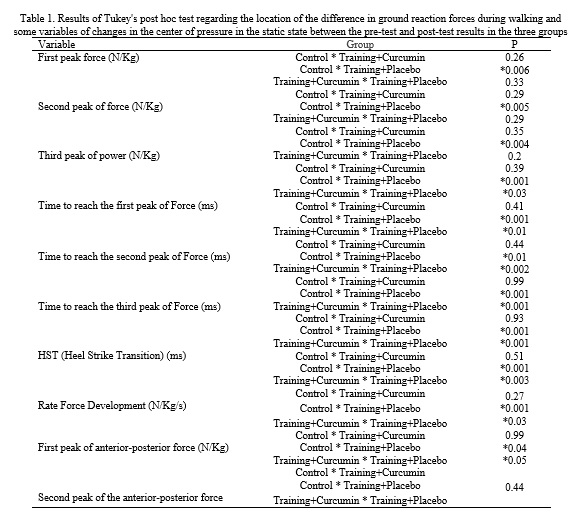
The results of the present study indicated that six weeks of TRX training, with or without curcumin supplementation, led to significant reductions in selected ground reaction force variables during walking in overweight and obese women with chronic nonspecific low back pain (P ≤ 0.05). However, no significant between-group differences were observed for center of pressure measures during walking or during static standing. In addition, no statistically significant differences were found between the Training + Curcumin and Training + Placebo groups in any of the assessed outcome variables (Table 1).
1. Introduction
Low back pain (LBP) is defined as pain or discomfort localized between the lower costal margin and the gluteal folds, with or without radiation to the lower extremities (1). Among its various subtypes, nonspecific low back pain accounts for the majority of cases, as no identifiable pathological cause can be determined in most patients (2). Despite the absence of a clear structural diagnosis, nonspecific low back pain is frequently accompanied by biomechanical alterations, including changes in gait mechanics, loading patterns, and postural control strategies (4).
Epidemiological evidence indicates that women with higher body mass index (BMI) exhibit a greater prevalence of low back pain, suggesting a potential interaction between excess body mass, altered movement mechanics, and spinal loading (5). Individuals with low back pain often adopt slower walking speeds as a protective strategy, which may paradoxically increase vertical ground reaction forces during gait and impose greater mechanical demands on the musculoskeletal system (6). In addition, patients with chronic nonspecific low back pain (NSLBP) demonstrate reduced postural stability compared with healthy individuals, and this instability appears to be closely associated with pain severity and sensorimotor dysfunction (9). NSLBP has also been identified as a condition that disrupts balance control across the lifespan, particularly in the presence of age- and weight-related neuromuscular decline (10).
Given the altered force transmission and pressure distribution observed during walking in individuals with NSLBP, therapeutic interventions aimed at modifying ground reaction force characteristics have gained increasing attention (12). Exercise-based interventions are widely recognized as effective strategies for improving functional performance, reducing pain, and enhancing neuromuscular control in patients with low back pain (13,14). Among these approaches, total body resistance exercise using suspension systems such as TRX has been proposed to enhance core stability, muscle coordination, and load distribution during dynamic tasks.
In parallel, growing interest has emerged in the use of herbal and nutritional supplements as adjunctive therapies for musculoskeletal disorders. Curcumin, a bioactive polyphenolic compound derived from turmeric, exhibits well-documented antioxidant and anti-inflammatory properties and has been investigated for its potential role in pain modulation and tissue protection (19). Previous research has reported that specific formulations of curcumin, such as nanobubble curcumin extract, may reduce peak vertical ground reaction forces during walking, thereby potentially lowering mechanical stress on the lower limb musculoskeletal system (20). However, existing studies have predominantly examined the effects of either resistance training or curcumin supplementation in isolation. For example, prior investigations by Gulmez et al. (2017), Peng et al. (2019), Doyle et al. (2023), and Senpasit et al. (2023) have focused on single-modality interventions, limiting insight into potential synergistic effects (17,20–22). To date, the combined influence of TRX-based resistance training and curcumin supplementation on gait kinetics and postural control in individuals with NSLBP remains largely unexplored.
Therefore, the present study aimed to investigate whether six weeks of total body TRX resistance training combined with curcumin supplementation would influence ground reaction forces and center of pressure behavior during walking and static standing in overweight and obese women with chronic nonspecific low back pain.
2. Methods
The statistical population of this study consisted of women with chronic nonspecific low back pain (NSLBP) who had attended specialized orthopedic clinics in Birjand, Iran, for the treatment of chronic low back pain during the previous year. The study adopted a quasi-experimental pretest–posttest design. A total of 36 overweight and obese women (mean age: 44 years) who met the inclusion criteria were recruited and randomly allocated into three groups of equal size (n = 12): a control group, a TRX training plus curcumin supplementation group (Training + Curcumin), and a TRX training plus placebo group (Training + Placebo). Prior to participation, written informed consent was obtained from all participants, and the study protocol complied with ethical standards for research involving human subjects. Inclusion criteria included a body mass index (BMI) greater than 25 kg/m², physician-confirmed diagnosis of chronic nonspecific low back pain, absence of a history of lumbar surgery, lumbar disc herniation, congenital structural abnormalities, or acute spinal trauma, and no use of sedative or analgesic medications during the study period. Additional exclusion criteria for participants assigned to the curcumin group included a history of active gastric ulcer, gastrointestinal bleeding, gallstones or bile duct obstruction, and the use of anticoagulants, hydantoins, lithium, corticosteroids, methotrexate, or colchicine (23).
Ground reaction forces (GRFs) during walking were recorded using an Iranian-manufactured force plate (Danesh Salar Iranian, model DSI). Participants initiated walking approximately seven steps before reaching the force plate to ensure a steady-state gait pattern, and data were sampled at a frequency of 200 Hz to capture natural walking dynamics (24). Each participant completed three successful walking trials, during which they contacted the force plate naturally without targeting it and continued walking beyond the platform. Heel contact and toe-off events were identified using a vertical GRF threshold of 10 N (25). Static center of pressure (COP) variables were assessed by instructing participants to stand quietly on the force plate for 10 seconds. Temporal characteristics of GRF and COP variables were normalized to the percentage of total foot–ground contact time and processed using MATLAB software (MATLAB R2010b; MathWorks Inc., Natick, MA, USA).
Participants in the Training + Curcumin and Training + Placebo groups completed a six-week TRX-based resistance training program consisting of three supervised sessions per week at an intensity of 50–60% of maximal heart rate. Each session included a 10-minute warm-up involving stretching exercises targeting the lower back, pelvis, gluteal muscles, and thighs, followed by 40–60 minutes of TRX exercises and a 5-minute cool-down period (26). Throughout the intervention period, participants in the Training + Curcumin group consumed 500 mg curcumin capsules daily, whereas those in the Training + Placebo group received visually identical placebo capsules (23,27).
3. Results
The results of the present study indicated that six weeks of TRX training, with or without curcumin supplementation, led to significant reductions in selected ground reaction force variables during walking in overweight and obese women with chronic nonspecific low back pain (P ≤ 0.05). However, no significant between-group differences were observed for center of pressure measures during walking or during static standing. In addition, no statistically significant differences were found between the Training + Curcumin and Training + Placebo groups in any of the assessed outcome variables (Table 1).
4. Discussion
The findings of this study indicate that a six-week TRX-based resistance training program, with or without curcumin supplementation, significantly reduced ground reaction force variables during walking in overweight and obese women with chronic nonspecific low back pain. In contrast, no significant effects were observed on center of pressure measures during either walking or quiet standing. These results suggest that TRX training primarily influences gait kinetics rather than postural control parameters in this population. Furthermore, curcumin supplementation at a daily dose of 500 mg did not provide additional benefits beyond those achieved through TRX training alone. Future studies with longer intervention periods and more sensitive balance assessments may help clarify the potential role of nutritional supplementation in postural control adaptations.
Ethical Considerations
Compliance with ethical guidelines
This study was approved with the ethics code IR.BIRJAND.REC.1402.005 of the University of Birjand and can also be viewed on the website of the National System of Ethics in Biomedical Research.
Funding
This article is extracted from the master's thesis of Ghodsiyeh Khazaei, in the Department of Physiology, University of Birjand. It has not received any financial support from government, private, or non-profit organizations.
Authors' contributions
All authors contributed equally to preparing the article.
Conflicts of interest
The authors declare that they have no conflict of interest associated with this study.
The findings of this study indicate that a six-week TRX-based resistance training program, with or without curcumin supplementation, significantly reduced ground reaction force variables during walking in overweight and obese women with chronic nonspecific low back pain. In contrast, no significant effects were observed on center of pressure measures during either walking or quiet standing. These results suggest that TRX training primarily influences gait kinetics rather than postural control parameters in this population. Furthermore, curcumin supplementation at a daily dose of 500 mg did not provide additional benefits beyond those achieved through TRX training alone. Future studies with longer intervention periods and more sensitive balance assessments may help clarify the potential role of nutritional supplementation in postural control adaptations.
Ethical Considerations
Compliance with ethical guidelines
This study was approved with the ethics code IR.BIRJAND.REC.1402.005 of the University of Birjand and can also be viewed on the website of the National System of Ethics in Biomedical Research.
Funding
This article is extracted from the master's thesis of Ghodsiyeh Khazaei, in the Department of Physiology, University of Birjand. It has not received any financial support from government, private, or non-profit organizations.
Authors' contributions
All authors contributed equally to preparing the article.
Conflicts of interest
The authors declare that they have no conflict of interest associated with this study.
Type of Study: Research |
Subject:
Special
Received: 2025/07/18 | Accepted: 2025/12/22 | Published: 2025/12/31
Received: 2025/07/18 | Accepted: 2025/12/22 | Published: 2025/12/31
References
1. Turci A, Nogueira C, Nogueira-Carrer H, Chaves T. Self-administered stretching exercises are as effective as motor control exercises for people with chronic non-specific low back pain. Journal of Physiotherapy. 2023;69(2):93-99. [DOI:10.1016/j.jphys.2023.02.016] [PMID]
2. Dolatian M, Hasanpour A, Heshmat R, Alavi Majd H. Effect of reflexology on pain intensity of labor. Iranian Red Crescent Medical Journal. 2010;12(1):52-61.
3. Fong SSM, Tam YT, Macfarlane DJ, et al. Core muscle activity during TRX suspension exercises with and without kinesiology taping in adults with chronic low back pain: implications for rehabilitation. Evidence-Based Complementary and Alternative Medicine. 2015;2015:910168. [DOI:10.1155/2015/910168] [PMID]
4. Matheve T, Brumagne S, Demoulin C, Timmermans A. Sensor-based postural feedback is more effective than conventional feedback to improve lumbopelvic movement control in patients with chronic low back pain: a randomized controlled trial. Journal of NeuroEngineering and Rehabilitation. 2018;15(1):85. [DOI:10.1186/s12984-018-0423-6] [PMID]
5. Mirtz T, Greene L. Is obesity a risk factor for low back pain? An example of using the evidence to answer a clinical question. Journal of Chiropractic & Osteopathy. 2005;13(1):2. [DOI:10.1186/1746-1340-13-2] [PMID]
6. Podraza JT, White SC. Effect of knee flexion angle on ground reaction forces, knee moments and muscle co-contraction during impact-like deceleration landing: implications for the non-contact mechanism of ACL injury. The Knee. 2010;17(4):291-295. [DOI:10.1016/j.knee.2010.02.013] [PMID]
7. McGill SM, Childs A, Liebenson C. Endurance times for low back stabilization exercises: clinical targets for testing and training from a normal database. Archives of Physical Medicine and Rehabilitation. 1999;80(8):941-944. [DOI:10.1016/S0003-9993(99)90087-4] [PMID]
8. Giakas G, Baltzopoulos V. Optimal digital filtering requires a different cut-off frequency strategy for the determination of higher derivatives. Journal of Biomechanics. 1997;30(8):851-855. [DOI:10.1016/S0021-9290(97)00043-2] [PMID]
9. Ruhe A, Fejer R, Walker B. Center of pressure excursion as a measure of balance performance in patients with non-specific low back pain compared with healthy controls. European Spine Journal. 2011;20(3):358-368. [DOI:10.1007/s00586-010-1543-2] [PMID]
10. Azarmi E, Azadi F, Mosallanezhad Z, Vahedi M. Relationship of low back pain and knee pain with dynamic balance in elderly individuals living in nursing homes. Iranian Journal of Ageing. 2023;18(3):460-473. [DOI:10.32598/sija.2023.774.5]
11. Ershad N, Kahrizi S, Firouzabadi S, Faghihzadeh S. Comparison of the effects of external load on lumbar lordosis in patients with low back pain and healthy individuals. Journal of Rehabilitation. 2007;8(3):28-34.
12. Farahpour N, Jafarnezhadgero A, Allard P, Majlesi M. Muscle activity and kinetics of lower limbs during walking in individuals with pronated feet with and without low back pain. Journal of Electromyography and Kinesiology. 2018;39:35-41. [DOI:10.1016/j.jelekin.2018.01.006] [PMID]
13. Fernández-de-Las-Peñas C, et al. Best exercise options for reducing pain and disability in adults with chronic low back pain: pilates, strength, core-based, and mind-body exercise. Journal of Orthopaedic & Sports Physical Therapy. 2022;52(8):505-521. [DOI:10.2519/jospt.2022.10671] [PMID]
14. Waller B, Lambeck J, Daly D. Therapeutic aquatic exercise in the treatment of low back pain: a systematic review. Clinical Rehabilitation. 2009;23(1):3-14. [DOI:10.1177/0269215508097856] [PMID]
15. Sami S, Hakimi M, Ali-Mohammadi M, Karimiyani N. Comparing the effects of hydrotherapy, relaxation and McKenzie exercise on chronic low back pain in athletes. Journal of Anesthesiology and Pain. 2014;4(4):11-21.
16. Alimoradi N, Nourollahi H, Hosseini F. Effects of eight weeks of TRX and CRX exercise on body composition and lipid profile in overweight young women. Journal of Physiology of Movement and Health. 2022;2(1):29-40.
17. Gulmez I. Effects of angle variations in suspension push-up exercise. Journal of Strength and Conditioning Research. 2017;31(4):1017-1023. [DOI:10.1519/JSC.0000000000001401] [PMID]
18. Tasa A, Arshadi A, Mirdar H, Maghsudi A. Effects of different levels of Withania coagulans water extract on growth performance and immunity parameters of Cyprinus carpio. Journal of Aquatic Ecology. 2021;10(4):105-116.
19. Huang WC, Chiu WC, Chuang HL, Tang DW, Lee ZM, Huang CC. Effect of curcumin supplementation on physiological fatigue and physical performance in mice. Nutrients. 2015;7(2):905-921. [DOI:10.3390/nu7020905] [PMID]
20. Peng HH, Wu CH, Kang ST, et al. Real-time monitoring of inertial cavitation effects of microbubbles using MRI: in vitro experiments. Magnetic Resonance in Medicine. 2017;77(1):102-111. [DOI:10.1002/mrm.26082] [PMID]
21. Doyle L, Desomayanandam P, Bhuvanendran A, et al. Safety and efficacy of turmeric (Curcuma longa) extract and curcumin supplements in musculoskeletal health: a systematic review and meta-analysis. Alternative Therapies in Health and Medicine. 2023;29(6):12-24.
22. Sanpasitt C, Apanukul S. Effects of contrast training protocols on vertical jump performance via post-activation performance enhancement. Journal of Physical Education and Sport. 2023;23(11):3024-3031.
23. Shep D, Khanwelkar C, Gade P, Karad S. Safety and efficacy of curcumin versus diclofenac in knee osteoarthritis: a randomized open-label parallel-arm study. Trials. 2019;20(1):214. [DOI:10.1186/s13063-019-3327-2] [PMID]
24. Arasto M, Zahednejad S, Arasto A, Negahban H, Gohar-Pay S. Measurement of ground reaction forces during forward and backward walking in women with flat feet. Journal of Modern Rehabilitation. 2011;5(1):1-7.
25. Aghamohammadi F, Jalalvand A. Effects of different walking strategies on maximum force and plantar pressure distribution. Journal of Sport Biomechanics. 2025;10(4):262-275. [DOI:10.61186/JSportBiomech.10.4.262]
26. Piralaee L, Barati A, Hasanzadeh M. Effects of eight weeks of TRX training on pain, quality of life and core muscle endurance in patients with chronic non-specific low back pain. Journal of Safety and Quality Improvement from Injuries. 2022;10(1):1-11.
27. Pourhabibi F, Rafraf M, Zayeni H, Asghari M, Ebrahimi A. Effects of curcumin supplementation on metabolic and inflammatory parameters in women with rheumatoid arthritis. Phytotherapy Research. 2022;36(4):1797-1806. [DOI:10.1002/ptr.7422] [PMID]
28. Nourizadeh S, Mirjani M, Naserpour H. Relationship between core stability, muscular endurance, static balance and shooting performance in military soldiers. Journal of Sport Biomechanics. 2019;5(1):62-71. [DOI:10.32598/biomechanics.5.1.6]
29. Roghani M, Baluchnejadmojarad T. Effects of curcumin on spatial memory and passive avoidance learning in diabetic rats. Daneshvar Medicine. 2020;19(6):51-60.
30. Joseph MS, Ying Z, Zhuang Y, Zhong H, Wu A, Bhatia HS, et al. Effects of diet and exercise on spinal cord sensorimotor learning. PLoS One. 2012;7(7):e41288. [DOI:10.1371/journal.pone.0041288] [PMID]
31. Boyao Y, Mengjiao S, Caicai B, Xiaoling L, Manxia W. Dynamic expression of autophagy-related factors and effects of curcumin therapy in autoimmune encephalomyelitis. Journal of Neuroimmunology. 2019;337:577067. [DOI:10.1016/j.jneuroim.2019.577067] [PMID]
32. Nanavati K, Rutherfurd-Markwick K, Lee S, Bishop N, Ali A. Effect of curcumin supplementation on exercise-induced muscle damage: a narrative review. Nutrients. 2022;14(8):3835. [DOI:10.1007/s00394-022-02943-7] [PMID]
33. Alsharif FJ, Almuhtadi YA. Effect of curcumin supplementation on anthropometric measures in overweight or obese adults. Nutrients. 2021;13(2):680. [DOI:10.3390/nu13020680] [PMID]
34. Boros-Balint I, et al. TRX suspension training and static balance in junior basketball players. Journal of Education, Health and Sport. 2015;5(3):27-34.
35. Hammami R, et al. Effects of instability resistance training on physical fitness and lower limb asymmetry in prepubertal weightlifters. Journal of Biomechanics in Sports Science and Medicine. 2023;15(1):40-48. [DOI:10.1186/s13102-023-00652-0] [PMID]
36. Shin YA, et al. Short-term effects of Theracurmin dose and exercise type on pain and muscle function in knee osteoarthritis. Journal of Exercise Rehabilitation. 2017;13(6):684-690. [DOI:10.12965/jer.1735064.532] [PMID]
37. Kayhanfar A, Akochekian M, Saheb Al-Zamani M. Effects and durability of a home exercise program on range of motion, balance and gait in retired athletes with knee osteoarthritis. Journal of Paramedical Sciences and Rehabilitation. 2022;11(3):92-107.
38. Delkhoush CT, Fatemi E, Ghorbani R. Effects of aerobic walking versus strength training on balance in patients with knee osteoarthritis. Journal of Koomesh. 2022;24(1):147-154.
39. Varjan M, et al. Sensorimotor training versus resistance-endurance training in older adults. Frontiers in Physiology. 2024;15:1386537. [DOI:10.3389/fphys.2024.1386537] [PMID]
40. Gholizade S, Mozayani H, Barati A. Effects of eight weeks of TRX exercise on pain intensity and balance in girls with chronic non-specific low back pain. Journal of Sport Biomechanics. 2022;8(1):34-48. [DOI:10.52547/JSportBiomech.8.1.2]
41. Asher GN, Spelman K. Clinical utility of curcumin extract. Alternative Therapies in Health and Medicine. 2013;19(2):20-22.
42. Lee MH, Kim BK. Comparison of abdominal muscle activity after sling and Swiss-ball exercises in asymptomatic adults. Journal of the Korean Society of Physical Medicine. 2014;9(3):333-338. [DOI:10.13066/kspm.2014.9.3.333]
43. Soleimani V, Sahebkar A, Hosseinzadeh H. Turmeric (Curcuma longa) and curcumin as safe and non-toxic substances. Phytotherapy Research. 2018;32(6):985-995. [DOI:10.1002/ptr.6054] [PMID]
44. Sheikhalizahe H, Imani Brouj S, Ashrafi N, Mehralian F. Effects of NASM exercises on ground reaction forces during running in individuals with low back pain. Journal of Advanced Sport Technology. 2024;8(1):57-66.
45. Sannicandro I, Cofano G, Rosa A. Strength and power analysis in half-squat exercise using suspension training tools. Journal of Physical Education and Sport. 2015;15(3):433-440.
46. Liu L, et al. Protective effects of tea polyphenols on exhaustive exercise-induced fatigue and inflammation. Food & Nutrition Research. 2017;61:1333390. [DOI:10.1080/16546628.2017.1333390] [PMID]
47. Apostu M. Effects of ergogenic substances on sports performance. Procedia - Social and Behavioral Sciences. 2014;117:329-334. [DOI:10.1016/j.sbspro.2014.02.222]
| Rights and permissions | |
 |
This work is licensed under a Creative Commons Attribution-NonCommercial 4.0 International License. |

Journal of Sport Biomechanics
Department of Sport Biomechanics, Faculty of Humanities, Islamic Azad University, Hamedan Branch, Prof. Mousivand Blvd, Imam Khomeini Blvd, Hamedan, Iran.
Journal Tel: +98 81 34494042
Website: http://biomechanics.iauh.ac.ir
Email: sportbiomechanics@iauh.ac.ir
