

Volume 12, Issue 3 (11-2026)
J Sport Biomech 2026, 12(3): 418-430 |
Back to browse issues page




Download citation:
BibTeX | RIS | EndNote | Medlars | ProCite | Reference Manager | RefWorks
Send citation to:


BibTeX | RIS | EndNote | Medlars | ProCite | Reference Manager | RefWorks
Send citation to:
Rickta J F, Mukta F T J, Shaim S N S, Rahaman M, Arafat Y. Anaerobic Power Cycling Training and Lower-Extremity Performance in Elite Female Handball Players: A Predictive Model Based on Morphological Indices. J Sport Biomech 2026; 12 (3) :418-430
URL: http://biomechanics.iauh.ac.ir/article-1-486-en.html
URL: http://biomechanics.iauh.ac.ir/article-1-486-en.html
Jannatul Ferdaus Rickta1 

 , Fatima Tus Johora Mukta1 , Shaik Nazmus Shakib Shaim1 , Musfiqur Rahaman1 , Yeasir Arafat *2
, Fatima Tus Johora Mukta1 , Shaik Nazmus Shakib Shaim1 , Musfiqur Rahaman1 , Yeasir Arafat *2
1- Department of Physical Education & Sports Science, Jashore University of Science and Technology, Bangladesh.
2- Physical Education Office; Chittagong University of Engineering & Technology, Bangladesh.
2- Physical Education Office; Chittagong University of Engineering & Technology, Bangladesh.
Full-Text [PDF 1028 kb]
(33 Downloads)
| Abstract (HTML) (78 Views)
Full-Text: (10 Views)
1. Introduction
Handball is an Olympic team sport played worldwide and characterized by frequent transitions between high-intensity and low-intensity activities (1). A standard match consists of two 30-minute halves, during which players repeatedly perform explosive actions such as sprinting, accelerating, jumping, throwing, and changing direction, interspersed with periods of walking or standing (2, 3). Consequently, repeated sprint ability, agility, and explosive power are essential determinants of successful performance (4). Physiological studies have shown that handball players spend a considerable proportion of match time at high exercise intensities, with approximately 47% of playing time performed at 81–90% of maximum heart rate and a further 24% above 90% of maximum heart rate (5, 6). Therefore, both anaerobic and aerobic energy systems are required to sustain performance, with anaerobic metabolism supporting high-intensity actions and aerobic metabolism facilitating recovery and prolonged activity (6).
Given the demanding nature of handball, training programs should incorporate anaerobic conditioning, explosive strength development, and sport-specific drills that replicate the rapid directional changes and repeated high-intensity efforts encountered during competition (7, 8). The frequent execution of sprinting, jumping, accelerating, decelerating, and directional changes places substantial demands on lower-extremity power and anaerobic capacity (9–13). These physical qualities are critical for achieving optimal performance during competitive matches (14). The repeated high-intensity actions performed during handball competition result in elevated blood lactate concentrations and substantial metabolic stress (15–17). Accordingly, handball players require well-developed anaerobic fitness to repeatedly perform intense efforts and recover efficiently between actions (18, 19). Previous research has demonstrated that high-intensity interval training (HIIT), plyometric exercises, explosive resistance training, and other anaerobic conditioning methods can improve performance-related physiological adaptations in handball players (20–22).
Several field and laboratory tests have been used to evaluate anaerobic performance in handball athletes, including repeated sprint ability (RSA) tests, suicide runs, vertical jump assessments, and the Wingate anaerobic cycling test (23–25). Among these, the 30-second Wingate test is widely recognized as a valid and reliable measure of anaerobic power and capacity (8, 25, 26). Previous studies have shown that various training interventions, including circuit resistance training under hypoxic conditions, HIIT, and Swiss-ball-based core power training, can enhance anaerobic exercise capacity and power production in athletes (27–29). Nevertheless, current training approaches do not always fully replicate the intermittent, high-intensity demands of competitive handball. Body composition and lower-extremity morphology are also important determinants of anaerobic performance. Limb circumference, muscle volume, and skeletal muscle mass are commonly used indicators of muscular development in sports science and physical education research (30, 31). Previous studies have demonstrated that muscle mass, limb circumference, and muscle volume can be modified through targeted training interventions and are positively associated with muscular strength and power production (30–35). Because muscle strength is closely related to muscle cross-sectional area, limb girth measurements are frequently used as practical indicators of strength development in both athletic and clinical populations (32, 33). Furthermore, resistance training has been shown to increase lower-extremity power and thigh circumference, and positive associations have been reported between thigh girth and power-related performance measures (30, 34, 35).
Evidence further suggests that anaerobic cycling performance is closely associated with body composition characteristics. Greater fat-free mass and skeletal muscle mass are generally associated with higher peak power, mean power, and jump performance, whereas higher body fat percentages are associated with reduced performance and increased fatigue (39, 40). In addition, different resistance-training approaches may influence specific performance outcomes, with velocity-based training being particularly effective for improving explosive strength and peak power, while percentage-based training may be more beneficial for enhancing mean power and endurance-related capacities (41–43). Therefore, the present study was designed to evaluate the effectiveness of power cycling training as a targeted intervention for improving anaerobic exercise capacity in elite female handball players, a population in which explosive strength and short-duration high-intensity performance are critical determinants of success. In addition, this study sought to investigate the relationships among lower-extremity circumference, skeletal muscle mass, and anaerobic cycling performance variables. By integrating these parameters, the study aimed to develop predictive models that may provide practical, objective, and cost-effective tools for monitoring athlete development and optimizing training strategies.
2. Methods
2.1. Participants
The study recruited 43 elite female handball players who had participated in the Bangladesh National Female Handball League and had been continuously engaged in handball training for at least five years. Participants were allocated into two groups based on their baseline anaerobic cycling performance. Following baseline assessment, athletes were assigned to either a control group (n = 21) or a training group (n = 22). To ensure methodological rigor, predefined inclusion and exclusion criteria were applied. Baseline homogeneity between groups was verified using independent-samples t-tests, which revealed no significant differences in the primary anaerobic performance variables. Athletes with known cardiovascular disease or any medical condition contraindicating high-intensity anaerobic exercise were excluded from participation. All participants volunteered to participate without financial compensation and provided written informed consent prior to data collection. All procedures were conducted according to standardized testing instructions. Prior to data collection, demographic information including age, height, weight, and body mass index (BMI) was recorded. Body composition and skeletal muscle mass were assessed using a validated bioelectrical impedance analyzer (InBody 720, Biospace Co., Ltd., Seoul, South Korea) (44, 45).
2.2. Anthropometric and Lower-Extremity Morphology Measurements
Before testing, the objectives and procedures of the study were explained in detail to all participants. To ensure measurement accuracy and reliability, all lower-extremity morphological assessments were performed by a certified examiner. Participants stood in an upright position with body weight evenly distributed between both lower limbs. Thigh circumference was measured using a Lufkin W606PM anthropometric tape at the midpoint between the greater trochanter and the lateral femoral condyle and recorded in centimeters (46, 47). Calf circumference was measured at the point of greatest girth. Baseline measurements were obtained one day before the commencement of the intervention, whereas follow-up assessments were conducted one day after completion of the final training session.
2.3. Anaerobic Cycling Training Protocol
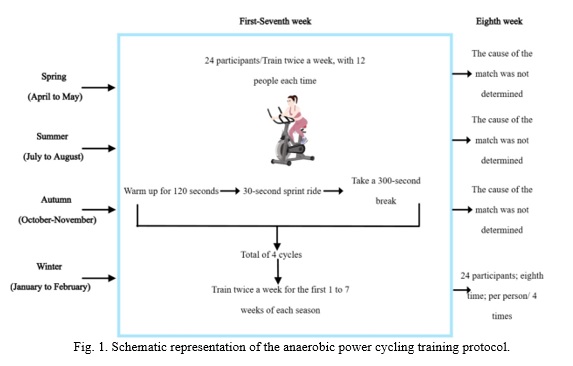
The anaerobic cycling intervention was implemented longitudinally across four seasonal periods (winter, spring, summer, and autumn). During each seasonal period, the training group completed a progressive 3.5-week intervention block consisting of seven training sessions performed twice weekly. All training sessions were incorporated into the athletes’ regular competitive-season training schedule. Each session consisted of a standardized active warm-up involving 120 seconds of light cycling, followed by a 30-second maximal Wingate-style sprint against a braking resistance equivalent to 0.075 kg·kg⁻¹ body mass. Participants then completed 300 seconds of passive recovery. This sequence was repeated four times within each training session (Fig. 1). The control group continued their regular handball training program, including technical, tactical, and conditioning activities, without additional cycling training. Outcome assessments were performed at baseline and following completion of the intervention period. The training protocol was based on established exercise physiology principles commonly used to evaluate anaerobic performance and training adaptations (8, 49).
Handball is an Olympic team sport played worldwide and characterized by frequent transitions between high-intensity and low-intensity activities (1). A standard match consists of two 30-minute halves, during which players repeatedly perform explosive actions such as sprinting, accelerating, jumping, throwing, and changing direction, interspersed with periods of walking or standing (2, 3). Consequently, repeated sprint ability, agility, and explosive power are essential determinants of successful performance (4). Physiological studies have shown that handball players spend a considerable proportion of match time at high exercise intensities, with approximately 47% of playing time performed at 81–90% of maximum heart rate and a further 24% above 90% of maximum heart rate (5, 6). Therefore, both anaerobic and aerobic energy systems are required to sustain performance, with anaerobic metabolism supporting high-intensity actions and aerobic metabolism facilitating recovery and prolonged activity (6).
Given the demanding nature of handball, training programs should incorporate anaerobic conditioning, explosive strength development, and sport-specific drills that replicate the rapid directional changes and repeated high-intensity efforts encountered during competition (7, 8). The frequent execution of sprinting, jumping, accelerating, decelerating, and directional changes places substantial demands on lower-extremity power and anaerobic capacity (9–13). These physical qualities are critical for achieving optimal performance during competitive matches (14). The repeated high-intensity actions performed during handball competition result in elevated blood lactate concentrations and substantial metabolic stress (15–17). Accordingly, handball players require well-developed anaerobic fitness to repeatedly perform intense efforts and recover efficiently between actions (18, 19). Previous research has demonstrated that high-intensity interval training (HIIT), plyometric exercises, explosive resistance training, and other anaerobic conditioning methods can improve performance-related physiological adaptations in handball players (20–22).
Several field and laboratory tests have been used to evaluate anaerobic performance in handball athletes, including repeated sprint ability (RSA) tests, suicide runs, vertical jump assessments, and the Wingate anaerobic cycling test (23–25). Among these, the 30-second Wingate test is widely recognized as a valid and reliable measure of anaerobic power and capacity (8, 25, 26). Previous studies have shown that various training interventions, including circuit resistance training under hypoxic conditions, HIIT, and Swiss-ball-based core power training, can enhance anaerobic exercise capacity and power production in athletes (27–29). Nevertheless, current training approaches do not always fully replicate the intermittent, high-intensity demands of competitive handball. Body composition and lower-extremity morphology are also important determinants of anaerobic performance. Limb circumference, muscle volume, and skeletal muscle mass are commonly used indicators of muscular development in sports science and physical education research (30, 31). Previous studies have demonstrated that muscle mass, limb circumference, and muscle volume can be modified through targeted training interventions and are positively associated with muscular strength and power production (30–35). Because muscle strength is closely related to muscle cross-sectional area, limb girth measurements are frequently used as practical indicators of strength development in both athletic and clinical populations (32, 33). Furthermore, resistance training has been shown to increase lower-extremity power and thigh circumference, and positive associations have been reported between thigh girth and power-related performance measures (30, 34, 35).
Evidence further suggests that anaerobic cycling performance is closely associated with body composition characteristics. Greater fat-free mass and skeletal muscle mass are generally associated with higher peak power, mean power, and jump performance, whereas higher body fat percentages are associated with reduced performance and increased fatigue (39, 40). In addition, different resistance-training approaches may influence specific performance outcomes, with velocity-based training being particularly effective for improving explosive strength and peak power, while percentage-based training may be more beneficial for enhancing mean power and endurance-related capacities (41–43). Therefore, the present study was designed to evaluate the effectiveness of power cycling training as a targeted intervention for improving anaerobic exercise capacity in elite female handball players, a population in which explosive strength and short-duration high-intensity performance are critical determinants of success. In addition, this study sought to investigate the relationships among lower-extremity circumference, skeletal muscle mass, and anaerobic cycling performance variables. By integrating these parameters, the study aimed to develop predictive models that may provide practical, objective, and cost-effective tools for monitoring athlete development and optimizing training strategies.
2. Methods
2.1. Participants
The study recruited 43 elite female handball players who had participated in the Bangladesh National Female Handball League and had been continuously engaged in handball training for at least five years. Participants were allocated into two groups based on their baseline anaerobic cycling performance. Following baseline assessment, athletes were assigned to either a control group (n = 21) or a training group (n = 22). To ensure methodological rigor, predefined inclusion and exclusion criteria were applied. Baseline homogeneity between groups was verified using independent-samples t-tests, which revealed no significant differences in the primary anaerobic performance variables. Athletes with known cardiovascular disease or any medical condition contraindicating high-intensity anaerobic exercise were excluded from participation. All participants volunteered to participate without financial compensation and provided written informed consent prior to data collection. All procedures were conducted according to standardized testing instructions. Prior to data collection, demographic information including age, height, weight, and body mass index (BMI) was recorded. Body composition and skeletal muscle mass were assessed using a validated bioelectrical impedance analyzer (InBody 720, Biospace Co., Ltd., Seoul, South Korea) (44, 45).
2.2. Anthropometric and Lower-Extremity Morphology Measurements
Before testing, the objectives and procedures of the study were explained in detail to all participants. To ensure measurement accuracy and reliability, all lower-extremity morphological assessments were performed by a certified examiner. Participants stood in an upright position with body weight evenly distributed between both lower limbs. Thigh circumference was measured using a Lufkin W606PM anthropometric tape at the midpoint between the greater trochanter and the lateral femoral condyle and recorded in centimeters (46, 47). Calf circumference was measured at the point of greatest girth. Baseline measurements were obtained one day before the commencement of the intervention, whereas follow-up assessments were conducted one day after completion of the final training session.
2.3. Anaerobic Cycling Training Protocol
The anaerobic cycling intervention was implemented longitudinally across four seasonal periods (winter, spring, summer, and autumn). During each seasonal period, the training group completed a progressive 3.5-week intervention block consisting of seven training sessions performed twice weekly. All training sessions were incorporated into the athletes’ regular competitive-season training schedule. Each session consisted of a standardized active warm-up involving 120 seconds of light cycling, followed by a 30-second maximal Wingate-style sprint against a braking resistance equivalent to 0.075 kg·kg⁻¹ body mass. Participants then completed 300 seconds of passive recovery. This sequence was repeated four times within each training session (Fig. 1). The control group continued their regular handball training program, including technical, tactical, and conditioning activities, without additional cycling training. Outcome assessments were performed at baseline and following completion of the intervention period. The training protocol was based on established exercise physiology principles commonly used to evaluate anaerobic performance and training adaptations (8, 49).
2.4. Statistical Analysis
All data were entered into Microsoft Excel and analyzed using IBM SPSS Statistics version 25.0 (IBM Corp., Armonk, NY, USA). Data entry was independently verified to ensure accuracy. Prior to inferential analysis, data normality was assessed using the Shapiro–Wilk test, and homogeneity of variance was evaluated using Levene’s test. All primary outcome variables satisfied the assumptions required for parametric statistical analyses (p > 0.05). Descriptive statistics are presented as mean ± standard deviation (SD). Independent-samples t-tests were used to examine baseline differences between groups. Repeated-measures one-way ANOVA was used to assess within-group changes across training sessions, whereas repeated-measures two-way ANOVA was applied to evaluate group × time interaction effects. When significant effects were identified, post hoc comparisons were performed using the Least Significant Difference (LSD) test.
Pearson correlation analysis was used to examine relationships between lower-extremity morphological characteristics and anaerobic cycling performance variables. Multiple linear regression analyses were subsequently conducted to develop predictive models for key anaerobic performance outcomes using lower-extremity anthropometric and skeletal muscle variables as predictors. Statistical significance was established at p < 0.05 for all analyses.
3. Results
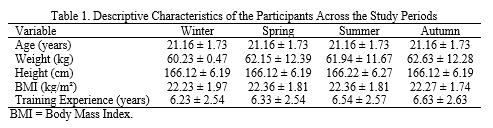
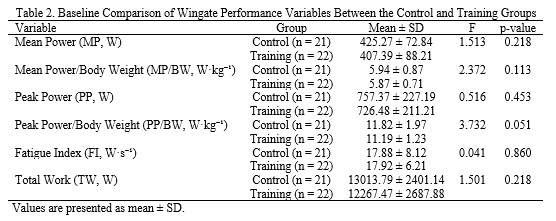
Descriptive characteristics of the participants are presented in Table 1. No significant differences were observed in the baseline anthropometric characteristics of the participants across the study periods. Table 2 presents the baseline Wingate test results for the control and training groups before the intervention. No significant between-group differences were observed in mean power, mean power relative to body weight, peak power, peak power relative to body weight, fatigue index, or total work (all p > 0.05), confirming baseline homogeneity between groups.
All data were entered into Microsoft Excel and analyzed using IBM SPSS Statistics version 25.0 (IBM Corp., Armonk, NY, USA). Data entry was independently verified to ensure accuracy. Prior to inferential analysis, data normality was assessed using the Shapiro–Wilk test, and homogeneity of variance was evaluated using Levene’s test. All primary outcome variables satisfied the assumptions required for parametric statistical analyses (p > 0.05). Descriptive statistics are presented as mean ± standard deviation (SD). Independent-samples t-tests were used to examine baseline differences between groups. Repeated-measures one-way ANOVA was used to assess within-group changes across training sessions, whereas repeated-measures two-way ANOVA was applied to evaluate group × time interaction effects. When significant effects were identified, post hoc comparisons were performed using the Least Significant Difference (LSD) test.
Pearson correlation analysis was used to examine relationships between lower-extremity morphological characteristics and anaerobic cycling performance variables. Multiple linear regression analyses were subsequently conducted to develop predictive models for key anaerobic performance outcomes using lower-extremity anthropometric and skeletal muscle variables as predictors. Statistical significance was established at p < 0.05 for all analyses.
3. Results
Descriptive characteristics of the participants are presented in Table 1. No significant differences were observed in the baseline anthropometric characteristics of the participants across the study periods. Table 2 presents the baseline Wingate test results for the control and training groups before the intervention. No significant between-group differences were observed in mean power, mean power relative to body weight, peak power, peak power relative to body weight, fatigue index, or total work (all p > 0.05), confirming baseline homogeneity between groups.
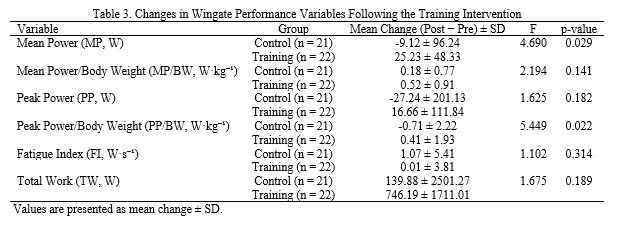
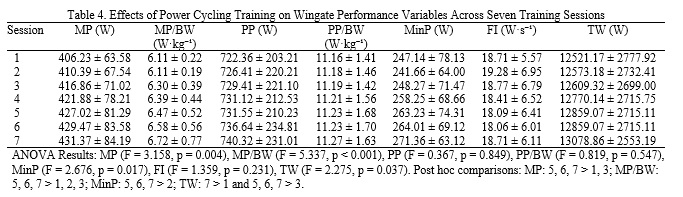
Changes in Wingate performance variables following the intervention are presented in Table 3. Significant between-group differences were observed for mean power (p = 0.029) and peak power relative to body weight (p = 0.022). Although improvements were observed in several performance variables in the training group, no significant differences were found between groups for peak power, fatigue index, or total work (p > 0.05). The effects of the power cycling training program across the seven training sessions are summarized in Table 4. Significant improvements were observed in mean power (p = 0.004), mean power relative to body weight (p < 0.001), minimum power (p = 0.017), and total work (p = 0.037). Post hoc analyses indicated that performance during sessions 5–7 was significantly greater than during the earlier sessions. In contrast, peak power, peak power relative to body weight, and fatigue index did not change significantly across the training period (p > 0.05).
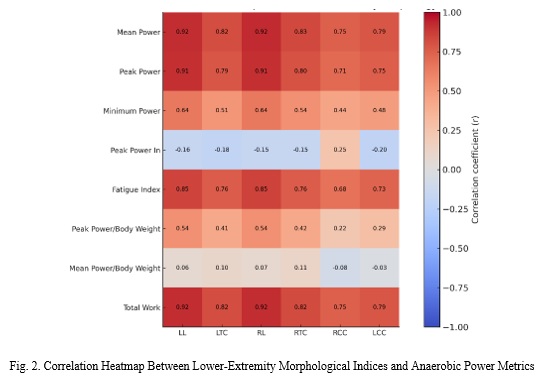
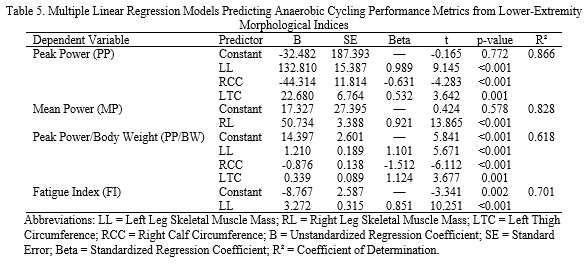
Fig. 2 illustrates the correlations between lower-extremity morphological characteristics and anaerobic cycling performance variables. Significant positive associations were observed between anaerobic performance measures and skeletal muscle mass, thigh circumference, and calf circumference. In addition, body weight was positively associated with lower-extremity skeletal muscle mass and selected circumference measures. Multiple linear regression analyses were performed to determine the predictive value of lower-extremity morphological characteristics for anaerobic cycling performance (Table 5). The regression models explained 86.6% of the variance in peak power, 82.8% of the variance in mean power, 61.8% of the variance in peak power relative to body weight, and 70.1% of the variance in fatigue index. These findings indicate that lower-extremity skeletal muscle mass and limb circumferences are significant predictors of anaerobic cycling performance in elite female handball players.
4. Discussion
The present study examined the effects of anaerobic power cycling training on anaerobic performance and explored the relationships between lower-extremity morphological characteristics and anaerobic cycling performance in elite female handball players. The findings demonstrated that power cycling training improved several Wingate performance variables, particularly mean power, mean power relative to body weight, minimum power, and total work. In addition, lower-extremity skeletal muscle mass and thigh circumference were strongly associated with anaerobic cycling performance and emerged as significant predictors in the regression models. Anaerobic capacity is a critical component of performance in handball because the sport requires repeated bouts of sprinting, jumping, accelerating, decelerating, and rapid changes of direction throughout a match (4, 9–13). Consequently, training methods capable of enhancing lower-extremity power and short-duration high-intensity performance are of considerable practical importance.
Power cycling training represents a form of high-intensity anaerobic exercise that places substantial demands on the ATP–phosphocreatine and glycolytic energy systems, thereby stimulating adaptations related to power production and fatigue resistance. Previous studies have similarly reported improvements in anaerobic performance following high-intensity interval training (HIIT) and sprint interval training (SIT) interventions in team-sport athletes (51–57). The present findings showed that the training group experienced greater improvements in Wingate performance variables than the control group. Significant improvements were particularly evident in mean power and peak power relative to body weight following the intervention. These results are consistent with previous research demonstrating that HIIT-based training programs can improve anaerobic power, repeated-sprint ability, and high-intensity exercise performance in handball players and other athletes (21, 51–54). The progressive increases observed across training sessions suggest that repeated exposure to high-intensity cycling stimuli may enhance the ability to sustain power output during short-duration maximal efforts.
A second important finding of this study was the strong relationship between lower-extremity morphology and anaerobic performance. Thigh circumference and lower-limb skeletal muscle mass demonstrated significant positive correlations with several Wingate performance variables. These findings are consistent with previous research showing that muscle size and cross-sectional area are important determinants of force production and power output (60–62). Because larger muscle mass provides greater potential for force generation, athletes with greater lower-extremity muscle development are generally capable of producing higher peak and mean power values during anaerobic exercise. The observed relationships may also reflect the physiological adaptations associated with high-intensity and resistance-based training. Initial improvements in performance are typically attributed to neural adaptations, including improved motor-unit recruitment and coordination, whereas longer-term gains are associated with muscle hypertrophy and increases in contractile protein content (65–67). Previous studies have reported that resistance and high-intensity training can increase thigh circumference and skeletal muscle mass within several weeks of training, contributing to improvements in strength and power performance (63, 66–68). The present findings support these observations by demonstrating significant associations between lower-extremity morphology and anaerobic power measures in female handball players.
Environmental conditions, nutritional status, and training-load characteristics may also influence anaerobic performance and training adaptations (46, 68, 69). Nevertheless, the strong associations observed in this study between lower-extremity skeletal muscle mass, limb circumferences, and anaerobic cycling performance are consistent with established physiological principles indicating that muscle force production is closely related to muscle size and physiological cross-sectional area (68–70). These findings support the use of lower-extremity anthropometric measurements as practical indicators of anaerobic performance capacity. The regression models developed in the present study explained a substantial proportion of the variance in anaerobic cycling performance variables. From a practical perspective, these models may provide coaches and practitioners with a simple and cost-effective method for estimating anaerobic performance when laboratory-based testing equipment is unavailable. Such an approach may be particularly useful in applied sport settings where access to specialized performance assessment tools is limited.
Several limitations should be acknowledged. First, the study included only female handball players; therefore, the findings may not be generalizable to male athletes or other sporting populations. Second, the sample size was relatively modest, which may limit the external validity of the predictive models. Future studies should examine the applicability of these models in larger and more diverse athletic populations and investigate whether similar relationships exist across different sports and competitive levels.
5. Conclusion
This study demonstrated that a targeted anaerobic power cycling training program improved mean power and relative peak power performance in elite female handball players. Although the groups were comparable at baseline, the training group showed progressive improvements across the intervention period and superior post-intervention performance in selected Wingate variables. Furthermore, lower-extremity morphological characteristics, particularly skeletal muscle mass and thigh circumference, were significant predictors of anaerobic cycling performance. The multiple linear regression models developed in this study may provide a practical, cost-effective, and field-based approach for evaluating lower-limb conditioning and monitoring anaerobic performance, particularly in training environments where access to advanced laboratory equipment is limited.
Ethical Considerations
Compliance with ethical guidelines
This study was conducted in accordance with the ethical principles of the Declaration of Helsinki. Prior to data collection, all participants received detailed information regarding the study procedures, potential risks, and data confidentiality. Written informed consent was obtained from all participants before participation.
Funding
This research did not receive any specific grant from funding agencies in the public, commercial, or not-for-profit sectors.
Authors' contributions
All authors contributed equally to the conception, design, data collection, analysis, interpretation of the results, and preparation of the manuscript. All authors reviewed and approved the final version of the manuscript.
Conflicts of interest
The authors declare that they have no conflict of interest related to this study.
The present study examined the effects of anaerobic power cycling training on anaerobic performance and explored the relationships between lower-extremity morphological characteristics and anaerobic cycling performance in elite female handball players. The findings demonstrated that power cycling training improved several Wingate performance variables, particularly mean power, mean power relative to body weight, minimum power, and total work. In addition, lower-extremity skeletal muscle mass and thigh circumference were strongly associated with anaerobic cycling performance and emerged as significant predictors in the regression models. Anaerobic capacity is a critical component of performance in handball because the sport requires repeated bouts of sprinting, jumping, accelerating, decelerating, and rapid changes of direction throughout a match (4, 9–13). Consequently, training methods capable of enhancing lower-extremity power and short-duration high-intensity performance are of considerable practical importance.
Power cycling training represents a form of high-intensity anaerobic exercise that places substantial demands on the ATP–phosphocreatine and glycolytic energy systems, thereby stimulating adaptations related to power production and fatigue resistance. Previous studies have similarly reported improvements in anaerobic performance following high-intensity interval training (HIIT) and sprint interval training (SIT) interventions in team-sport athletes (51–57). The present findings showed that the training group experienced greater improvements in Wingate performance variables than the control group. Significant improvements were particularly evident in mean power and peak power relative to body weight following the intervention. These results are consistent with previous research demonstrating that HIIT-based training programs can improve anaerobic power, repeated-sprint ability, and high-intensity exercise performance in handball players and other athletes (21, 51–54). The progressive increases observed across training sessions suggest that repeated exposure to high-intensity cycling stimuli may enhance the ability to sustain power output during short-duration maximal efforts.
A second important finding of this study was the strong relationship between lower-extremity morphology and anaerobic performance. Thigh circumference and lower-limb skeletal muscle mass demonstrated significant positive correlations with several Wingate performance variables. These findings are consistent with previous research showing that muscle size and cross-sectional area are important determinants of force production and power output (60–62). Because larger muscle mass provides greater potential for force generation, athletes with greater lower-extremity muscle development are generally capable of producing higher peak and mean power values during anaerobic exercise. The observed relationships may also reflect the physiological adaptations associated with high-intensity and resistance-based training. Initial improvements in performance are typically attributed to neural adaptations, including improved motor-unit recruitment and coordination, whereas longer-term gains are associated with muscle hypertrophy and increases in contractile protein content (65–67). Previous studies have reported that resistance and high-intensity training can increase thigh circumference and skeletal muscle mass within several weeks of training, contributing to improvements in strength and power performance (63, 66–68). The present findings support these observations by demonstrating significant associations between lower-extremity morphology and anaerobic power measures in female handball players.
Environmental conditions, nutritional status, and training-load characteristics may also influence anaerobic performance and training adaptations (46, 68, 69). Nevertheless, the strong associations observed in this study between lower-extremity skeletal muscle mass, limb circumferences, and anaerobic cycling performance are consistent with established physiological principles indicating that muscle force production is closely related to muscle size and physiological cross-sectional area (68–70). These findings support the use of lower-extremity anthropometric measurements as practical indicators of anaerobic performance capacity. The regression models developed in the present study explained a substantial proportion of the variance in anaerobic cycling performance variables. From a practical perspective, these models may provide coaches and practitioners with a simple and cost-effective method for estimating anaerobic performance when laboratory-based testing equipment is unavailable. Such an approach may be particularly useful in applied sport settings where access to specialized performance assessment tools is limited.
Several limitations should be acknowledged. First, the study included only female handball players; therefore, the findings may not be generalizable to male athletes or other sporting populations. Second, the sample size was relatively modest, which may limit the external validity of the predictive models. Future studies should examine the applicability of these models in larger and more diverse athletic populations and investigate whether similar relationships exist across different sports and competitive levels.
5. Conclusion
This study demonstrated that a targeted anaerobic power cycling training program improved mean power and relative peak power performance in elite female handball players. Although the groups were comparable at baseline, the training group showed progressive improvements across the intervention period and superior post-intervention performance in selected Wingate variables. Furthermore, lower-extremity morphological characteristics, particularly skeletal muscle mass and thigh circumference, were significant predictors of anaerobic cycling performance. The multiple linear regression models developed in this study may provide a practical, cost-effective, and field-based approach for evaluating lower-limb conditioning and monitoring anaerobic performance, particularly in training environments where access to advanced laboratory equipment is limited.
Ethical Considerations
Compliance with ethical guidelines
This study was conducted in accordance with the ethical principles of the Declaration of Helsinki. Prior to data collection, all participants received detailed information regarding the study procedures, potential risks, and data confidentiality. Written informed consent was obtained from all participants before participation.
Funding
This research did not receive any specific grant from funding agencies in the public, commercial, or not-for-profit sectors.
Authors' contributions
All authors contributed equally to the conception, design, data collection, analysis, interpretation of the results, and preparation of the manuscript. All authors reviewed and approved the final version of the manuscript.
Conflicts of interest
The authors declare that they have no conflict of interest related to this study.
Type of Study: Research |
Subject:
General
Received: 2025/12/15 | Accepted: 2026/06/7 | Published: 2026/06/23
Received: 2025/12/15 | Accepted: 2026/06/7 | Published: 2026/06/23
References
1. Bělka J, Hůlka K, Šafář M, Dušková L, Weisser R, Riedel V. Time-motion analysis and physiological responses of small-sided team handball games in youth male players: influence of player number. Acta Gymnica. 2016;46(4):201-6. [DOI:10.5507/ag.2016.019]
2. Wagner H, Finkenzeller T, Würth S, von Duvillard SP. Individual and team performance in team-handball: a review. Journal of Sports Science and Medicine. 2014;13(4):808-16.
3. Liu H, Li R, Zheng W, Ramirez-Campillo R, de Villarreal ES, Zhang M. The effect of combined strength, plyometric, and sprint training on repeated sprint ability in team-sport athletes: a systematic review and meta-analysis. Journal of Sports Science and Medicine. 2024;23(4):718-43. [DOI:10.52082/jssm.2024.718]
4. Wang X, Zhang K, Samsudin SB, Hassan MZ, Yaakob SS, Dong D. Effects of plyometric training on physical fitness attributes in handball players: a systematic review and meta-analysis. Journal of Sports Science and Medicine. 2024;23(1):177-91. [DOI:10.52082/jssm.2024.177]
5. Luteberget LS, Spencer M. High-intensity events in international women's team handball matches. International Journal of Sports Physiology and Performance. 2017;12(1):56-61. [DOI:10.1123/ijspp.2015-0641]
6. Póvoas SC, Castagna C, Resende C, Coelho EF, Silva P, Santos R, et al. Physical and physiological demands of recreational team handball for adult untrained men. BioMed Research International. 2017;2017:6204603. [DOI:10.1155/2017/6204603]
7. Alkufe RKA, Alshammary FK. The effect of compound anaerobic exercises on certain bio-kinetic abilities of handball players. International Journal of Yogic, Human Movement and Sports Sciences. 2025;10(1):323-8. [DOI:10.22271/yogic.2025.v10.i1e.1740]
8. Ding H, Zhao R, Wang J, Zhao S. Effects of anaerobic power bicycle training on the lower-limb anaerobic exercise ability of female basketball players. Apunts Sports Medicine. 2025;60(228):100494. [DOI:10.1016/j.apunsm.2025.100494]
9. Heuvelmans P, Gokeler A, Benjaminse A, Baumeister J, Büchel D. Agility in handball: position- and age-specific insights in performance and kinematics using proximity and wearable inertial sensors. Sensors. 2025;25(9):2728. [DOI:10.3390/s25092728]
10. Wagner H, Fuchs PX, von Duvillard SP. Specific physiological and biomechanical performance in elite, sub-elite and non-elite male team handball players. The Journal of Sports Medicine and Physical Fitness. 2018;58(1-2):73-81. [DOI:10.23736/S0022-4707.16.06758-X]
11. Matthys SP, Fransen J, Vaeyens R, Lenoir M, Philippaerts R. Differences in biological maturation, anthropometry and physical performance between playing positions in youth team handball. Journal of Sports Sciences. 2013;31(12):1344-52. [DOI:10.1080/02640414.2013.781663]
12. Myklebust G, Engebretsen L, Brækken IH, Skjølberg A, Olsen OE, Bahr R. Prevention of anterior cruciate ligament injuries in female team handball players: a prospective intervention study over three seasons. Clinical Journal of Sport Medicine. 2003;13(2):71-8. [DOI:10.1097/00042752-200303000-00002]
13. Wedderkopp N, Kaltoft M, Lundgaard B, Rosendahl M, Froberg K. Prevention of injuries in young female players in European team handball: a prospective intervention study. Scandinavian Journal of Medicine and Science in Sports. 1999;9(1):41-7. [DOI:10.1111/j.1600-0838.1999.tb00205.x]
14. Mukta FT, Rickta JF, Arafat MY. Monitoring of athletes condition: male handball players body part pain in handball performance. Journal of Sports Research. 2025;12(1):24-32. [DOI:10.18488/90.v12i1.4334]
15. Gheorghe C, Michalsik LB, Bădău D, Bădău A, Mereuță C. Effects of post warm-up short-term inactivity on physical and physiological parameters in female elite team handball players. Balneo and PRM Research Journal. 2024;15(1):652. [DOI:10.12680/balneo.2024.652]
16. Póvoas SC, Ascensão AA, Magalhães J, Seabra AF, Krustrup P, Soares JM, et al. Analysis of fatigue development during elite male handball matches. The Journal of Strength and Conditioning Research. 2014;28(9):2640-8. [DOI:10.1519/JSC.0000000000000424]
17. Arazi H, Mosavi SS, Basir SS, Karam MG. The effects of different recovery conditions on blood lactate concentration and physiological variables after high intensity exercise in handball players. Sport Science. 2012;5(2):13-17.
18. Belka J, Hulka K, Safar M, Weisser R, Samcova A. Analyses of time-motion and heart rate in elite female players (U19) during competitive handball matches. Kinesiology. 2014;46(1):33-43.
19. Kounalakis SN, Bayios IA, Koskolou MD, Geladas ND. Anaerobic capacity of the upper arms in top-level team handball players. International Journal of Sports Physiology and Performance. 2008;3(3):251-61. [DOI:10.1123/ijspp.3.3.251]
20. Chittibabu B. Effect of high intensity interval training on anaerobic capacity and fatigue index of male handball players. International Journal of Physical Education, Fitness and Sports. 2014;3(4):18-23. [DOI:10.26524/1443]
21. Spieszny M, Zubik M. Modification of strength training programs in handball players and its influence on power during the competitive period. Journal of Human Kinetics. 2018;63:149-160. [DOI:10.2478/hukin-2018-0015]
22. Alp A. Effects of plyometric trainings on upper extremity anaerobic power and shot speed in male handball players. European Journal of Educational Sciences. 2021;8(2):60-67. [DOI:10.19044/ejes.v8no2a60]
23. Karadenizli ZI. The effects of plyometric training on balance, anaerobic power and physical fitness parameters in handball. The Anthropologist. 2016;24(3):751-761. [DOI:10.1080/09720073.2016.11892072]
24. Daneshfar A, Gahreman DE, Koozehchian MS, Amani Shalamzari S, Hassanzadeh Sablouei M, Rosemann T, et al. Multi directional repeated sprint is a valid and reliable test for assessment of junior handball players. Frontiers in Physiology. 2018;9:317. [DOI:10.3389/fphys.2018.00317]
25. Manou V, Aguilera JF, Dalamitros AA. Aerobic power, anaerobic power, and vertical jumping ability over an entire competitive period in young elite male handball players. Human Movement. 2019;20(4):28-32. [DOI:10.5114/hm.2019.85941]
26. Starczewski M, Borkowski L, Zmijewski P. Repeated sprint ability demands in U16 to U19 highly trained handball players concerning playing position. International Journal of Environmental Research and Public Health. 2020;17(16):5959. [DOI:10.3390/ijerph17165959]
27. Jia J, Wang C. Short-term resistance training in hypoxia on aerobic and anaerobic exercise performance of male gymnasts. Journal of Guangzhou Sport University. 2020;40(2):91-96.
28. Wang C. Effects of high-intensity intermittent training on aerobic and anaerobic exercise performance in juvenile male basketball athletes. Journal of Xi'an Physical Education University. 2019;36(2):211-219.
29. Zhang J, Zhang L. Experimental study on the effects of Swiss ball core strength training on aerobic and anaerobic exercise ability. Journal of Biomedical Engineering Research. 2012;31(3):157-160.
30. Abe T, DeHoyos DV, Pollock ML, Garzarella L. Time course for strength and muscle thickness changes following upper and lower body resistance training in men and women. European Journal of Applied Physiology. 2000;81(3):174-180. [DOI:10.1007/s004210050027]
31. Tesch PA, Ekberg A, Lindquist DM, Trieschmann JT. Muscle hypertrophy following 5-week resistance training using a non-gravity-dependent exercise system. Acta Physiologica Scandinavica. 2004;180(1):89-98. [DOI:10.1046/j.0001-6772.2003.01225.x]
32. Jones PR, Pearson J. Anthropometric determination of leg fat and muscle plus bone volumes in young male and female adults. The Journal of Physiology. 1969;204(2):63P-66P.
33. Maughan RJ, Watson JS, Weir J. Relationships between muscle strength and muscle cross-sectional area in male sprinters and endurance runners. European Journal of Applied Physiology and Occupational Physiology. 1983;50(3):309-318. [DOI:10.1007/BF00423237]
34. Kawakami Y, Abe T, Fukunaga T. Muscle-fiber pennation angles are greater in hypertrophied than in normal muscles. Journal of Applied Physiology. 1993;74(6):2740-2744. [DOI:10.1152/jappl.1993.74.6.2740]
35. Narici MV, Roi GS, Landoni L, Minetti AE, Cerretelli P. Changes in force, cross-sectional area and neural activation during strength training and detraining of the human quadriceps. European Journal of Applied Physiology and Occupational Physiology. 1989;59(4):310-319. [DOI:10.1007/BF02388334]
36. O'Brien TD, Reeves ND, Baltzopoulos V, Jones DA, Maganaris CN. Muscle-tendon structure and dimensions in adults and children. Journal of Anatomy. 2010;216(5):631-642. [DOI:10.1111/j.1469-7580.2010.01218.x]
37. Wernbom M, Augustsson J, Thomeé R. Effects of vascular occlusion training on muscle strength and hypertrophy: a systematic review. Scandinavian Journal of Medicine and Science in Sports. 2008;18(4):337-348. [DOI:10.1111/j.1600-0838.2008.00788.x]
38. Yasuda T, Fujita S, Ogasawara R, Sato Y, Abe T. Effects of low-intensity bench press training with restricted arm muscle blood flow on chest muscle hypertrophy: a pilot study. Clinical Physiology and Functional Imaging. 2010;30(5):338-343. [DOI:10.1111/j.1475-097X.2010.00949.x]
39. Vargas VZ, de Lira CA, Vancini RL, Rayes AB, Andrade MS. Fat mass is negatively associated with the physiological ability of tissue to consume oxygen. Motriz: Revista de Educação Física. 2018;24(4):e101808. [DOI:10.1590/s1980-6574201800040010]
40. Kahraman MZ, Okut S. The relationship between body composition parameters, anaerobic power, and jumping performance in basketball players. Physical Education of Students. 2025;29(1):66-72. [DOI:10.15561/20755279.2025.0107]
41. González-Badillo JJ, Sánchez-Medina L. Movement velocity as a measure of loading intensity in resistance training. International Journal of Sports Medicine. 2010;31(5):347-352. [DOI:10.1055/s-0030-1248333]
42. Jidovtseff B, Harris NK, Crielaard JM, Cronin JB. Using the load-velocity relationship for 1RM prediction. The Journal of Strength and Conditioning Research. 2011;25(1):267-270. [DOI:10.1519/JSC.0b013e3181b62c5f]
43. Loturco I, Nakamura FY, Tricoli V, Kobal R, Cal Abad CC, Kitamura K, et al. Determining the optimum power load in jump squat using the mean propulsive velocity. PLoS One. 2015;10(10):e0140102. [DOI:10.1371/journal.pone.0140102]
44. Mukta FT, Rickta JF, Islam MZ, Arafat MY. Correlation between functional movement patterns and performance metrics in national level female handball players. International Journal of Kinesiology and Sports Science. 2025;13(3):81-89. [DOI:10.7575/aiac.ijkss.v.13n.3p.81]
45. Mukta FT, Rickta JF, Arafat MY. AI-guided vs. traditional training in adolescent soccer players: effects on performance and injury risk. Journal of Sport Biomechanics. 2026;11(4):392-409. [DOI:10.61882/JSportBiomech.11.4.392]
46. Maroto-Izquierdo S, García-López D, Fernandez-Gonzalo R, Moreira OC, González-Gallego J, de Paz JA. Skeletal muscle functional and structural adaptations after eccentric overload flywheel resistance training: a systematic review and meta-analysis. Journal of Science and Medicine in Sport. 2017;20(10):943-951. [DOI:10.1016/j.jsams.2017.03.004]
47. Chromy A, Žalud L, Dobsak P, Suskevic I, Mrkvicova V. Limb volume measurements: comparison of accuracy and decisive parameters of the most used present methods. SpringerPlus. 2015;4(1):707. [DOI:10.1186/s40064-015-1468-7]
48. Hopkins WG. Measures of reliability in sports medicine and science. Sports Medicine. 2000;30(1):1-15. [DOI:10.2165/00007256-200030010-00001]
49. Mukta FT, Rickta JF, Arafat MY. Monitoring of athletes condition: male handball players body part pain in handball performance. Journal of Sports Research. 2025;12(1):24-32. [DOI:10.18488/90.v12i1.4334]
50. Olagbegi OM, Adegoke BO, Christie CJ, Bolarinde OS, Jegede JA. Effects of an eight-week stepladder exercise protocol on lower limb muscular strength of apparently healthy young adults. Human Movement. 2017;18(3):60-66. [DOI:10.1515/humo-2017-0026]
51. Stankovic M, Djordjevic D, Trajkovic N, Milanovic Z. Effects of high-intensity interval training (HIIT) on physical performance in female team sports: a systematic review. Sports Medicine - Open. 2023;9(1):78. [DOI:10.1186/s40798-023-00623-2]
52. Barahona-Fuentes G, Hinojosa-Torres C, Espoz-Lazo S, Zavala-Crichton JP, Cortés-Roco G, Yáñez-Sepúlveda R, et al. Impact of training interventions on physical fitness in children and adolescent handball players: a systematic review and meta-analysis. Applied Sciences. 2025;15(11):6208. [DOI:10.3390/app15116208]
53. Yuan Y, Soh KG, Qi F, Bashir M, Zhao N. Effects of high-intensity interval training on selected indicators of physical fitness among male team-sport athletes: a systematic review and meta-analysis. PLoS One. 2024;19(11):e0310955. [DOI:10.1371/journal.pone.0310955]
54. Čaprić I, Stanković M, Bojić I, Katanić B, Jelaska I, Pezelj L, et al. Effects of different types of high-intensity interval training (HIIT) on physical performance in female basketball players: a systematic review. Life. 2025;15(8):1180. [DOI:10.3390/life15081180]
55. Liu H, Leng B, Li Q, Liu Y, Bao D, Cui Y. The effect of eight-week sprint interval training on aerobic performance of elite badminton players. International Journal of Environmental Research and Public Health. 2021;18(2):638. [DOI:10.3390/ijerph18020638]
56. Nyberg M, Egelund J, Mandrup CM, Andersen CB, Hansen KM, Hergel IM, et al. Leg vascular and skeletal muscle mitochondrial adaptations to aerobic high-intensity exercise training are enhanced in the early postmenopausal phase. The Journal of Physiology. 2017;595(9):2969-2983. [DOI:10.1113/JP273871]
57. De Castro Fernandes JV, Pedrinelli A, Rubio-Arias JÁ. Comparative analysis of treatment strategies for groin injuries in athletes: effects on successful recovery and recurrence of sports conditions-a systematic review. Apunts Sports Medicine. 2025;60(227):100481. [DOI:10.1016/j.apunsm.2025.100481]
58. Zhao D, Liu H, Yang W, Ho IM, Poon ET, Su Y, et al. Effects of low-volume court-based sprint interval training on anaerobic capacity and sport-specific performance in competitive tennis players. Scientific Reports. 2024;14(1):19131. [DOI:10.1038/s41598-024-70198-9]
59. Castañeda-Babarro A. The Wingate anaerobic test: a narrative review of the protocol variables that affect the results obtained. Applied Sciences. 2021;11(16):7417. [DOI:10.3390/app11167417]
60. Zhang Z, Yang Q, He P, Liu X, Zeng X, Mao X, et al. The relationship between thigh circumference and sarcopenia in Chinese community-dwelling elderly aged ≥60 years. Heliyon. 2024;10(24):e39322. [DOI:10.1016/j.heliyon.2024.e39322]
61. Heidari B. Knee osteoarthritis prevalence, risk factors, pathogenesis and features: part I. Caspian Journal of Internal Medicine. 2011;2(2):205-212.
62. Kumarahewa CV, Amaratunga HA. Effectiveness of quadriceps muscle strengthening on knee joint stability and activities of daily living in patients with knee joint osteoarthritis. Sri Lanka Anatomy Journal. 2020;4(1):1-8. [DOI:10.4038/slaj.v4i1.112]
63. Rahimi M, Saadat P, Hosseini SR, Bayani MA, Bijani A. Muscle strength in diabetics compared to non-diabetic elderly subjects: a cross-sectional and case-control study. Caspian Journal of Internal Medicine. 2019;10(3):265-271.
64. Kim JH, So WY. Associations between weight status and different types of physical fitness variables in Korean men: a community-based study. Journal of Men's Health. 2013;10(2):60-64. [DOI:10.1016/j.jomh.2012.10.002]
65. Kahraman MZ, Okut S. The relationship between body composition parameters, anaerobic power, and jumping performance in basketball players. Physical Education of Students. 2025;29(1):66-72. [DOI:10.15561/20755279.2025.0107]
66. Panzhinskiy E, Culver B, Ren J, Bagchi D, Nair S. Role of mammalian target of rapamycin in muscle growth. In: Bagchi D, Nair S, Sen CK, editors. Nutrition and Enhanced Sports Performance. 2nd ed. London: Academic Press; 2019. p. 251-261. [DOI:10.1016/B978-0-12-813922-6.00022-9]
67. Rogers ME, Rogers NL, Fujita E, Islam MM, Takeshima N. Muscle strength and size gains in older women after four and eight weeks of high-intensity resistance training. International Journal of Sport, Exercise and Health Research. 2017;1(1):22-28. [DOI:10.31254/sportmed.1105]
68. Bartolomei S, Hoffman JR, Stout JR, Merni F. Effect of lower-body resistance training on upper-body strength adaptation in trained men. The Journal of Strength and Conditioning Research. 2018;32(1):13-18. [DOI:10.1519/JSC.0000000000001639]
69. Gilbert PM, Weaver VM. Cellular adaptation to biomechanical stress across length scales in tissue homeostasis and disease. Seminars in Cell and Developmental Biology. 2017;67:141-152. [DOI:10.1016/j.semcdb.2016.09.004]
70. Bertuzzi R, Kiss MAPDM, Damasceno M, Oliveira RS, Lima-Silva AE. Association between anaerobic components of the maximal accumulated oxygen deficit and 30-second Wingate test. Brazilian Journal of Medical and Biological Research. 2015;48(3):261-266. [DOI:10.1590/1414-431x20144043]
| Rights and permissions | |
 |
This work is licensed under a Creative Commons Attribution-NonCommercial 4.0 International License. |

Journal of Sport Biomechanics
Department of Sport Biomechanics, Faculty of Humanities, Islamic Azad University, Hamedan Branch, Prof. Mousivand Blvd, Imam Khomeini Blvd, Hamedan, Iran.
Journal Tel: +98 81 34494042
Website: http://biomechanics.iauh.ac.ir
Email: sportbiomechanics@iauh.ac.ir
