

Volume 12, Issue 4 (2-2027)
J Sport Biomech 2027, 12(4): 710-731 |
Back to browse issues page




Download citation:
BibTeX | RIS | EndNote | Medlars | ProCite | Reference Manager | RefWorks
Send citation to:


BibTeX | RIS | EndNote | Medlars | ProCite | Reference Manager | RefWorks
Send citation to:
Ghasemi S, Najim A, Golpaygani M. High-Intensity Interval Training on an Aquatic Treadmill in Professional Futsal Players: Effect on Postural Control and Jump-Landing Biomechanics. J Sport Biomech 2027; 12 (4) :710-731
URL: http://biomechanics.iauh.ac.ir/article-1-570-en.html
URL: http://biomechanics.iauh.ac.ir/article-1-570-en.html


1- Department of Biomedical Engineering, Faculty of Biomedical and Mechanical Engineering, Hamedan University of Technology, Hamedan, Iran.
2- Department of Sports Physiology and Pathology, Faculty of Sports Sciences, Arak University, Arak, Iran.
2- Department of Sports Physiology and Pathology, Faculty of Sports Sciences, Arak University, Arak, Iran.
Keywords: Postural control, Jump-landing biomechanics, High-intensity interval training, Aquatic treadmill, Elite futsal
Full-Text [PDF 1467 kb]
(17 Downloads)
| Abstract (HTML) (37 Views)

Full-Text: (15 Views)
Introduction
Postural control, which is one of the basic components of daily activities and sports skills, is essential for the successful execution of movements and the prevention of musculoskeletal injuries. It develops through the functioning of three main sensory systems (visual, vestibular, and proprioceptive systems), joint mobility, and muscle strength and coordination (1, 2). Among athletes, especially adolescent athletes, balance disorders are considered an important intrinsic risk factor. In this regard, Farhadi (2013) found a significant inverse relationship between static and dynamic balance scores and the frequency of lower extremity injuries among adolescent athletes, indicating that poor balance increases the likelihood of injuries (3). Professional athletes demonstrate different center-of-pressure response patterns during defensive landings compared with novices, which may influence postural control and the risk of lower extremity injuries (4). Due to the high frequency of non-contact injuries in jumping and cutting sports such as futsal, researchers have become increasingly interested in identifying and modifying biomechanical risk factors (5, 6).
Anterior cruciate ligament (ACL) injuries are among the most common non-contact lower extremity injuries observed in ball-sport athletes and are associated with activities such as rapid deceleration, cutting, and improper landing after jumping (7). Faulty jump-landing biomechanics are among the most important risk factors for ACL injury (7). In fact, smaller knee flexion angles, dynamic knee valgus, and internal rotation of the hip joint during landing increase ligament loading (7, 8). Additionally, a stiff landing pattern (reduced trunk flexion) and lateral trunk displacement toward the supporting leg increase the risk of ACL injury (7, 9). Considering that non-contact ACL injuries usually occur during multiphase movement patterns involving knee valgus, internal tibial rotation, and smaller knee flexion angles (10), modifying movement patterns during landing maneuvers has been proposed as a key preventive strategy for ACL injuries (7, 11).
To assess landing risk factors appropriately and economically, field-based testing methods such as the Landing Error Scoring System (LESS) test have been introduced. The inter-rater and intra-rater reliability of this test has been reported to be good to excellent, allowing the assessment of technical errors such as knee valgus, trunk flexion, and ankle angles without expensive laboratory equipment (12, 13). Although laboratory motion analysis systems are the most precise means of assessment, they cannot be easily applied on a large scale due to financial and time constraints. Thus, the LESS test can be a useful tool in both clinical and sports settings (14).
In recent years, aquatic training has been recognized as an effective approach to rehabilitation and performance enhancement due to the physical properties of water, such as buoyancy (reduced body weight), resistance, and waves. Buoyancy helps reduce joint loading, whereas waves provide external stimuli for balance control, thereby improving static and dynamic balance (15, 16). From a neuromuscular perspective, high-intensity interval training may modify movement patterns through the induction of controlled fatigue. Vermeulen et al. (2023) reported that a high-intensity intermittent fatigue protocol in volleyball players resulted in significant alterations in landing kinematics, including a stiffer lower extremity landing strategy (reduced knee and hip flexion) and prolonged pelvis-trunk flexion, which were interpreted as a protective mechanism to attenuate patellar tendon loading (17). In this regard, the aquatic treadmill, as a relatively new device, allows individuals from diverse populations to perform aerobic and interval training in water (18). On the other hand, biomechanical studies have shown that performing plyometric exercises in water leads to a 33–54% reduction in peak impact forces, a 19–54% reduction in impulse, and a 33–62% reduction in the rate of force development compared with land-based exercises (19). This reduction in mechanical loading makes the aquatic environment a safe platform for retraining neuromuscular landing patterns. Studies have shown that this type of training can lead to increased quadriceps muscle volume, reduced joint inflammation, and improved range of motion following ACL injuries (20). Moreover, Hoskins et al. (2013) stated that aquatic training has a greater effect on jumping performance and flexibility in soccer athletes than running on cold and warm aquatic treadmills (21). Lee et al. (2017, 2018) found significant improvements in gait symmetry, balance, and static strength in stroke patients following aquatic treadmill training (22, 23). Safari et al. (2022) and Sabzi et al. (2022, 2021) highlighted the positive effects of core stability training and aquatic treadmill training on landing performance and balance in older adults and children with attention-deficit/hyperactivity disorder (12, 18, 24).
However, despite the positive findings regarding the effects of aquatic exercises on balance in athletes, no study has yet investigated the effects of interval training on an aquatic treadmill on jump-landing kinematics and balance in professional futsal players. It was hypothesized that six weeks of high-intensity interval training on an aquatic treadmill would have a significant effect on postural control (static and dynamic balance) and jump-landing biomechanics (LESS score and selected kinematic parameters) in professional futsal players. Given the lack of research in this field and the high incidence of lower limb injuries in futsal, the purpose of this study was to assess the effects of six weeks of interval training on an aquatic treadmill on postural control and jump-landing kinematics in professional futsal players.
Methods
Study Design and Participants
The present study was a randomized controlled trial (RCT) with a pretest–posttest design and a control group. Participants were divided into two groups: an experimental group (interval training on an aquatic treadmill) and a control group (no intervention). The study population included all 16 professional futsal players (aged 18–32 years) from Aluminum Arak Club during the 2022–2023 season. Due to the small population size, census sampling (the entire population) was used, and participants were randomly assigned to two groups: experimental and control (n = 8 in each group). The inclusion criteria were no musculoskeletal injuries in the lower limbs during the previous three months, no history of joint or bone surgery in the lower limbs, and at least three years of professional futsal experience. The exclusion criteria were absence from more than two training sessions and the occurrence of any injury during the specialized futsal training period. Before the study began, all participants signed informed consent forms. The purpose and potential risks of the study were thoroughly explained to them. The study was approved by the Ethics Committee of Arak University.
Research Instruments
The following instruments were used to achieve the objectives of this study. Interval training was performed on an aquatic treadmill (HydroTrack, HT-1000, Australia) with adjustable speed and depth settings (25). Jump-landing biomechanics were assessed using the Landing Error Scoring System (LESS). For this purpose, two video cameras (Sony, HDR-CX405, Japan) operating at a sampling rate of 60 Hz were positioned 4.8 m (frontal view) and 4 m (sagittal view) from the participants. The recorded videos were analyzed using Kinovea software to calculate LESS scores and assess kinematic parameters, including knee valgus, knee flexion, trunk flexion, and trunk lateral flexion (26). Postural control was assessed using static and dynamic balance tests. Static balance was measured using the Stork Stand Test. The time participants maintained balance on their dominant leg was recorded using a digital stopwatch (Casio, HS-80TW, Japan) (25). Dynamic balance was assessed using the Y Balance Test (YBT) and its dedicated kit (Perform Better, YBT-Kit, USA), which measures reaching performance in three directions. Participants' actual leg lengths were measured using a standard measuring tape (SECA, 201, Germany) (26). Demographic information forms and written consent forms were also used for data collection.
Testing Procedures
Before testing, the dominant leg of each participant was determined using the preferred-leg method for kicking and stepping (27). This procedure identified the right leg as dominant in all participants. Moreover, to control environmental variables and minimize potential confounding factors, the temperature of the testing hall was maintained at 24–26°C, and all tests were conducted between 9:00 and 11:00 a.m. Participants in the control group were instructed not to perform any additional physical exercise beyond their regular team training program. During the pretest, the LESS test was performed by having participants jump from a 30-cm-high platform positioned at a distance equivalent to half their height, followed immediately by a maximal vertical jump. Two initial trials were performed, followed by three valid recorded attempts. The average score of these three attempts was calculated as the final LESS score. Scoring was performed according to the ten-item LESS checklist (23, 12). For the static balance assessment, the Stork Stand Test was performed with participants standing on their dominant leg, placing their hands on their waist, and positioning their non-dominant foot against the knee of the stance leg. At the tester's command, participants rose onto their toes, and the duration of maintaining the single-leg stance was recorded. The test was performed three times, and the best result was recorded (25). For the dynamic balance assessment, participants performed the YBT by standing on their dominant leg at the center of the Y Balance device and extending their other leg as far as possible in three directions: anterior, posteromedial, and posterolateral. Three attempts were performed in each direction, and the average of the three trials was calculated. Scores were expressed as percentages of leg length (26). Kinematic parameters, including trunk flexion angle, trunk lateral flexion, knee valgus, and knee flexion, were extracted during the LESS test by analyzing the recorded videos using Kinovea software. After the six-week training period, all participants in both groups completed the same tests performed during the pretest phase.
Training Protocol
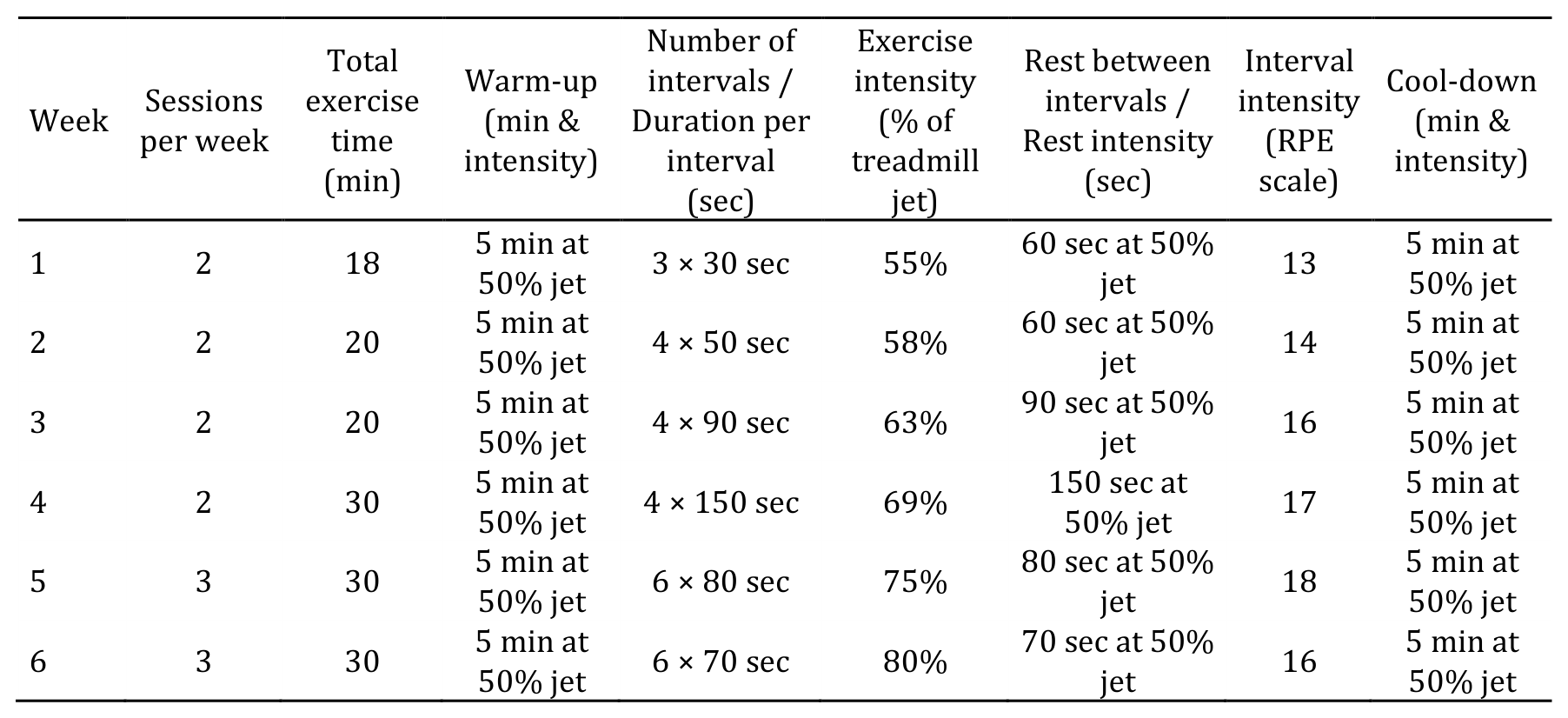
The experimental group completed a six-week interval training program on an aquatic treadmill, while the control group received no intervention. The training protocol was developed based on the findings of Bressel et al. (2014) (25). The training sessions consisted of a 5-minute warm-up at 50% of the participant's maximum speed, followed by a 5-minute cool-down at 50% of the participant's maximum speed. The water depth was adjusted to the same level as the participant's maximum speed during each session. During training sessions, the xiphoid process of the sternum was monitored, and the water temperature was maintained between 28 and 30°C. The specifications of the training protocol are presented in Table 1. All sessions were supervised by an experienced trainer.
Statistical Analysis
Descriptive statistics were presented as mean ± standard deviation. The Shapiro–Wilk test was performed to assess the normality of the collected data. Data distributions were also examined using histograms, and Levene's test was performed to assess the homogeneity of variances between groups. The significance level was set at P ≤ 0.05 for all statistical tests. Data were analyzed using
Table 1. Specifications of the six-week interval training protocol on the aquatic treadmill.
paired-samples t-tests for within-group comparisons and independent-samples t-tests for between-group comparisons. Additionally, difference-in-differences (diff-in-diff) analysis was conducted to examine the interaction effect between groups of the same age. All statistical analyses were performed using SPSS software (version 25).
Results
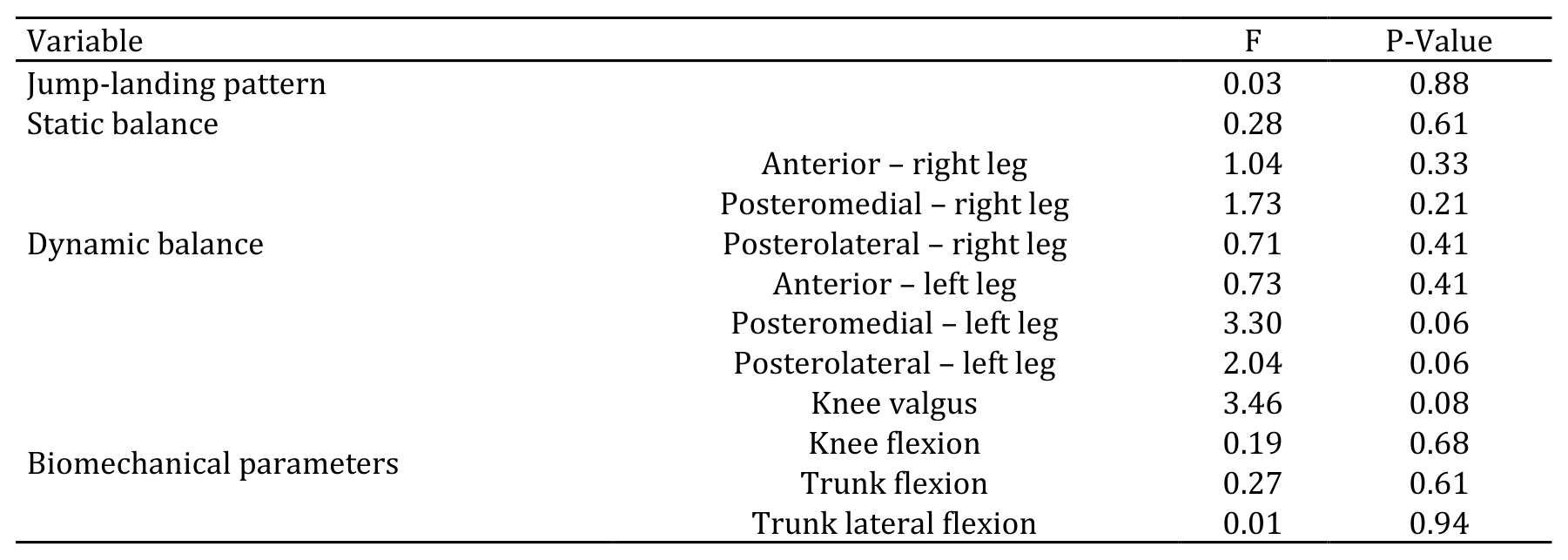
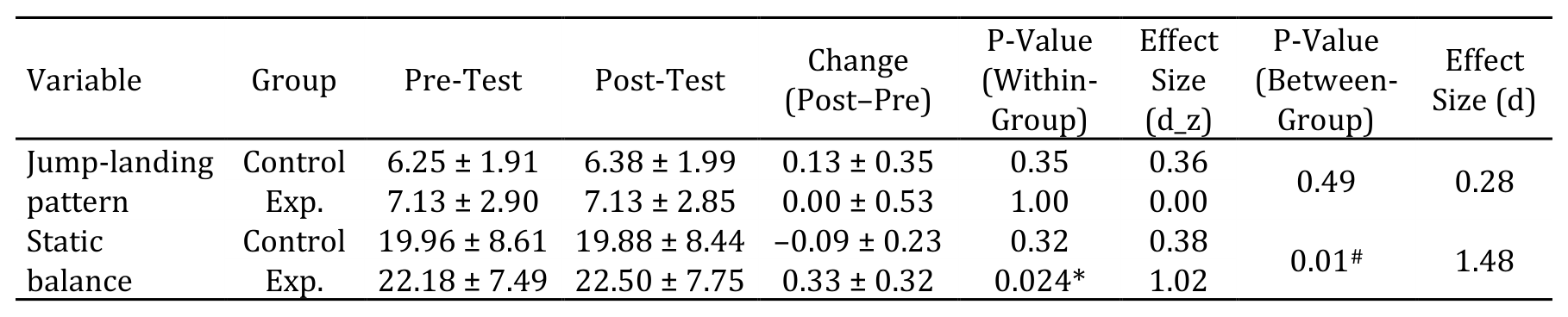
In this study, a total of 16 players aged 18–32 years from the professional futsal team of Aluminum Arak were investigated. The descriptive characteristics of these players are presented in Table 2. The independent-samples t-test indicated no significant differences between the experimental and control groups in terms of age, height, weight, body mass index, or leg length (p > 0.05), indicating that the two groups were comparable at baseline (Table 2). Before conducting the statistical analyses, the data were examined for normality and homogeneity of variances. The Shapiro–Wilk test was used to assess the normality of the data distribution (p > 0.05), and Levene's test (Table 3) was used to assess the homogeneity of variances (p > 0.05). Therefore, parametric tests, including paired-samples t-tests (for within-group comparisons) and independent-samples t-tests (for between-group comparisons and difference-in-differences analysis), were employed. The results of these analyses are presented in Table 4.
For the jump-landing pattern variable, the independent-samples t-test showed no significant differences between the two groups at pretest (p = 0.49), posttest (p = 0.55), or in the magnitude of change (p = 0.59). Additionally, the paired-samples t-test demonstrated that within-group changes from pretest to posttest were not statistically significant in either the control group (p = 0.35) or the experimental group (p = 1.00). Therefore, interval training on an aquatic treadmill had no statistically significant effect on the jump-landing pattern of professional futsal players.
Regarding static balance, the independent-samples t-test showed no significant differences between the two groups at pretest (p = 0.59) or posttest (p = 0.53). However, the difference in changes between the two groups was significant (p = 0.01). The paired-samples t-test also demonstrated that within-group changes were not statistically significant in the control group (p = 0.32), whereas a significant increase was observed in the experimental group (p = 0.024). Therefore, interval training on an aquatic treadmill had a statistically significant effect on static balance in professional futsal players.
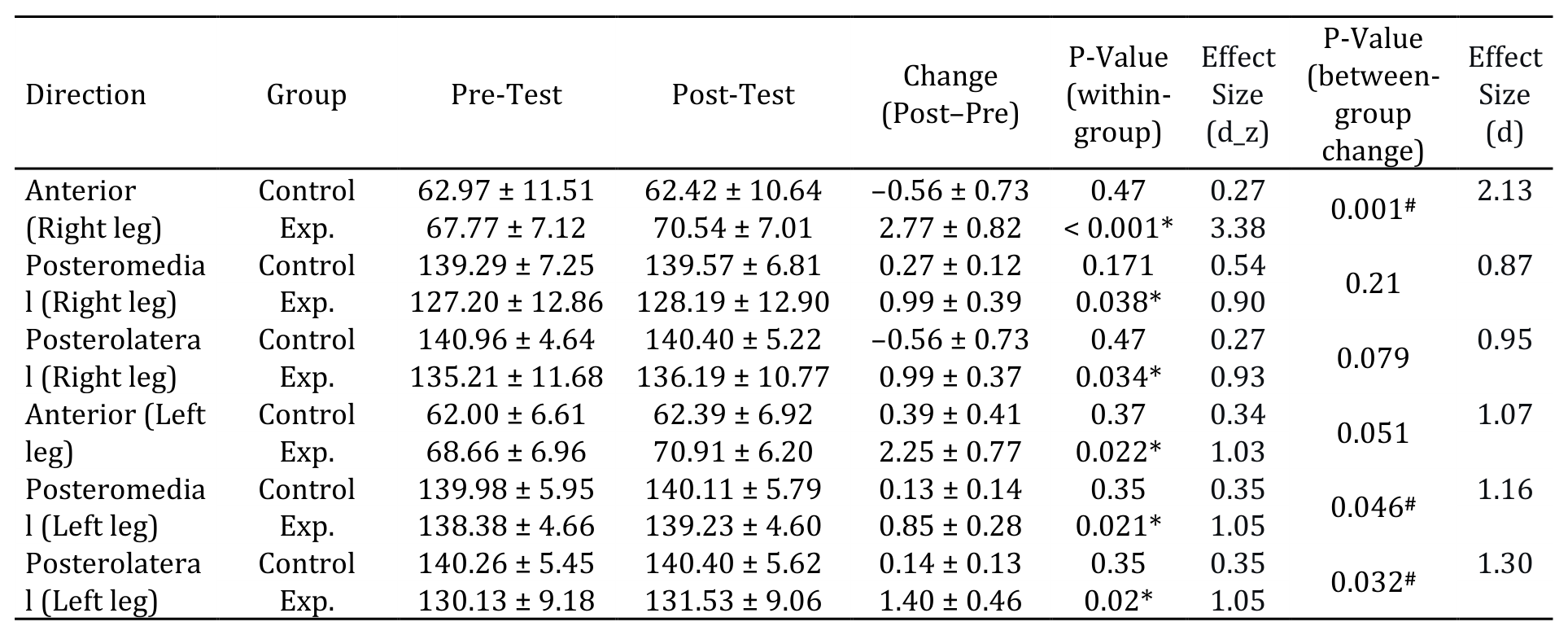
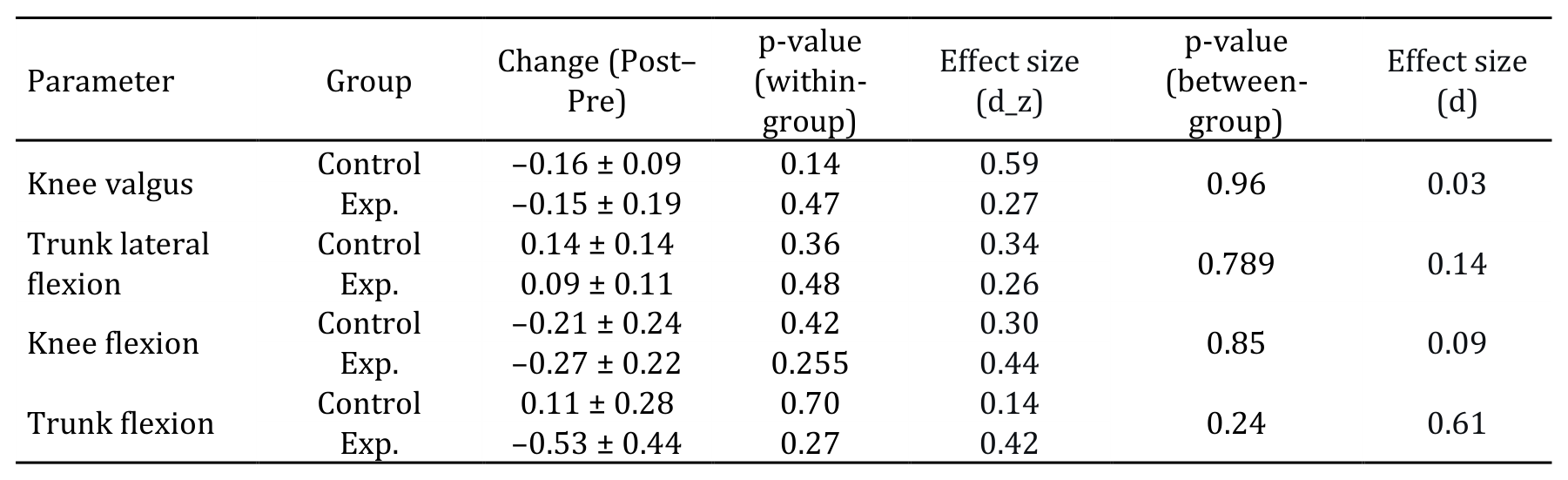
The findings for dynamic balance (YBT) in six directions (three directions for the right leg and three directions for the left leg) are presented in Table 5. The independent-samples t-test showed a significant between-group difference in the change in the anterior direction of the right leg (p = 0.001). Additionally, the paired-samples t-test indicated a significant increase in the experimental group (p < 0.001). For the posteromedial direction of the left leg, the between-group difference in change was also significant (p = 0.046), with the paired-samples t-test revealing a significant increase in the experimental group (p = 0.021). Similarly, for the posterolateral direction of the left leg, the between-group difference in change was significant (p = 0.032), and the paired-samples t-test showed a significant increase in the experimental group (p = 0.02). However, no significant differences were found in the other directions. A summary of the kinematic parameters is presented in Table 6. The results indicated that interval training on an aquatic treadmill did not produce statistically significant changes in jump-landing biomechanics. Neither the overall LESS score nor any of the kinematic parameters (knee valgus, knee flexion, trunk flexion, and trunk lateral flexion)
Table 2. Comparison of demographic characteristics between the two groups (mean ± SD)
Table 3. Levene's test results for control and experimental groups
Table 4. Comparison of jump-landing pattern and static balance between the two groups (mean ± SD)
* Indicates a statistically significant within-group difference. # Indicates a statistically significant between-group difference.
showed significant differences from pretest to posttest. Additionally, no statistically significant within-group changes were observed in either group (p > 0.05).
Discussion
The findings of this study revealed that six weeks of interval training on an aquatic treadmill resulted in significant improvements in static balance and some components of dynamic balance. However, the training did not significantly alter jump-landing patterns or kinematic parameters. These findings suggest that although aquatic training may be a useful approach for enhancing postural control in professional athletes, it may not be sufficient to modify movement patterns associated with ACL injuries. Regarding jump-landing patterns, the results showed that interval training on an aquatic treadmill did not improve LESS scores. This finding contrasts with the results of Safari Bek et al. (2020), who reported that strengthening the hip abductors and external rotators over 6 to 8 weeks could improve landing mechanics (13). It appears that despite the resistance provided by water, the training program did not effectively target the specific muscle groups essential for controlling knee valgus and correcting landing patterns. Moreover, Alimoradi et al. (2021) demonstrated that the 11+ program, which combines strength, plyometric, and balance exercises, improved LESS scores after 16 weeks (30). In contrast, the present study focused exclusively on aerobic interval training in water and did not include corrective or plyometric exercises. Additionally, fatigue induced by the high intensity of training, along with the participants' already high fitness levels, may have contributed to a ceiling effect, potentially explaining the lack of changes in LESS scores (31). Given that the participants were professional athletes, their initial LESS scores were likely relatively low, limiting the potential for further improvement. Conversely, the significant effects of training on both static and dynamic balance are consistent with previous studies. For instance, Sabzi et al. (2022) reported that aquatic treadmill training improved static balance by 62% and dynamic balance by 71% in older women (18). Additionally, Safari et al. (2022) confirmed the
Table 5. Comparison of dynamic balance (YBT) in six directions between the two groups and their comparison from pre-test to post-test within each group (mean ± SD)
* Indicates a statistically significant within-group difference. # Indicates a statistically significant between-group difference.
Table 6. Comparison of kinematic parameters between the two groups (mean ± SD)
benefits of eight weeks of core stability training on both types of balance (12). Similarly, SeyedJafari et al. (2017) and Taheri (2015) reported comparable findings, highlighting the positive effects of aquatic training on balance in older adults (32, 33). From a physiological perspective, three main factors contribute to improvements in balance in water. First, water buoyancy reduces joint loading, allowing individuals to move more freely and enhance proprioception. Second, water viscosity and resistance provide a continuous sensory challenge, stimulating cutaneous and joint receptors and enhancing the processing of proprioceptive information in the central nervous system. Finally, water waves and currents challenge the vestibular system, improving the integration of sensory information and motor responses. Together, these three factors contribute to improved postural control and balance.
Regarding kinematic parameters, the results showed that aquatic treadmill training had no significant effect on any of the four parameters: knee valgus, trunk lateral flexion, knee flexion, and trunk flexion. This finding is consistent with the results of Wang et al. (2010), who demonstrated that cold-water immersion had no effect on landing mechanics (34). Similarly, Bressel et al. (2017) reported that six weeks of aquatic treadmill training did not alter running kinematics on a land-based treadmill (35). These findings suggest that the aquatic environment may not provide sufficient stimulus for retraining land-specific landing movement patterns and that kinematic changes during aquatic training are not necessarily transferred to land-based tasks. In other words, although water buoyancy reduces joint loading and may help improve balance, more task-specific training in a similar environment may be required to modify land-specific landing movement patterns.
On the other hand, Samakoush and Norasteh (2021) showed that neuromuscular training could improve knee valgus, highlighting the important role of the neuromuscular system in controlling this movement (36). It appears that interval training on an aquatic treadmill did not sufficiently enhance neuromuscular performance to produce such changes. Regarding knee flexion, the findings of the present study are inconsistent with those of Fattahi et al. (2018), who reported that eight weeks of core stability training increased knee flexion and reduced anterior shear force (37). This discrepancy may be attributed to differences in the training protocols. Core stability training directly influences trunk and pelvic control, which may alter knee flexion patterns, whereas aquatic treadmill interval training primarily targets cardiorespiratory endurance and overall muscle strength. Additionally, a case study by Maruszewska and Panasiuk (2020) demonstrated that aquatic treadmill training could improve knee range of motion. However, this effect was not observed in the present group study, possibly due to the small sample size and the specific characteristics of case studies (20).
Regarding trunk lateral flexion, the present findings are inconsistent with those of Mohajeran et al. (2017), who reported that neuromuscular training positively affected trunk lateral flexion. The main reason for this discrepancy may be the type of training protocol used, as aquatic treadmill training primarily involves movement in the sagittal plane (forward movement) and does not specifically target the frontal plane (lateral flexion) (38). Conversely, the lack of improvement in trunk flexion is consistent with the findings of Yadollahi et al. (2022), who reported that neuromuscular training did not affect trunk flexion (39). Water buoyancy tends to maintain the body in a more extended position, meaning that individuals do not naturally adopt a trunk-flexed posture during aquatic treadmill training. Consequently, this movement pattern may not improve. Additionally, Rajabi and Mohammadpour (2014) reported a significant relationship between trunk flexion and anterior tibial shear force (40), while Blackburn and Padua (2008, 2009) demonstrated that trunk flexion could reduce ground reaction forces and increase hip and knee flexion (41, 42). However, the lack of an effect of aquatic treadmill training on trunk flexion in the present study may be attributed to water buoyancy and the maintenance of an extended trunk posture.
The present study also had several limitations. The small sample size (16 participants) was one of the main limitations, reflecting the nature of the study and the limited population available from a single professional team. Therefore, the findings should be generalized to other professional futsal players with caution. Additionally, the six-week training period may not have been sufficient to induce stable structural and neuromuscular changes in kinematic parameters. The use of two-dimensional motion analysis was another limitation. Despite these limitations, the findings of this study may provide a basis for future research using more rigorous methodologies.
Conclusion
Six weeks of interval training on an aquatic treadmill improved postural control (static balance and some components of dynamic balance) in professional futsal players. However, this training did not significantly alter jump-landing patterns or the kinematic parameters associated with ACL injury risk (knee valgus, knee flexion, trunk flexion, and trunk lateral flexion). Since landing mechanics are among the main risk factors for ACL injuries, the findings of this study suggest that interval training on an aquatic treadmill alone cannot be recommended as an effective approach to improving these risk factors or preventing ACL injuries in professional futsal players. In other words, this type of training appears to be beneficial for improving postural control but is insufficient to correct landing biomechanics. Given the high incidence of ACL injuries in futsal and the multifactorial nature of these injuries, a more appropriate and effective approach may involve designing combined training programs that integrate aquatic training with neuromuscular, core stability, and plyometric exercises. Future research should investigate this intervention in larger samples, including both sexes, over longer training periods (8–12 weeks), using three-dimensional (3D) motion analysis systems and simultaneous electromyographic measurements of muscle activity. Studies should also include athletes from different sports and assess the long-term effects of the intervention.
Ethical Considerations
Compliance with ethical guidelines
All ethical considerations were fully observed in this study. Participants were informed about the research procedures in detail and provided written consent prior to participation. They were also assured of their right to withdraw from the study at any time without penalty. Furthermore, all personal information was kept strictly confidential and used solely for research purposes. This study was approved by the Ethics Committee of Arak University with the ethical code IR.ARAKU.REC.1402.012.
Funding
This research did not receive any grants from funding agencies in the public, commercial, or non-profit sectors.
Authors' contributions
Safoura Ghasemi: Conceptualization, Methodology, Formal analysis, Supervision, Writing – original draft, Writing – review & editing.
Amirhossein Najimi: Investigation, Project administration, Writing – review & editing.
Masoud Golpaygani: Supervision, Writing – review & editing.
All authors read and approved the final version of the manuscript.
Conflicts of interest
The authors declare no conflicts of interest related to this article.
Type of Study: Research |
Subject:
Special
Received: 2026/08/24 | Accepted: 2026/10/9 | Published: 2026/10/10
Received: 2026/08/24 | Accepted: 2026/10/9 | Published: 2026/10/10
References
1. Feizolahi F, Azarbayjani MA. Comparison of static and dynamic balance in amateur male athletes. Rehabilitation Medicine. 2015;3(4):89-98.
2. Nourizadeh S, Daneshmandi H. Comparison of upper extremity function test and balance between different sports. Scientific Journal of Rehabilitation Medicine. 2017;6(2):110-121.
3. Farhadi H. The relationship between static and dynamic balances and lower extremity injuries in the adolescent athlete. Journal of Research in Rehabilitation Sciences. 2013;8(6):1159-1168.
4. Darvishi S, Majlesi M, Azadian E. Comparative analysis of center of pressure responses during defensive landing in professional and novice volleyball players. Journal of Sport Biomechanics. 2025;11(2):162-174. [DOI:10.61186/JSportBiomech.11.2.162]
5. Shadkanlu Ostad M, Norasteh AA, Babagoltabar Samakoush H. Comparison of static and dynamic balance of athletes of different sports in conditions with and without posture disturbances. Journal of Sport Biomechanics. 2019;4(4):16-27. [DOI:10.32598/biomechanics.4.4.16]
6. Roshandel Hesari A, Roshandel Hesari A. Investigation of static and dynamic balance in school basketball players with a history of ankle injury. Journal of Sport Biomechanics. 2020;6(2):86-97. [DOI:10.32598/biomechanics.6.2.1]
7. Belkhelladi M, Cierson T, Martineau PA. Biomechanical risk factors for increased anterior cruciate ligament loading and injury: a systematic review. Orthopaedic Journal of Sports Medicine. 2025;13(2):23259671241312681. [DOI:10.1177/23259671241312681]
8. Sloma K, Erdman A, Davis A, Loewen A, Ellis H, Wilson P, et al. Kinematic and kinetic risk factors exist bilaterally during the first and second landing of the drop vertical jump in adolescent patients following ACL reconstruction. International Journal of Sports Physical Therapy. 2025;20(10):1436. [DOI:10.26603/001c.144188]
9. Lynch B, Bond C, Noonan B. Knee and trunk biomechanics during a single leg drop vertical jump: the effects of horizontal distance, sex, and limb dominance. Gait & Posture. 2026;128:110190. [DOI:10.1016/j.gaitpost.2026.110190]
10. Miralles-Iborra A, Vera-Garcia FJ, Elvira JL, Del Coso J, Buckthorpe M, Manchón-Davó M, et al. Mechanisms, injury patterns and biomechanical factors of anterior cruciate ligament injuries in football (soccer): a systematic review and meta-analysis of video-analysis studies. Sports Medicine. 2026;56(2):465-480. [DOI:10.1007/s40279-025-02345-9]
11. Hodel S, Imhoff FB, Strutzenberger G, Fitze D, Obrist S, Vlachopoulos L, et al. Greater hip internal rotation range of motion is associated with increased dynamic knee valgus during jump landing, both before and after fatigue. Knee Surgery, Sports Traumatology, Arthroscopy. 2025;33(5):1560-1568. [DOI:10.1002/ksa.12447]
12. Safari H, Fallah Mohammadi M. Investigating the effect of 8-week central stability training program on jump-landing pattern and balance of active students with trunk problems. Journal of Research in Management and Teaching in Marine Sciences. 2022;9(3):145-157.
13. Safari Bak M, Khayambashi K, Esmaeili H, Lenjannejadian S. The effects of isolated hip abductor and external rotator muscles strengthening on concentric and eccentric strength and jump-landing mechanics using Landing Error Scoring System. Journal of Safety Promotion and Injury Prevention. 2020;8(3):139-148.
14. Mokhtari Fard Z, Sabbagh Langeroudi M. The effects of 8 weeks TRX exercises and core stability in the stable level on the landing pattern, the stability of the core area and balance of girls football players. Scientific Journal of Rehabilitation Medicine. 2021;10(3):546-561. [DOI:10.32598/SJRM.10.3.14]
15. Shafiee A, Daneshjoo A, Sahebozamani M. The effect of eight weeks of water training on postural control and balance recovery strategies in 60-70 years old elderly men. Scientific Journal of Rehabilitation Medicine. 2022;10(6):1326-1337. [DOI:10.32598/SJRM.10.6.20]
16. Abbasi H, Akhonda A, Sharifatpour R, Abedinzadeh S, Ayatizadeh F. Comparison of the effect of 8 weeks of training in water and land environment on pain and range of motion of athletes with acute ankle sprain: a semi-experimental study. Journal of Rafsanjan University of Medical Sciences. 2023;22(1):65-78. [DOI:10.52547/jrums.22.1.65]
17. Vermeulen S, De Bleecker C, Spanhove V, Segers V, Willems T, Roosen P, et al. The effect of fatigue on spike jump biomechanics in view of patellar tendon loading in volleyball. Scandinavian Journal of Medicine & Science in Sports. 2023;33(11):2208-2218. [DOI:10.1111/sms.14458]
18. Sabzi AH, Gholami A, Naeimikia M, Rouzbahani M. The effect of underwater treadmill training on static balance, dynamic balance, and cognitive ability of sedentary elderly women. Middle Eastern Journal of Disability Studies. 2022;12:2.
19. Donoghue OA, Shimojo H, Takagi H. Impact forces of plyometric exercises performed on land and in water. Sports Health. 2011;3(3):303-309. [DOI:10.1177/1941738111403872]
20. Maruszewska A, Panasiuk L. Water treadmill therapy after reconstruction of the anterior cruciate ligament ACL: case report. Acta Balneologica. 2020;160(2):99. [DOI:10.36740/ABal202002105]
21. Hoskin K, Dodd K, Chan SP, Rosengarten S, Heywood S. Aquatic exercise compared to contrast therapy with shallow water treadmill running to assist recovery in elite Australian rules footballers. International Journal of Aquatic Research and Education. 2013;7(4):5. [DOI:10.25035/ijare.07.04.05]
22. Lee ME, Jo GY, Do HK, Choi HE, Kim WJ. Efficacy of aquatic treadmill training on gait symmetry and balance in subacute stroke patients. Annals of Rehabilitation Medicine. 2017;41(3):376. [DOI:10.5535/arm.2017.41.3.376]
23. Lee SY, Im SH, Kim BR, Han EY. The effects of a motorized aquatic treadmill exercise program on muscle strength, cardiorespiratory fitness, and clinical function in subacute stroke patients: a randomized controlled pilot trial. American Journal of Physical Medicine & Rehabilitation. 2018;97(8):533-540. [DOI:10.1097/PHM.0000000000000920]
24. Sabzi AH, Dana A, Salehian MH, Shaygan Yekta H. The effect of water treadmill exercise on children with attention deficit hyperactivity disorder. International Journal of Pediatrics. 2021;9(6):13671-13681.
25. Bressel E, Wing JE, Miller AI, Dolny DG. High-intensity interval training on an aquatic treadmill in adults with osteoarthritis: effect on pain, balance, function, and mobility. Journal of Strength and Conditioning Research. 2014;28(8):2088-2096. [DOI:10.1519/JSC.0000000000000258]
26. Padua DA, Marshall SW, Boling MC, Thigpen CA, Garrett WE Jr, Beutler AI. The Landing Error Scoring System (LESS) is a valid and reliable clinical assessment tool of jump-landing biomechanics: the JUMP-ACL study. The American Journal of Sports Medicine. 2009;37(10):1996-2002. [DOI:10.1177/0363546509343200]
27. Duquette AM, Senia M, van Wyk PM, Baker J, Paquin KC, Horton S. Re-examining the relationship between measures of static and dynamic balance among young adults. Current Issues in Sport Science. 2022;8(1). [DOI:10.36950/2022ciss012]
28. Plisky P, Schwartkopf-Phifer K, Huebner B, Garner MB, Bullock G. Systematic review and meta-analysis of the Y-Balance Test lower quarter: reliability, discriminant validity, and predictive validity. International Journal of Sports Physical Therapy. 2021;16(5):1190. [DOI:10.26603/001c.27634]
29. Hoffman M, Schrader J, Applegate T, Koceja D. Unilateral postural control of the functionally dominant and nondominant extremities of healthy subjects. Journal of Athletic Training. 1998;33(4):319.
30. Alimoradi M, Sahebazamini M, Bigtashkhani R. The effect of +11 injury prevention program on the jumping-landing error in female amateur soccer players. Research in Sport Medicine and Technology. 2021;19:91-102.
31. Parsa A, Daneshmandi H, Majelan AS. The ground reaction force in jump-landing maneuver after soccer specific fatigue protocol (SAFT90) in elite soccer players. Medical Journal of Tabriz University of Medical Sciences. 2017;39(2):19-26.
32. Seyedjafari E, Sahebozamani M, Ebrahimipour E. Effect of eight weeks of water exercises on deep part of the pool on the static balance of the elderly man. Iranian Journal of Ageing. 2017;12(3):384-393. [DOI:10.21859/sija.12.3.384]
33. Taheri MO. Effect of hydrotherapy on lower body strength and balance among elderly women. Journal of Physical Education Research. 2015;2(4):19-26.
34. Wang H, Toner MM, Lemonda TJ, Zohar M. Changes in landing mechanics after cold-water immersion. Research Quarterly for Exercise and Sport. 2010;81(2):127-132. [DOI:10.1080/02701367.2010.10599659]
35. Bressel E, Louder TJ, Hoover JP, Roberts LC, Dolny DG. Acute and chronic effects of aquatic treadmill training on land treadmill running kinematics: a cross-over and single-subject design approach. Journal of Sports Sciences. 2017;35(21):2105-2113. [DOI:10.1080/02640414.2016.1256493]
36. Samakoush HB, Norasteh A. The effect and persistence of neuromuscular correction program on landing position, static and dynamic balance of athletes with dynamic knee valgus defects. Rehabilitation Medicine. 2021;8(1):45-57.
37. Fatahi F, Ghasemi GA, Karimi MT, Beyranvand R. Can eight weeks of stabilization exercise change the amount of knee flexion and anterior shear force. Journal of Clinical and Analytical Medicine. 2018;9(3):203-208.
38. Mohajeran ES, Khoshraftar Yazdi N, Mohammadi MR. The effect of eight weeks of training on core stability and proprioceptive neuromuscular trunk women basketball elite. Journal of Research in Sport Rehabilitation. 2017;5(9):67-74.
39. Yadollahi A, Zarei M, Gheiitasi M. The effect of eight weeks reactive neuromuscular training on lower extremity kinematics during landing in female basketball players. Studies in Sport Medicine. 2022;14(33):59-80.
40. Rajabi R, Mohammadpour S. The relationship of kinematics of trunk and knee in sagittal plane with anterior tibia shear force during single leg landing. Scientific Journal of Kurdistan University of Medical Sciences. 2014;19(2):47-56.
41. Blackburn JT, Padua DA. Influence of trunk flexion on hip and knee joint kinematics during a controlled drop landing. Clinical Biomechanics. 2008;23(3):313-319. [DOI:10.1016/j.clinbiomech.2007.10.003]
42. Blackburn JT, Padua DA. Sagittal-plane trunk position, landing forces, and quadriceps electromyographic activity. Journal of Athletic Training. 2009;44(2):174-179. [DOI:10.4085/1062-6050-44.2.174]
| Rights and permissions | |
 |
This work is licensed under a Creative Commons Attribution-NonCommercial 4.0 International License. |

Journal of Sport Biomechanics
Department of Sport Biomechanics, Faculty of Humanities, Islamic Azad University, Hamedan Branch, Prof. Mousivand Blvd, Imam Khomeini Blvd, Hamedan, Iran.
Journal Tel: +98 81 34494042
Website: http://biomechanics.iauh.ac.ir
Email: sportbiomechanics@iauh.ac.ir
