

Volume 12, Issue 3 (11-2026)
J Sport Biomech 2026, 12(3): 484-505 |
Back to browse issues page




Download citation:
BibTeX | RIS | EndNote | Medlars | ProCite | Reference Manager | RefWorks
Send citation to:


BibTeX | RIS | EndNote | Medlars | ProCite | Reference Manager | RefWorks
Send citation to:
Elhamipour A, Yousefian Molla R, Fatahi A. Relationships Between Selected Components of Physical Fitness and Skill Performance in Adolescent Female Taekwondo Athletes: A Cross-Sectional Study. J Sport Biomech 2026; 12 (3) :484-505
URL: http://biomechanics.iauh.ac.ir/article-1-510-en.html
URL: http://biomechanics.iauh.ac.ir/article-1-510-en.html


1- Department of Physical Education and Sport Sciences, CT.C., Islamic Azad University, Tehran, Iran.
Full-Text [PDF 1841 kb]
(277 Downloads)
| Abstract (HTML) (1043 Views)
Full-Text: (352 Views)
1. Introduction
Taekwondo, as an Olympic combat sport, is inherently multidimensional, and success in this discipline depends on the coordinated interaction of various physical fitness components and technical–motor skills (1, 2). Effective execution of taekwondo techniques, particularly under competitive conditions, requires high levels of explosive power, rapid reaction time, movement accuracy, balance, and flexibility. These attributes enable athletes to make rapid decisions and execute effective techniques within extremely short time frames (3, 4). Consequently, performance in taekwondo depends not only on technical proficiency acquired through training but also on the development of the underlying physical capacities that support optimal performance (5, 6).
Previous research has demonstrated that physical fitness components play a crucial role in predicting skill performance and competitive success in combat sports (5). In taekwondo, sport-specific training has been shown to improve anaerobic capacity, lower-limb explosive power, flexibility, and motor control (4, 7). Furthermore, the application of specialized assessment tools, such as the Frequency Speed of Kick Test (FSKT-10s) for evaluating kicking speed, together with balance and vertical jump tests, has enabled more accurate assessment of performance characteristics that reflect the physiological and technical demands of competition (8). Previous studies have also reported that athletes with greater explosive power and faster reaction times tend to demonstrate superior performance in offensive techniques, kicking speed, and combined technical skills, suggesting that these characteristics contribute to competitive success in taekwondo (7, 8). In addition, performance in taekwondo-specific tests such as the FSKT has been associated with overall physical fitness and the quality of technical skill execution (9). Nevertheless, much of the existing literature has focused primarily on general fitness characteristics or isolated aspects of muscular performance among taekwondo athletes (4).
Evidence further suggests that physical characteristics and skill performance may be influenced by age, sex, and biological maturation (1, 10). Despite the increasing participation of adolescent girls in competitive taekwondo, relatively few studies have examined the relationships between physical fitness components and skill performance in this population (9, 11). Existing investigations have primarily focused on adult or male athletes (4) or have examined only a single physical or skill-related characteristic in isolation (9). For example, some studies have investigated only kicking speed or explosive power (12), whereas relatively few have simultaneously evaluated multiple physical fitness components alongside different indicators of skill performance in adolescent female taekwondo athletes (1). Consequently, it remains unclear how physical attributes such as flexibility, explosive power, reaction time, and balance collectively relate to skill performance indicators, including kicking speed, punching power, and combined technical skill performance, in adolescent female taekwondo athletes. Adolescence is a critical developmental period characterized by rapid changes in neuromuscular coordination, muscular strength, flexibility, and motor control, all of which can substantially influence athletic performance (9). In adolescent female athletes, these developmental processes may differ from those observed in males, potentially influencing the relationships between physical fitness characteristics and skill performance (10).
The importance of addressing this knowledge gap becomes even more evident when considering the demands of modern taekwondo competition, where rapid execution of techniques and the ability to combine technical actions effectively under competitive pressure are key determinants of success (3, 13). Combined technical skills require precise coordination of speed, accuracy, and motor responsiveness and are particularly important during adolescence, as they contribute substantially to athletic development and progression to higher levels of competition (10). Therefore, identifying the physical fitness components associated with these skills may provide a valuable scientific basis for the development of evidence-based training programs. Accordingly, the present study aimed to investigate the relationships between selected physical fitness components, including flexibility, explosive power, reaction time, and balance, and taekwondo-specific skill performance indicators, namely kicking speed, punching power, and combined skill performance, in adolescent female athletes. It was hypothesized that physical fitness components, particularly flexibility, explosive power, and reaction time, would be significantly associated with kicking speed, punching power, and combined skill performance. Furthermore, athletes with higher levels of physical fitness were expected to demonstrate superior performance in taekwondo-specific skill assessments.
2. Methods
2.1. Participants
This applied study employed a quantitative approach using a cross-sectional correlational design. The primary objective was to examine the relationships between selected physical fitness components and skill performance indicators in adolescent female taekwondo athletes. Given the observational nature of the study, the findings were limited to identifying statistical associations, and no causal inferences were made. The target population consisted of female taekwondo athletes from the eastern region of Tehran Province, Iran, aged 14–18 years, with 3–5 years of regular taekwondo training experience. Participants were recruited using a non-probability convenience sampling method to obtain a relatively homogeneous sample suitable for correlation analysis. A total of 31 athletes voluntarily participated in the study. To enhance internal validity and minimize potential confounding factors, participants were required to meet the following inclusion criteria: (a) female sex; (b) age between 14 and 18 years; (c) regular taekwondo training of at least three sessions per week; (d) no musculoskeletal injury during the preceding six months; (e) no injuries or medical conditions that, according to self-report and coach confirmation, could interfere with performance testing or full participation in training; (f) no use of medications or supplements known to affect neuromuscular performance or physical capacity, including stimulants, creatine, or pharmacological agents influencing physiological responses related to sport performance; and (g) no participation in other organized competitive sports. To reduce the potential influence of biological maturation, participants were recruited from a relatively homogeneous age group with comparable training backgrounds. Participants were excluded if they missed more than two testing sessions, sustained an injury during the study period, or failed to comply with the testing procedures. These criteria ensured a homogeneous and reliable sample for examining the relationships among the study variables. Ethical approval was obtained from the relevant institutional ethics committee (Ethics Code: IR.IAU.CTB.REC.1404.196). Before participation, all study procedures, objectives, and potential risks were fully explained to both participants and their parents or legal guardians. Written informed consent was obtained from all participants, and confidentiality of all collected data was ensured throughout the study.
2.2. Procedures
All assessments were conducted under standardized conditions in an indoor training facility with an ambient temperature of 22–24°C, normal environmental humidity, and a standard foam-covered taekwondo training surface. Testing sessions were performed between 4:00 and 6:00 PM to minimize potential circadian influences on performance. Before testing, all participants completed a standardized warm-up consisting of 10 minutes of light jogging and dynamic stretching, followed by 5 minutes of taekwondo-specific activities, including basic kicking techniques and sport-specific movement patterns. Recovery intervals of 3–5 minutes were provided between tests to minimize fatigue. All assessments were administered by two experienced taekwondo coaches and one specialist in physical education and sports biomechanics to ensure procedural consistency and minimize measurement error.
2.3. Physical Fitness Assessments
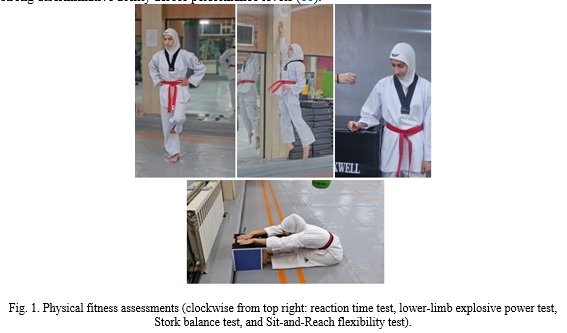
The physical fitness components assessed in this study included reaction time, flexibility, explosive power, and static balance (Fig. 1).
Taekwondo, as an Olympic combat sport, is inherently multidimensional, and success in this discipline depends on the coordinated interaction of various physical fitness components and technical–motor skills (1, 2). Effective execution of taekwondo techniques, particularly under competitive conditions, requires high levels of explosive power, rapid reaction time, movement accuracy, balance, and flexibility. These attributes enable athletes to make rapid decisions and execute effective techniques within extremely short time frames (3, 4). Consequently, performance in taekwondo depends not only on technical proficiency acquired through training but also on the development of the underlying physical capacities that support optimal performance (5, 6).
Previous research has demonstrated that physical fitness components play a crucial role in predicting skill performance and competitive success in combat sports (5). In taekwondo, sport-specific training has been shown to improve anaerobic capacity, lower-limb explosive power, flexibility, and motor control (4, 7). Furthermore, the application of specialized assessment tools, such as the Frequency Speed of Kick Test (FSKT-10s) for evaluating kicking speed, together with balance and vertical jump tests, has enabled more accurate assessment of performance characteristics that reflect the physiological and technical demands of competition (8). Previous studies have also reported that athletes with greater explosive power and faster reaction times tend to demonstrate superior performance in offensive techniques, kicking speed, and combined technical skills, suggesting that these characteristics contribute to competitive success in taekwondo (7, 8). In addition, performance in taekwondo-specific tests such as the FSKT has been associated with overall physical fitness and the quality of technical skill execution (9). Nevertheless, much of the existing literature has focused primarily on general fitness characteristics or isolated aspects of muscular performance among taekwondo athletes (4).
Evidence further suggests that physical characteristics and skill performance may be influenced by age, sex, and biological maturation (1, 10). Despite the increasing participation of adolescent girls in competitive taekwondo, relatively few studies have examined the relationships between physical fitness components and skill performance in this population (9, 11). Existing investigations have primarily focused on adult or male athletes (4) or have examined only a single physical or skill-related characteristic in isolation (9). For example, some studies have investigated only kicking speed or explosive power (12), whereas relatively few have simultaneously evaluated multiple physical fitness components alongside different indicators of skill performance in adolescent female taekwondo athletes (1). Consequently, it remains unclear how physical attributes such as flexibility, explosive power, reaction time, and balance collectively relate to skill performance indicators, including kicking speed, punching power, and combined technical skill performance, in adolescent female taekwondo athletes. Adolescence is a critical developmental period characterized by rapid changes in neuromuscular coordination, muscular strength, flexibility, and motor control, all of which can substantially influence athletic performance (9). In adolescent female athletes, these developmental processes may differ from those observed in males, potentially influencing the relationships between physical fitness characteristics and skill performance (10).
The importance of addressing this knowledge gap becomes even more evident when considering the demands of modern taekwondo competition, where rapid execution of techniques and the ability to combine technical actions effectively under competitive pressure are key determinants of success (3, 13). Combined technical skills require precise coordination of speed, accuracy, and motor responsiveness and are particularly important during adolescence, as they contribute substantially to athletic development and progression to higher levels of competition (10). Therefore, identifying the physical fitness components associated with these skills may provide a valuable scientific basis for the development of evidence-based training programs. Accordingly, the present study aimed to investigate the relationships between selected physical fitness components, including flexibility, explosive power, reaction time, and balance, and taekwondo-specific skill performance indicators, namely kicking speed, punching power, and combined skill performance, in adolescent female athletes. It was hypothesized that physical fitness components, particularly flexibility, explosive power, and reaction time, would be significantly associated with kicking speed, punching power, and combined skill performance. Furthermore, athletes with higher levels of physical fitness were expected to demonstrate superior performance in taekwondo-specific skill assessments.
2. Methods
2.1. Participants
This applied study employed a quantitative approach using a cross-sectional correlational design. The primary objective was to examine the relationships between selected physical fitness components and skill performance indicators in adolescent female taekwondo athletes. Given the observational nature of the study, the findings were limited to identifying statistical associations, and no causal inferences were made. The target population consisted of female taekwondo athletes from the eastern region of Tehran Province, Iran, aged 14–18 years, with 3–5 years of regular taekwondo training experience. Participants were recruited using a non-probability convenience sampling method to obtain a relatively homogeneous sample suitable for correlation analysis. A total of 31 athletes voluntarily participated in the study. To enhance internal validity and minimize potential confounding factors, participants were required to meet the following inclusion criteria: (a) female sex; (b) age between 14 and 18 years; (c) regular taekwondo training of at least three sessions per week; (d) no musculoskeletal injury during the preceding six months; (e) no injuries or medical conditions that, according to self-report and coach confirmation, could interfere with performance testing or full participation in training; (f) no use of medications or supplements known to affect neuromuscular performance or physical capacity, including stimulants, creatine, or pharmacological agents influencing physiological responses related to sport performance; and (g) no participation in other organized competitive sports. To reduce the potential influence of biological maturation, participants were recruited from a relatively homogeneous age group with comparable training backgrounds. Participants were excluded if they missed more than two testing sessions, sustained an injury during the study period, or failed to comply with the testing procedures. These criteria ensured a homogeneous and reliable sample for examining the relationships among the study variables. Ethical approval was obtained from the relevant institutional ethics committee (Ethics Code: IR.IAU.CTB.REC.1404.196). Before participation, all study procedures, objectives, and potential risks were fully explained to both participants and their parents or legal guardians. Written informed consent was obtained from all participants, and confidentiality of all collected data was ensured throughout the study.
2.2. Procedures
All assessments were conducted under standardized conditions in an indoor training facility with an ambient temperature of 22–24°C, normal environmental humidity, and a standard foam-covered taekwondo training surface. Testing sessions were performed between 4:00 and 6:00 PM to minimize potential circadian influences on performance. Before testing, all participants completed a standardized warm-up consisting of 10 minutes of light jogging and dynamic stretching, followed by 5 minutes of taekwondo-specific activities, including basic kicking techniques and sport-specific movement patterns. Recovery intervals of 3–5 minutes were provided between tests to minimize fatigue. All assessments were administered by two experienced taekwondo coaches and one specialist in physical education and sports biomechanics to ensure procedural consistency and minimize measurement error.
2.3. Physical Fitness Assessments
The physical fitness components assessed in this study included reaction time, flexibility, explosive power, and static balance (Fig. 1).
2.3.1. Reaction Time
Reaction time was assessed using the Nelson Ruler Drop Test. During the test, a ruler was suspended vertically between the participant's thumb and index finger and released without warning. Participants were instructed to catch the ruler as quickly as possible. The distance fallen by the ruler was recorded, and reaction time was calculated using the following equation:
t = √(2d/g)
where t represents reaction time (s), d is the distance fallen (m), and g is gravitational acceleration (9.8 m·s⁻²). Three trials were performed, and the best performance was retained for analysis. Previous studies have reported moderate-to-high reliability (ICC = 0.60–0.85) and acceptable construct validity for this test (14).
2.3.2. Flexibility
Flexibility was assessed using the Sit-and-Reach Test. Participants sat on the floor with their knees fully extended and reached forward with both hands placed one over the other. The maximum distance reached on the measuring box was recorded. Three trials were performed, and the highest value was retained for analysis. This test has demonstrated moderate criterion validity (r = 0.46–0.67) and good reliability (ICC ≈ 0.88) in athletic populations (15).
2.3.3. Explosive Power
Lower-limb explosive power was assessed using the Sargent Vertical Jump Test. Standing reach height and maximum jump reach height were measured, and the difference between these values was recorded as vertical jump performance. Participants completed three maximal attempts, and the best score was retained for analysis. Previous research has demonstrated excellent reliability for this test (ICC ≈ 0.90) (16).
2.3.4. Balance
Static balance was assessed using the Stork Balance Test. Participants stood on the forefoot of one leg while placing the opposite foot against the supporting knee. The duration for which balance could be maintained was recorded. Two trials were completed for each leg, and the best performance was retained as the final score. Previous studies have reported good reliability (ICC ≥ 0.82) and acceptable validity for this assessment (17).
2.4. Skill Performance Assessments
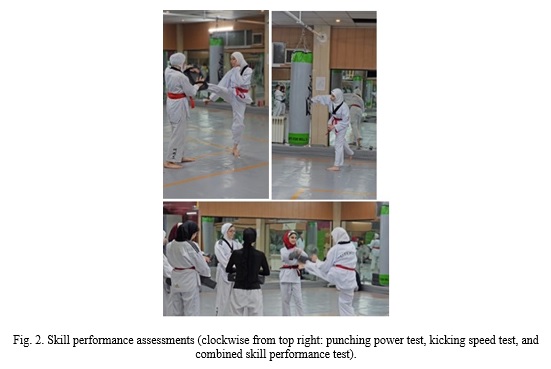
Skill performance indicators included kicking speed, punching power, and combined skill performance (Fig. 2).
Reaction time was assessed using the Nelson Ruler Drop Test. During the test, a ruler was suspended vertically between the participant's thumb and index finger and released without warning. Participants were instructed to catch the ruler as quickly as possible. The distance fallen by the ruler was recorded, and reaction time was calculated using the following equation:
t = √(2d/g)
where t represents reaction time (s), d is the distance fallen (m), and g is gravitational acceleration (9.8 m·s⁻²). Three trials were performed, and the best performance was retained for analysis. Previous studies have reported moderate-to-high reliability (ICC = 0.60–0.85) and acceptable construct validity for this test (14).
2.3.2. Flexibility
Flexibility was assessed using the Sit-and-Reach Test. Participants sat on the floor with their knees fully extended and reached forward with both hands placed one over the other. The maximum distance reached on the measuring box was recorded. Three trials were performed, and the highest value was retained for analysis. This test has demonstrated moderate criterion validity (r = 0.46–0.67) and good reliability (ICC ≈ 0.88) in athletic populations (15).
2.3.3. Explosive Power
Lower-limb explosive power was assessed using the Sargent Vertical Jump Test. Standing reach height and maximum jump reach height were measured, and the difference between these values was recorded as vertical jump performance. Participants completed three maximal attempts, and the best score was retained for analysis. Previous research has demonstrated excellent reliability for this test (ICC ≈ 0.90) (16).
2.3.4. Balance
Static balance was assessed using the Stork Balance Test. Participants stood on the forefoot of one leg while placing the opposite foot against the supporting knee. The duration for which balance could be maintained was recorded. Two trials were completed for each leg, and the best performance was retained as the final score. Previous studies have reported good reliability (ICC ≥ 0.82) and acceptable validity for this assessment (17).
2.4. Skill Performance Assessments
Skill performance indicators included kicking speed, punching power, and combined skill performance (Fig. 2).
2.4.1. Kicking Speed
Kicking speed was assessed using the Frequency Speed of Kick Test (FSKT-10s). Participants performed repeated Ap Dollyo Chagi (roundhouse kicks) with their dominant leg against a handheld target (mitt) for 10 seconds. The target was positioned at trunk level and maintained at a constant height throughout testing. To prevent participants from intentionally reducing kicking force to increase kicking frequency, they were instructed to execute all kicks with an intensity comparable to that used during competition. Only kicks judged by the supervising coach to have acceptable technical quality and effective contact were counted. Two trials were performed with sufficient recovery between attempts, and the best score was retained for analysis. The FSKT-10s has demonstrated excellent reliability (ICC ≈ 0.95), low measurement error, and strong discriminative ability across performance levels (18).
2.4.2. Punching Power
Punching power was assessed using a straight punch delivered to a boxing bag while wearing standard taekwondo gloves. The punching target consisted of a cylindrical leather heavy bag weighing approximately 30 kg and suspended securely from the ceiling. The displacement of the lower edge of the bag following impact was measured with a calibrated measuring tape and recorded in centimeters. Participants completed three maximal attempts, and the greatest displacement was used as the indicator of punching power. This method has demonstrated acceptable reliability (ICC ≈ 0.80) (19).
2.4.3. Combined Skill Performance
Combined skill performance was evaluated using a sport-specific agility and kicking task. Participants completed a zigzag course of approximately 6 m by running between four obstacles positioned 1.5 m apart. Upon reaching the end of the course, participants performed Ap Dollyo Chagi kicks with their dominant leg against two targets positioned approximately 1 m apart at trunk height. This test simultaneously assessed agility, neuromuscular coordination, movement speed, and the ability to execute accurate kicking techniques following rapid changes of direction. Two trials were performed, and the fastest completion time was retained for analysis. Previous studies have reported good reliability for this assessment (ICC ≈ 0.84) (20).
2.5. Statistical Analysis
All statistical analyses were performed using IBM SPSS Statistics version 26. Descriptive statistics are presented as mean ± standard deviation (SD). Data normality was assessed using the Shapiro–Wilk test. Relationships between physical fitness components and skill performance indicators were analyzed using Pearson's product–moment correlation coefficient. Statistical significance was established at p < 0.05.
3. Results
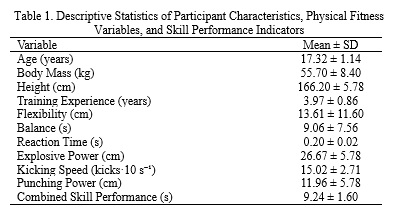
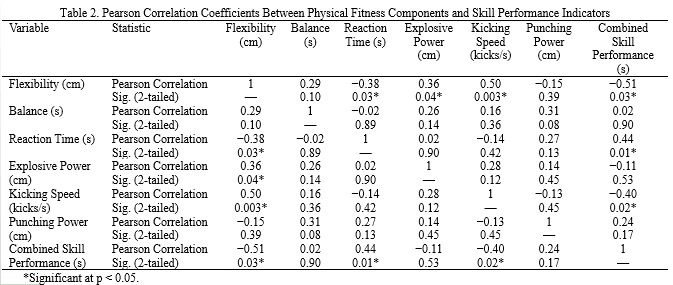
Descriptive statistics for participant characteristics, physical fitness variables, and skill performance indicators are presented in Table 1. Pearson’s correlation analysis revealed several significant associations between physical fitness components and skill performance indicators (Table 2). Flexibility demonstrated significant relationships with reaction time, explosive power, kicking speed, and combined skill performance. Specifically, greater flexibility was associated with shorter reaction times (r = −0.38, p = 0.03), indicating faster neuromuscular responsiveness. Furthermore, flexibility was positively correlated with explosive power (r = 0.36, p = 0.04) and kicking speed (r = 0.50, p = 0.003), suggesting that athletes with greater flexibility tended to exhibit superior lower-limb power and higher kicking frequency. A significant negative correlation was observed between flexibility and combined skill performance time (r = −0.51, p = 0.03), indicating that athletes with greater flexibility completed the combined skill task more rapidly and therefore achieved better performance. In addition, reaction time was positively associated with combined skill performance time (r = 0.44, p = 0.01), indicating that slower reaction times were related to poorer performance outcomes. Similarly, kicking speed was significantly associated with combined skill performance (r = −0.40, p = 0.02), suggesting that athletes capable of producing a higher kicking frequency completed the combined skill task in less time. No statistically significant relationships were observed between balance and any of the skill performance variables. Likewise, punching power was not significantly correlated with flexibility, reaction time, explosive power, kicking speed, or combined skill performance (all p > 0.05).
Kicking speed was assessed using the Frequency Speed of Kick Test (FSKT-10s). Participants performed repeated Ap Dollyo Chagi (roundhouse kicks) with their dominant leg against a handheld target (mitt) for 10 seconds. The target was positioned at trunk level and maintained at a constant height throughout testing. To prevent participants from intentionally reducing kicking force to increase kicking frequency, they were instructed to execute all kicks with an intensity comparable to that used during competition. Only kicks judged by the supervising coach to have acceptable technical quality and effective contact were counted. Two trials were performed with sufficient recovery between attempts, and the best score was retained for analysis. The FSKT-10s has demonstrated excellent reliability (ICC ≈ 0.95), low measurement error, and strong discriminative ability across performance levels (18).
2.4.2. Punching Power
Punching power was assessed using a straight punch delivered to a boxing bag while wearing standard taekwondo gloves. The punching target consisted of a cylindrical leather heavy bag weighing approximately 30 kg and suspended securely from the ceiling. The displacement of the lower edge of the bag following impact was measured with a calibrated measuring tape and recorded in centimeters. Participants completed three maximal attempts, and the greatest displacement was used as the indicator of punching power. This method has demonstrated acceptable reliability (ICC ≈ 0.80) (19).
2.4.3. Combined Skill Performance
Combined skill performance was evaluated using a sport-specific agility and kicking task. Participants completed a zigzag course of approximately 6 m by running between four obstacles positioned 1.5 m apart. Upon reaching the end of the course, participants performed Ap Dollyo Chagi kicks with their dominant leg against two targets positioned approximately 1 m apart at trunk height. This test simultaneously assessed agility, neuromuscular coordination, movement speed, and the ability to execute accurate kicking techniques following rapid changes of direction. Two trials were performed, and the fastest completion time was retained for analysis. Previous studies have reported good reliability for this assessment (ICC ≈ 0.84) (20).
2.5. Statistical Analysis
All statistical analyses were performed using IBM SPSS Statistics version 26. Descriptive statistics are presented as mean ± standard deviation (SD). Data normality was assessed using the Shapiro–Wilk test. Relationships between physical fitness components and skill performance indicators were analyzed using Pearson's product–moment correlation coefficient. Statistical significance was established at p < 0.05.
3. Results
Descriptive statistics for participant characteristics, physical fitness variables, and skill performance indicators are presented in Table 1. Pearson’s correlation analysis revealed several significant associations between physical fitness components and skill performance indicators (Table 2). Flexibility demonstrated significant relationships with reaction time, explosive power, kicking speed, and combined skill performance. Specifically, greater flexibility was associated with shorter reaction times (r = −0.38, p = 0.03), indicating faster neuromuscular responsiveness. Furthermore, flexibility was positively correlated with explosive power (r = 0.36, p = 0.04) and kicking speed (r = 0.50, p = 0.003), suggesting that athletes with greater flexibility tended to exhibit superior lower-limb power and higher kicking frequency. A significant negative correlation was observed between flexibility and combined skill performance time (r = −0.51, p = 0.03), indicating that athletes with greater flexibility completed the combined skill task more rapidly and therefore achieved better performance. In addition, reaction time was positively associated with combined skill performance time (r = 0.44, p = 0.01), indicating that slower reaction times were related to poorer performance outcomes. Similarly, kicking speed was significantly associated with combined skill performance (r = −0.40, p = 0.02), suggesting that athletes capable of producing a higher kicking frequency completed the combined skill task in less time. No statistically significant relationships were observed between balance and any of the skill performance variables. Likewise, punching power was not significantly correlated with flexibility, reaction time, explosive power, kicking speed, or combined skill performance (all p > 0.05).
4. Discussion
The present study examined the relationships between selected physical fitness components and skill performance indicators in adolescent female taekwondo athletes. The findings demonstrated that flexibility and reaction time were significantly associated with skill performance. Specifically, greater flexibility was associated with better kicking speed and superior combined skill performance, suggesting that athletes with higher levels of flexibility performed more effectively in both kicking tasks and complex technical movements.
In addition, faster reaction times were significantly associated with better combined skill performance, highlighting the importance of rapid neuromuscular responsiveness during the execution of integrated taekwondo techniques. Furthermore, kicking speed was negatively correlated with combined skill performance time, indicating that athletes capable of executing kicks at a higher frequency were also able to complete complex technical tasks more efficiently. In contrast, static balance, explosive power, and punching power were not significantly associated with most of the evaluated skill performance indicators. Overall, these findings suggest that flexibility and reaction time are among the physical fitness components most strongly associated with skill performance in adolescent female taekwondo athletes.
The observed associations between flexibility, reaction time, and skill performance may be explained from both biomechanical and physiological perspectives. Greater flexibility increases joint range of motion, facilitates efficient force transmission through the kinetic chain, and reduces muscular resistance during explosive movements (21). In taekwondo, rapid kicking techniques and rotational movements require substantial mobility, particularly at the hip and knee joints. Consequently, greater flexibility may facilitate faster force production and more efficient neuromuscular activation. Moreover, the negative association between flexibility and combined skill performance time indicates that athletes with greater flexibility completed the task more rapidly, reflecting more efficient movement patterns and technical execution. Although flexibility was positively associated with explosive power, explosive power itself was not significantly related to the evaluated skill performance indicators, suggesting that flexibility may have a more direct contribution to sport-specific performance than general lower-limb power in this population.
Reaction time is widely recognized as an indicator of neuromuscular responsiveness and the ability of the nervous system to process and respond rapidly to external stimuli (22). The significant association between reaction time and combined skill performance suggests that athletes with faster responses are better able to execute complex motor sequences efficiently. This finding is consistent with current concepts of motor control, which emphasize the importance of rapid and accurate responses to environmental stimuli during combat sports. Similarly, kicking speed, assessed using the Frequency Speed of Kick Test (FSKT-10s), reflects not only the ability to perform repeated kicks at high speed but also the neuromuscular coordination required to sustain explosive movements (9). The negative relationship between kicking speed and combined skill performance time further indicates that athletes capable of executing technically effective kicks at a higher frequency are also more proficient in performing complex movement sequences efficiently. From a practical perspective, successful execution of combined taekwondo skills requires an integrated combination of movement speed, neuromuscular coordination, technical proficiency, and the ability to maintain movement rhythm under physically demanding conditions.
Contrary to the initial hypothesis, lower-limb explosive power was not significantly associated with the evaluated skill performance indicators. This finding differs from previous studies that have highlighted the importance of explosive power in taekwondo performance (12). One possible explanation relates to the developmental characteristics of adolescent athletes. During adolescence, variations in neuromuscular development and biological maturation may influence the extent to which general explosive power translates into sport-specific performance. Furthermore, the Sargent Vertical Jump Test primarily assesses general lower-limb explosive capacity, whereas successful taekwondo performance depends on a complex interaction of neuromuscular coordination, movement control, decision-making speed, and technical proficiency. The relatively small sample size may also have limited the statistical power required to detect weaker associations. It is therefore plausible that flexibility and reaction time play a more prominent role than general explosive power in determining skill performance among adolescent female taekwondo athletes.
Previous research has consistently identified flexibility, explosive power, and movement speed as important determinants of performance in taekwondo and other combat sports (4, 19). In a systematic review, Kim et al. reported that taekwondo athletes exhibit a multidimensional physical profile characterized by strength, speed, and flexibility, all of which contribute to technical execution and competitive performance (5). Although most previous studies have focused on adult or male athletes, their findings are generally consistent with the present results. In addition, flexibility-oriented training programs have been shown to improve reaction time and explosive performance in combat sport athletes (12), supporting the positive association observed between flexibility and explosive power in the current study. Similarly, investigations using the Frequency Speed of Kick Test (FSKT-10s) have demonstrated that this assessment is a sensitive measure of kicking speed and repeated kicking performance, both of which are associated with competitive success (9). These findings are consistent with the significant relationship identified between kicking speed and combined skill performance in the present study.
Some studies have also suggested that balance and punching power contribute to performance in complex combat-sport movements (23). However, no significant relationships were observed in the present study. Regarding balance, one possible explanation is that the Stork Balance Test evaluates static balance, whereas taekwondo performance relies predominantly on dynamic balance during rapid directional changes, kicking actions, and transitional movements. Consequently, a static balance assessment may not adequately reflect the functional demands of competitive taekwondo. In addition, the relatively homogeneous training background of the participants may have reduced variability in balance performance, thereby limiting the likelihood of detecting significant correlations.
Similarly, punching power was not significantly associated with any of the evaluated skill performance indicators. This finding may be related to the assessment method, as displacement of a punching bag may not fully represent the multidimensional nature of punching performance in taekwondo, which depends on force production, impact velocity, movement accuracy, and intermuscular coordination. Moreover, kicking techniques generally play a more dominant role than hand techniques in modern taekwondo competition, particularly among adolescent athletes, which may explain the limited contribution of punching power to overall skill performance.
The findings of this study have several practical implications for coaches, strength and conditioning specialists, and sport practitioners. Training programs designed to improve lower-limb flexibility may contribute to enhanced reaction time and combined technical performance. Accordingly, dynamic stretching, active flexibility exercises, and mobility-focused interventions should be incorporated into periodized training programs. Furthermore, neuromuscular response training, including reactive drills, agility exercises incorporating unpredictable stimuli, and visual–auditory reaction tasks, may further improve reaction speed and technical execution. Finally, sport-specific assessments such as the FSKT-10s may serve as valuable monitoring tools, enabling coaches to evaluate not only kicking speed and repeated-performance capacity but also broader aspects of technical skill development.
Several limitations should be considered when interpreting the findings of this study. First, the cross-sectional correlational design precludes causal inference; therefore, the observed relationships should be interpreted strictly as associations. Second, the relatively small sample size (N = 31) may have limited the statistical power to detect weaker correlations and may reduce the generalizability of the findings. Third, participants were recruited using convenience sampling and represented only adolescent female taekwondo athletes from eastern Tehran Province, Iran, thereby limiting the external validity of the results. In addition, potentially important confounding variables, including body mass index, biological maturation status, detailed training history, and training program characteristics, were not systematically controlled and may have influenced the observed relationships. Finally, multiple correlation analyses were performed, increasing the possibility of Type I error. Although no adjustment for multiple comparisons (e.g., Bonferroni correction) was applied because of the exploratory nature of the study and the limited sample size, this issue should be considered when interpreting the findings.
Future studies should employ longitudinal or quasi-experimental designs to investigate changes in physical fitness and skill performance following targeted training interventions. Larger, multi-center studies involving more diverse athlete populations are also needed to improve the generalizability of the findings. Furthermore, advanced statistical approaches, including multiple regression, path analysis, and structural equation modeling, may provide deeper insight into the direct and indirect mechanisms through which physical fitness characteristics influence sport-specific performance in taekwondo.
5. Conclusion
In conclusion, the findings of the present study demonstrated that selected physical fitness components, particularly flexibility and reaction time, were significantly associated with skill performance indicators in adolescent female taekwondo athletes. Furthermore, kicking speed, as a sport-specific performance measure, showed a significant relationship with combined skill performance. These findings contribute to a better understanding of the physical attributes associated with technical performance in adolescent female taekwondo athletes and may provide valuable guidance for the development and implementation of evidence-based training programs. Nevertheless, given the limitations of the study, including the relatively small sample size, convenience sampling approach, and correlational design, the findings should be interpreted with caution and should not be considered evidence of causal relationships.
Acknowledgments
The authors would like to express their sincere gratitude to all adolescent female taekwondo athletes who voluntarily participated in this study and contributed to its successful completion.
Ethical Considerations
Compliance with ethical guidelines
All ethical principles relevant to human research were strictly observed throughout the study. Detailed information regarding the study procedures, objectives, potential benefits, and participants’ rights was clearly explained to both the athletes and their parents or legal guardians. Written informed consent was obtained from parents or legal guardians, and verbal assent was obtained from the participating adolescents before data collection. The study was conducted in accordance with the ethical principles outlined in the Declaration of Helsinki. Participants were informed of their right to withdraw from the study at any stage without penalty, and the confidentiality of all personal information was maintained. Every effort was made to ensure that participation in the study posed no physical or psychological risk to the participants. Ethical approval for this study was obtained from the Ethics Committee of Islamic Azad University-Central Tehran Branch (Ethics Code: IR.IAU.CTB.REC.1404.196).
Funding
This research received no specific grant from any funding agency in the public, commercial, or not-for-profit sectors.
Authors' contributions
All authors made substantial contributions to the conception and design of the study, data collection, analysis and interpretation of data, manuscript preparation, and critical revision of the manuscript. All authors reviewed and approved the final version of the manuscript.
Conflicts of interest
The authors declare that there are no conflicts of interest regarding the publication of this study.
The present study examined the relationships between selected physical fitness components and skill performance indicators in adolescent female taekwondo athletes. The findings demonstrated that flexibility and reaction time were significantly associated with skill performance. Specifically, greater flexibility was associated with better kicking speed and superior combined skill performance, suggesting that athletes with higher levels of flexibility performed more effectively in both kicking tasks and complex technical movements.
In addition, faster reaction times were significantly associated with better combined skill performance, highlighting the importance of rapid neuromuscular responsiveness during the execution of integrated taekwondo techniques. Furthermore, kicking speed was negatively correlated with combined skill performance time, indicating that athletes capable of executing kicks at a higher frequency were also able to complete complex technical tasks more efficiently. In contrast, static balance, explosive power, and punching power were not significantly associated with most of the evaluated skill performance indicators. Overall, these findings suggest that flexibility and reaction time are among the physical fitness components most strongly associated with skill performance in adolescent female taekwondo athletes.
The observed associations between flexibility, reaction time, and skill performance may be explained from both biomechanical and physiological perspectives. Greater flexibility increases joint range of motion, facilitates efficient force transmission through the kinetic chain, and reduces muscular resistance during explosive movements (21). In taekwondo, rapid kicking techniques and rotational movements require substantial mobility, particularly at the hip and knee joints. Consequently, greater flexibility may facilitate faster force production and more efficient neuromuscular activation. Moreover, the negative association between flexibility and combined skill performance time indicates that athletes with greater flexibility completed the task more rapidly, reflecting more efficient movement patterns and technical execution. Although flexibility was positively associated with explosive power, explosive power itself was not significantly related to the evaluated skill performance indicators, suggesting that flexibility may have a more direct contribution to sport-specific performance than general lower-limb power in this population.
Reaction time is widely recognized as an indicator of neuromuscular responsiveness and the ability of the nervous system to process and respond rapidly to external stimuli (22). The significant association between reaction time and combined skill performance suggests that athletes with faster responses are better able to execute complex motor sequences efficiently. This finding is consistent with current concepts of motor control, which emphasize the importance of rapid and accurate responses to environmental stimuli during combat sports. Similarly, kicking speed, assessed using the Frequency Speed of Kick Test (FSKT-10s), reflects not only the ability to perform repeated kicks at high speed but also the neuromuscular coordination required to sustain explosive movements (9). The negative relationship between kicking speed and combined skill performance time further indicates that athletes capable of executing technically effective kicks at a higher frequency are also more proficient in performing complex movement sequences efficiently. From a practical perspective, successful execution of combined taekwondo skills requires an integrated combination of movement speed, neuromuscular coordination, technical proficiency, and the ability to maintain movement rhythm under physically demanding conditions.
Contrary to the initial hypothesis, lower-limb explosive power was not significantly associated with the evaluated skill performance indicators. This finding differs from previous studies that have highlighted the importance of explosive power in taekwondo performance (12). One possible explanation relates to the developmental characteristics of adolescent athletes. During adolescence, variations in neuromuscular development and biological maturation may influence the extent to which general explosive power translates into sport-specific performance. Furthermore, the Sargent Vertical Jump Test primarily assesses general lower-limb explosive capacity, whereas successful taekwondo performance depends on a complex interaction of neuromuscular coordination, movement control, decision-making speed, and technical proficiency. The relatively small sample size may also have limited the statistical power required to detect weaker associations. It is therefore plausible that flexibility and reaction time play a more prominent role than general explosive power in determining skill performance among adolescent female taekwondo athletes.
Previous research has consistently identified flexibility, explosive power, and movement speed as important determinants of performance in taekwondo and other combat sports (4, 19). In a systematic review, Kim et al. reported that taekwondo athletes exhibit a multidimensional physical profile characterized by strength, speed, and flexibility, all of which contribute to technical execution and competitive performance (5). Although most previous studies have focused on adult or male athletes, their findings are generally consistent with the present results. In addition, flexibility-oriented training programs have been shown to improve reaction time and explosive performance in combat sport athletes (12), supporting the positive association observed between flexibility and explosive power in the current study. Similarly, investigations using the Frequency Speed of Kick Test (FSKT-10s) have demonstrated that this assessment is a sensitive measure of kicking speed and repeated kicking performance, both of which are associated with competitive success (9). These findings are consistent with the significant relationship identified between kicking speed and combined skill performance in the present study.
Some studies have also suggested that balance and punching power contribute to performance in complex combat-sport movements (23). However, no significant relationships were observed in the present study. Regarding balance, one possible explanation is that the Stork Balance Test evaluates static balance, whereas taekwondo performance relies predominantly on dynamic balance during rapid directional changes, kicking actions, and transitional movements. Consequently, a static balance assessment may not adequately reflect the functional demands of competitive taekwondo. In addition, the relatively homogeneous training background of the participants may have reduced variability in balance performance, thereby limiting the likelihood of detecting significant correlations.
Similarly, punching power was not significantly associated with any of the evaluated skill performance indicators. This finding may be related to the assessment method, as displacement of a punching bag may not fully represent the multidimensional nature of punching performance in taekwondo, which depends on force production, impact velocity, movement accuracy, and intermuscular coordination. Moreover, kicking techniques generally play a more dominant role than hand techniques in modern taekwondo competition, particularly among adolescent athletes, which may explain the limited contribution of punching power to overall skill performance.
The findings of this study have several practical implications for coaches, strength and conditioning specialists, and sport practitioners. Training programs designed to improve lower-limb flexibility may contribute to enhanced reaction time and combined technical performance. Accordingly, dynamic stretching, active flexibility exercises, and mobility-focused interventions should be incorporated into periodized training programs. Furthermore, neuromuscular response training, including reactive drills, agility exercises incorporating unpredictable stimuli, and visual–auditory reaction tasks, may further improve reaction speed and technical execution. Finally, sport-specific assessments such as the FSKT-10s may serve as valuable monitoring tools, enabling coaches to evaluate not only kicking speed and repeated-performance capacity but also broader aspects of technical skill development.
Several limitations should be considered when interpreting the findings of this study. First, the cross-sectional correlational design precludes causal inference; therefore, the observed relationships should be interpreted strictly as associations. Second, the relatively small sample size (N = 31) may have limited the statistical power to detect weaker correlations and may reduce the generalizability of the findings. Third, participants were recruited using convenience sampling and represented only adolescent female taekwondo athletes from eastern Tehran Province, Iran, thereby limiting the external validity of the results. In addition, potentially important confounding variables, including body mass index, biological maturation status, detailed training history, and training program characteristics, were not systematically controlled and may have influenced the observed relationships. Finally, multiple correlation analyses were performed, increasing the possibility of Type I error. Although no adjustment for multiple comparisons (e.g., Bonferroni correction) was applied because of the exploratory nature of the study and the limited sample size, this issue should be considered when interpreting the findings.
Future studies should employ longitudinal or quasi-experimental designs to investigate changes in physical fitness and skill performance following targeted training interventions. Larger, multi-center studies involving more diverse athlete populations are also needed to improve the generalizability of the findings. Furthermore, advanced statistical approaches, including multiple regression, path analysis, and structural equation modeling, may provide deeper insight into the direct and indirect mechanisms through which physical fitness characteristics influence sport-specific performance in taekwondo.
5. Conclusion
In conclusion, the findings of the present study demonstrated that selected physical fitness components, particularly flexibility and reaction time, were significantly associated with skill performance indicators in adolescent female taekwondo athletes. Furthermore, kicking speed, as a sport-specific performance measure, showed a significant relationship with combined skill performance. These findings contribute to a better understanding of the physical attributes associated with technical performance in adolescent female taekwondo athletes and may provide valuable guidance for the development and implementation of evidence-based training programs. Nevertheless, given the limitations of the study, including the relatively small sample size, convenience sampling approach, and correlational design, the findings should be interpreted with caution and should not be considered evidence of causal relationships.
Acknowledgments
The authors would like to express their sincere gratitude to all adolescent female taekwondo athletes who voluntarily participated in this study and contributed to its successful completion.
Ethical Considerations
Compliance with ethical guidelines
All ethical principles relevant to human research were strictly observed throughout the study. Detailed information regarding the study procedures, objectives, potential benefits, and participants’ rights was clearly explained to both the athletes and their parents or legal guardians. Written informed consent was obtained from parents or legal guardians, and verbal assent was obtained from the participating adolescents before data collection. The study was conducted in accordance with the ethical principles outlined in the Declaration of Helsinki. Participants were informed of their right to withdraw from the study at any stage without penalty, and the confidentiality of all personal information was maintained. Every effort was made to ensure that participation in the study posed no physical or psychological risk to the participants. Ethical approval for this study was obtained from the Ethics Committee of Islamic Azad University-Central Tehran Branch (Ethics Code: IR.IAU.CTB.REC.1404.196).
Funding
This research received no specific grant from any funding agency in the public, commercial, or not-for-profit sectors.
Authors' contributions
All authors made substantial contributions to the conception and design of the study, data collection, analysis and interpretation of data, manuscript preparation, and critical revision of the manuscript. All authors reviewed and approved the final version of the manuscript.
Conflicts of interest
The authors declare that there are no conflicts of interest regarding the publication of this study.
Type of Study: Research |
Subject:
General
Received: 2026/04/8 | Accepted: 2026/06/16 | Published: 2026/07/4
Received: 2026/04/8 | Accepted: 2026/06/16 | Published: 2026/07/4
References
1. Liu R, He L. The relationship between physical fitness and competitive performance of taekwondo athletes. PLoS One. 2022;17(6):e0267711. [DOI:10.1371/journal.pone.0267711]
2. Rostami A, Tabatabaeinejad SM, Soltani M, Mirmoezzi M. Comparative effects of static stretching and PNF techniques on functional flexibility and postural balance in competitive taekwondo athletes. Journal of Sport Biomechanics. 2025;11(2):94-112. [DOI:10.61186/JSportBiomech.11.2.94]
3. Sun M, Soh KG, Cao S, Yaacob AB, Ma S, Ding C. Effects of speed, agility, and quickness training on athletic performance: a systematic review and meta-analysis. BMC Sports Science, Medicine and Rehabilitation. 2025;17(1):66. [DOI:10.1186/s13102-025-01101-w]
4. Bridge CA, Ferreira da Silva Santos J, Chaabene H, Pieter W, Franchini E. Physical and physiological profiles of taekwondo athletes. Sports Medicine. 2014;44(6):713-733. [DOI:10.1007/s40279-014-0159-9]
5. Kim JW, Nam SS. Physical characteristics and physical fitness profiles of Korean taekwondo athletes: a systematic review. International Journal of Environmental Research and Public Health. 2021;18(18):9624. [DOI:10.3390/ijerph18189624]
6. Ebrahimi E, Mozafari S. The effect of six weeks of core stability training on balance and performance improvement among male taekwondo athletes. Journal of Sport Biomechanics. 2024;10(2):160-173. [DOI:10.61186/JSportBiomech.10.2.160]
7. Yılmaz DS. The effect of different flexibility studies on performance of taekwondo. Turkish Journal of Sport and Exercise. 2021;23(3):339-344.
8. Apollaro G, Franchini E, Falcó C, Detanico D, Kons RL. Sport-specific tests for endurance in taekwondo: a narrative review with guidelines for the assessment. Strength and Conditioning Journal. 2024;46(6):627-645. [DOI:10.1519/SSC.0000000000000828]
9. da Silva Santos JF, Franchini E. Frequency speed of kick test performance comparison between female taekwondo athletes of different competitive levels. The Journal of Strength and Conditioning Research. 2018;32(10):2934-2938. [DOI:10.1519/JSC.0000000000002552]
10. Boutios S, Fiorilli G, Buonsenso A, Daniilidis P, Centorbi M, Intrieri M, et al. The impact of age, gender and technical experience on three motor coordination skills in children practicing taekwondo. International Journal of Environmental Research and Public Health. 2021;18(11):5998. [DOI:10.3390/ijerph18115998]
11. Kim HB, Stebbins CL, Chai JH, Song JK. Taekwondo training and fitness in female adolescents. Journal of Sports Sciences. 2011;29(2):133-138. [DOI:10.1080/02640414.2010.525519]
12. Kızılca S, Kahraman MZ. Acute effects of dynamic and plyometric warm-up protocols on speed, strength, flexibility and jump performance in taekwondo athletes. Journal of Sports and Physical Education Studies. 2025;5(3):11-18. [DOI:10.32996/jspes.2025.5.3.2]
13. Masoumi S. The interactive effect of pre-landing skill complexity and fatigue on biomechanical landing patterns in female taekwondo athletes. Journal of Sport Biomechanics. 2026;12(2):172-191. [DOI:10.66224/JSportBiomech.12.2.172]
14. Ferreira S, Raimundo A, del Pozo-Cruz J, Leite N, Pinto A, Marmeleira J. Validity and reliability of a ruler drop test to measure dual-task reaction time, choice reaction time and discrimination reaction time. Aging Clinical and Experimental Research. 2024;36(1):61. [DOI:10.1007/s40520-024-02726-6]
15. Ayala F, de Baranda PS, Croix MDS, Santonja F. Reproducibility and criterion-related validity of the sit and reach test and toe touch test for estimating hamstring flexibility in recreationally active young adults. Physical Therapy in Sport. 2012;13(4):219-226. [DOI:10.1016/j.ptsp.2011.11.001]
16. do Amaral Vasconcellos FV, Fonseca RT, Dantas EHM. Validity and reproducibility of the Sargent jump test in the assessment of explosive strength in soccer players. Journal of Human Kinetics. 2012;33:115-122. [DOI:10.2478/v10078-012-0050-4]
17. Panta K, Arulsingh WD, Raj JO, Sinha M, Rahman M. A study to associate the Flamingo test and the Stork test in measuring static balance on healthy adults. The Foot and Ankle Online Journal. 2015;8(3):4.
18. Ferreira da Silva Santos J, Lopes-Silva JP, Loturco I, Franchini E. Test-retest reliability, sensibility and construct validity of the frequency speed of kick test in male black-belt taekwondo athletes. Ido Movement for Culture. Journal of Martial Arts Anthropology. 2020;20(3):38-46.
19. Buśko K, Nikolaidis PT. Biomechanical characteristics of taekwondo athletes: kicks and punches versus laboratory tests. Biomechanical Human Kinetics. 2018;10(1):81-88. [DOI:10.1515/bhk-2018-0013]
20. Aloui A, Tayech A, Mejri MA, Makhlouf I, Clark CCT, Granacher U, et al. Reliability and validity of a new taekwondo-specific change-of-direction speed test with striking techniques in elite taekwondo athletes: a pilot study. Frontiers in Physiology. 2022;13:774546. [DOI:10.3389/fphys.2022.774546]
21. Behm DG, Alizadeh S, Daneshjoo A, Anvar SH, Graham A, Zahiri A, et al. Acute effects of various stretching techniques on range of motion: a systematic review with meta-analysis. Sports Medicine - Open. 2023;9(1):107. [DOI:10.1186/s40798-023-00652-x]
22. Cano LA, Gerez GD, García MS, Albarracín AL, Farfán FD, Fernández-Jover E. Decision-making time analysis for assessing processing speed in athletes during motor reaction tasks. Sports. 2024;12(6):151. [DOI:10.3390/sports12060151]
23. Yilmaz AK, Yilmaz C, Karaduman E, Mayda MH, Erail S, Bostanci Ö, et al. Correlation of bilateral and ipsilateral strength ratios with balance in female taekwondo athletes. Revista de Artes Marciales Asiáticas. 2021. [DOI:10.18002/rama.v16i2.6486]
| Rights and permissions | |
 |
This work is licensed under a Creative Commons Attribution-NonCommercial 4.0 International License. |

Journal of Sport Biomechanics
Department of Sport Biomechanics, Faculty of Humanities, Islamic Azad University, Hamedan Branch, Prof. Mousivand Blvd, Imam Khomeini Blvd, Hamedan, Iran.
Journal Tel: +98 81 34494042
Website: http://biomechanics.iauh.ac.ir
Email: sportbiomechanics@iauh.ac.ir
