

Volume 12, Issue 3 (11-2026)
J Sport Biomech 2026, 12(3): 626-640 |
Back to browse issues page




Download citation:
BibTeX | RIS | EndNote | Medlars | ProCite | Reference Manager | RefWorks
Send citation to:


BibTeX | RIS | EndNote | Medlars | ProCite | Reference Manager | RefWorks
Send citation to:
Yousefi M, Borhani R, Aleghabi M, Mohammadnia Ahmadi S. The Effect of Thermoplastic Insoles on Center of Pressure Parameters in Individuals with Flatfoot Deformity. J Sport Biomech 2026; 12 (3) :626-640
URL: http://biomechanics.iauh.ac.ir/article-1-515-en.html
URL: http://biomechanics.iauh.ac.ir/article-1-515-en.html


1- Faculty of Physical Education and Sport Sciences, Department of Sport Sciences, University of Birjand, Birjand, Iran.
2- Department of Neurology, Faculty of Medicine, Birjand University of Medical Sciences, Birjand, Iran.
2- Department of Neurology, Faculty of Medicine, Birjand University of Medical Sciences, Birjand, Iran.
Full-Text [PDF 1810 kb]
(180 Downloads)
| Abstract (HTML) (800 Views)
Full-Text: (156 Views)
Extended Abstract
1. Introduction
The human foot plays a critical role in shock absorption and load distribution during gait, and proper structural alignment is essential for efficient locomotion and musculoskeletal function. Flatfoot deformity (pes planus) is a common structural alteration characterized by a reduction or collapse of the medial longitudinal arch. When persistent beyond normal development, this deformity may result in compensatory biomechanical adaptations, including rearfoot valgus and forefoot abduction, which can increase mechanical stress on the plantar fascia and Achilles tendon and contribute to pain and impaired postural stability. One of the important biomechanical consequences of flatfoot deformity is the alteration of the center of pressure (COP) trajectory. During the stance phase of gait, the COP represents the point of application of the ground reaction force vector and provides valuable information regarding postural control and loading strategies. Individuals with flatfoot may demonstrate altered COP displacement patterns, which can affect dynamic balance and plantar loading distribution. Although various orthotic interventions have been developed to improve foot mechanics, previous studies have reported inconsistent findings regarding their effects on ground reaction forces and COP-related parameters. Thermoplastic insoles, due to their heat-moldable properties, allow individualized shaping according to foot morphology and may provide targeted mechanical support for correcting abnormal foot alignment. Therefore, the purpose of the present study was to investigate the effects of custom thermoplastic insoles on COP parameters and Confidence Ellipse Area (CEA) in individuals with flatfoot deformity.
2. Methods
The present study employed an applied quasi-experimental pretest-posttest control group design. The study population consisted of individuals with flexible flatfoot deformity aged between 10 and 17 years. Fourteen participants (male and female) who met the eligibility criteria were recruited and randomly allocated into either the intervention group (thermoplastic insole, n=7) or the control group (n=7). Participants were included if they had a definitive clinical diagnosis of flexible flatfoot deformity confirmed by a specialist physician. Flexible flatfoot was defined as a structural condition characterized by collapse or flattening of the medial longitudinal arch during weight-bearing activities, with restoration of the arch during non-weight-bearing conditions or tip-toe standing. Participants were excluded if they developed soft tissue injuries or severe plantar arch hypersensitivity during insole use, experienced persistent or severe pain after one week of thermoplastic insole application, or if they or their guardians were unwilling to continue participation at any stage of the study.
Following a comprehensive explanation of the study procedures, written informed consent was obtained from the parents or legal guardians of all participants. Anthropometric characteristics, including height and body mass, were recorded. Participants then underwent pedobarographic assessment using a foot-scan system. Prior to data collection, participants received instructions regarding the gait protocol and were familiarized with walking across the sensor platform. They were instructed to step on the platform with the left foot during the forward trial and with the right foot during the return trial. To minimize the effects of unfamiliarity and ensure a natural walking pattern, participants performed 3–5 familiarization trials. The most representative trial reflecting their habitual walking pattern was selected for subsequent analysis.
After the baseline assessment, participants were randomly assigned to their respective groups. The intervention group was instructed to wear custom thermoplastic insoles continuously inside their footwear for 45 days, whereas the control group received no orthotic or exercise intervention during this period. Following completion of the intervention period, all participants returned to the laboratory, and post-test measurements were obtained under conditions identical to the baseline assessment. Foot pressure data were collected using the Foot Medisense Plus scanner (Danesh Salar Iranian Co.). The system has dimensions of 520 × 640 mm, a maximum load capacity of 150 kg, sensors with a spatial resolution of 0.7 cm, and a sensor plate area of 40 × 40 cm. The system is capable of calculating the center of pressure (COP) trajectory during dynamic activities.
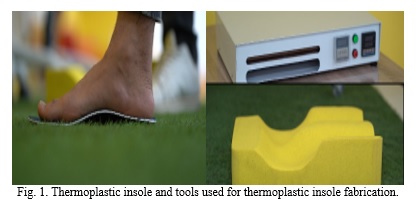
The extracted COP variables were recorded during walking. COP coordinates were calculated and reported in millimeters, whereas the Confidence Ellipse Area (CEA) was expressed in square millimeters. The analyzed COP parameters included COP-LFX, COP-RFX, COP-LFY, and COP-RFY, representing the mean position of the COP trajectory along the mediolateral (X) and anteroposterior (Y) axes during walking. These parameters provide information regarding plantar loading distribution and dynamic postural control. In addition, CEA-LF and CEA-RF represented the 95% confidence ellipse area, indicating the spatial dispersion of COP trajectory fluctuations during gait. The thermoplastic insoles used in this study were provided by the "Pouya Gam Azma Tajhiz" technology firm. Due to the thermo-moldable characteristics of the polymer material, these insoles allowed individualized shaping according to each participant’s foot morphology. During fabrication, the raw insole was heated in a dedicated thermo-heater unit at 110°C until it became sufficiently flexible for molding. The heated insole was then placed on a specialized polyurethane (PU) molding pad, and participants were instructed to stand on the insole while maintaining their natural body weight. The geometric structure of the high-density PU pad enabled accurate adaptation of the insole to the individual foot arch. The insoles were cooled for approximately 2–3 minutes until reaching their final supportive form. The main advantages of these insoles include reduced fabrication time, lightweight structure, mechanical durability, improved pressure distribution, and individualized adaptation to foot anatomy (Fig. 1).
1. Introduction
The human foot plays a critical role in shock absorption and load distribution during gait, and proper structural alignment is essential for efficient locomotion and musculoskeletal function. Flatfoot deformity (pes planus) is a common structural alteration characterized by a reduction or collapse of the medial longitudinal arch. When persistent beyond normal development, this deformity may result in compensatory biomechanical adaptations, including rearfoot valgus and forefoot abduction, which can increase mechanical stress on the plantar fascia and Achilles tendon and contribute to pain and impaired postural stability. One of the important biomechanical consequences of flatfoot deformity is the alteration of the center of pressure (COP) trajectory. During the stance phase of gait, the COP represents the point of application of the ground reaction force vector and provides valuable information regarding postural control and loading strategies. Individuals with flatfoot may demonstrate altered COP displacement patterns, which can affect dynamic balance and plantar loading distribution. Although various orthotic interventions have been developed to improve foot mechanics, previous studies have reported inconsistent findings regarding their effects on ground reaction forces and COP-related parameters. Thermoplastic insoles, due to their heat-moldable properties, allow individualized shaping according to foot morphology and may provide targeted mechanical support for correcting abnormal foot alignment. Therefore, the purpose of the present study was to investigate the effects of custom thermoplastic insoles on COP parameters and Confidence Ellipse Area (CEA) in individuals with flatfoot deformity.
2. Methods
The present study employed an applied quasi-experimental pretest-posttest control group design. The study population consisted of individuals with flexible flatfoot deformity aged between 10 and 17 years. Fourteen participants (male and female) who met the eligibility criteria were recruited and randomly allocated into either the intervention group (thermoplastic insole, n=7) or the control group (n=7). Participants were included if they had a definitive clinical diagnosis of flexible flatfoot deformity confirmed by a specialist physician. Flexible flatfoot was defined as a structural condition characterized by collapse or flattening of the medial longitudinal arch during weight-bearing activities, with restoration of the arch during non-weight-bearing conditions or tip-toe standing. Participants were excluded if they developed soft tissue injuries or severe plantar arch hypersensitivity during insole use, experienced persistent or severe pain after one week of thermoplastic insole application, or if they or their guardians were unwilling to continue participation at any stage of the study.
Following a comprehensive explanation of the study procedures, written informed consent was obtained from the parents or legal guardians of all participants. Anthropometric characteristics, including height and body mass, were recorded. Participants then underwent pedobarographic assessment using a foot-scan system. Prior to data collection, participants received instructions regarding the gait protocol and were familiarized with walking across the sensor platform. They were instructed to step on the platform with the left foot during the forward trial and with the right foot during the return trial. To minimize the effects of unfamiliarity and ensure a natural walking pattern, participants performed 3–5 familiarization trials. The most representative trial reflecting their habitual walking pattern was selected for subsequent analysis.
After the baseline assessment, participants were randomly assigned to their respective groups. The intervention group was instructed to wear custom thermoplastic insoles continuously inside their footwear for 45 days, whereas the control group received no orthotic or exercise intervention during this period. Following completion of the intervention period, all participants returned to the laboratory, and post-test measurements were obtained under conditions identical to the baseline assessment. Foot pressure data were collected using the Foot Medisense Plus scanner (Danesh Salar Iranian Co.). The system has dimensions of 520 × 640 mm, a maximum load capacity of 150 kg, sensors with a spatial resolution of 0.7 cm, and a sensor plate area of 40 × 40 cm. The system is capable of calculating the center of pressure (COP) trajectory during dynamic activities.
The extracted COP variables were recorded during walking. COP coordinates were calculated and reported in millimeters, whereas the Confidence Ellipse Area (CEA) was expressed in square millimeters. The analyzed COP parameters included COP-LFX, COP-RFX, COP-LFY, and COP-RFY, representing the mean position of the COP trajectory along the mediolateral (X) and anteroposterior (Y) axes during walking. These parameters provide information regarding plantar loading distribution and dynamic postural control. In addition, CEA-LF and CEA-RF represented the 95% confidence ellipse area, indicating the spatial dispersion of COP trajectory fluctuations during gait. The thermoplastic insoles used in this study were provided by the "Pouya Gam Azma Tajhiz" technology firm. Due to the thermo-moldable characteristics of the polymer material, these insoles allowed individualized shaping according to each participant’s foot morphology. During fabrication, the raw insole was heated in a dedicated thermo-heater unit at 110°C until it became sufficiently flexible for molding. The heated insole was then placed on a specialized polyurethane (PU) molding pad, and participants were instructed to stand on the insole while maintaining their natural body weight. The geometric structure of the high-density PU pad enabled accurate adaptation of the insole to the individual foot arch. The insoles were cooled for approximately 2–3 minutes until reaching their final supportive form. The main advantages of these insoles include reduced fabrication time, lightweight structure, mechanical durability, improved pressure distribution, and individualized adaptation to foot anatomy (Fig. 1).
Descriptive statistics were presented as mean and standard deviation (SD). The normality of data distribution was assessed using the Shapiro–Wilk test, and homogeneity of variances was evaluated using Levene’s test. Paired t-tests were used to examine within-group changes between pre-test and post-test measurements. Furthermore, a univariate analysis of covariance (ANCOVA) was performed to compare post-test outcomes between groups while controlling for baseline values. All statistical analyses were conducted using SPSS software (version 27.0.1; IBM Corp., Armonk, NY, USA), and statistical significance was set at P<0.05.
3. Results
The demographic characteristics of the 14 participants were normally distributed and comparable between groups at baseline. Within-group comparisons using paired t-tests demonstrated significant improvements in all mediolateral and anteroposterior COP parameters, along with a significant reduction in CEA, in the thermoplastic insole group. In contrast, no significant changes were observed in the control group. Furthermore, ANCOVA revealed a significant effect of the intervention on post-test COP parameters in both lower extremities after controlling for baseline values. Similarly, significant between-group differences were observed in post-test CEA values for both limbs, indicating the potential effectiveness of custom thermoplastic insoles in modifying COP-related measures.
4. Discussion
The present study aimed to investigate the effects of thermoplastic insoles on center of pressure (COP) parameters and Confidence Ellipse Area (CEA) in individuals with flexible flatfoot deformity. The findings demonstrated that the use of thermoplastic insoles resulted in significant improvements in COP parameters and a significant reduction in CEA. These findings suggest that thermoplastic insoles may enhance dynamic postural control by providing support for the medial and transverse foot arches, improving plantar pressure distribution, and guiding COP displacement toward a more stable biomechanical pattern. Consequently, excessive COP fluctuations may be reduced, contributing to improved postural stability.
The findings of the present study are consistent with previous studies indicating that alterations in the medial and transverse foot arches can influence postural stability and balance control (32 - 34). In individuals with flatfoot deformity, structural changes and abnormal plantar pressure distribution may affect the efficiency of the postural control system. Thermoplastic insoles may provide a more favorable mechanical condition by increasing the support surface and optimizing plantar load distribution. Therefore, the observed improvements in postural control, reflected by COP and CEA parameters, are in agreement with previous studies emphasizing the beneficial effects of supportive orthotic interventions on balance and postural stability (33, 35).
Regarding the mediolateral axis, the results of the present study showed that thermoplastic insoles shifted the mean COP position toward a more lateral direction. Although direct kinematic measurements were not obtained in this study, this alteration may be associated with the reduction of excessive foot pronation and improved alignment of the foot during weight-bearing activities (16, 33). In addition to improvements in the mediolateral direction, the current findings demonstrated enhanced control of COP fluctuations along the anteroposterior axis. The foot arch not only provides essential support for weight-bearing but also plays an important role in shock absorption, body weight transfer, and forward progression during gait (28). The present findings suggest that thermoplastic insoles may improve anteroposterior stability through enhanced support of the medial longitudinal arch. These results are consistent with previous studies reporting that medial arch support increases midfoot joint stiffness and optimizes weight transfer and forward propulsion in individuals with flatfoot deformity (36). In addition to the biomechanical mechanisms described above, the structural durability of the insole material is an important factor influencing the effectiveness of orthotic interventions during longer-term use (37). The results of the present study indicated that thermoplastic insoles maintained their structural characteristics throughout the intervention period. Therefore, this type of insole may represent a suitable option for longer-term management in individuals with flatfoot deformity. However, further studies with larger sample sizes and longer follow-up periods are required to confirm these effects.
Several limitations should be considered when interpreting the findings of the present study. The small sample size, short intervention period that limits evaluation of long-term musculoskeletal adaptations, lack of assessment of kinematic, kinetic, and muscle activity parameters, and absence of a sham insole condition should be acknowledged. Furthermore, participants were aware of the intervention, and expectations regarding treatment effects could not be fully controlled. Therefore, the results of the present study should be interpreted considering these methodological limitations.
5. Conclusion
In conclusion, the findings of the present study indicate that the use of thermoplastic insoles may positively influence center of pressure (COP) parameters and reduce Confidence Ellipse Area (CEA) in individuals with flatfoot deformity. These findings suggest that customized thermoplastic insoles may contribute to improved dynamic postural control by providing individualized mechanical support and optimizing plantar load distribution. Considering their customizable characteristics and structural stability, thermoplastic insoles may represent a promising orthotic approach for managing biomechanical alterations associated with flatfoot deformity. However, further studies with larger sample sizes, longer follow-up periods, and additional assessments, including kinematic, kinetic, and electromyographic analyses, are required to clarify the underlying mechanisms and long-term effects of these interventions.
Ethical Considerations
Compliance with ethical guidelines
This study was conducted in accordance with the ethical principles of the relevant research committees and the Declaration of Helsinki. All participants voluntarily participated in the study, and written informed consent was obtained prior to enrollment.
Funding
This article was derived from a research project approved by the University of Birjand.
Authors' contributions
All authors contributed to the conceptualization, data collection, data analysis, and preparation of the manuscript. All authors have read and approved the final version of the manuscript.
Conflicts of interest
The authors declare that they have no conflicts of interest.
3. Results
The demographic characteristics of the 14 participants were normally distributed and comparable between groups at baseline. Within-group comparisons using paired t-tests demonstrated significant improvements in all mediolateral and anteroposterior COP parameters, along with a significant reduction in CEA, in the thermoplastic insole group. In contrast, no significant changes were observed in the control group. Furthermore, ANCOVA revealed a significant effect of the intervention on post-test COP parameters in both lower extremities after controlling for baseline values. Similarly, significant between-group differences were observed in post-test CEA values for both limbs, indicating the potential effectiveness of custom thermoplastic insoles in modifying COP-related measures.
4. Discussion
The present study aimed to investigate the effects of thermoplastic insoles on center of pressure (COP) parameters and Confidence Ellipse Area (CEA) in individuals with flexible flatfoot deformity. The findings demonstrated that the use of thermoplastic insoles resulted in significant improvements in COP parameters and a significant reduction in CEA. These findings suggest that thermoplastic insoles may enhance dynamic postural control by providing support for the medial and transverse foot arches, improving plantar pressure distribution, and guiding COP displacement toward a more stable biomechanical pattern. Consequently, excessive COP fluctuations may be reduced, contributing to improved postural stability.
The findings of the present study are consistent with previous studies indicating that alterations in the medial and transverse foot arches can influence postural stability and balance control (32 - 34). In individuals with flatfoot deformity, structural changes and abnormal plantar pressure distribution may affect the efficiency of the postural control system. Thermoplastic insoles may provide a more favorable mechanical condition by increasing the support surface and optimizing plantar load distribution. Therefore, the observed improvements in postural control, reflected by COP and CEA parameters, are in agreement with previous studies emphasizing the beneficial effects of supportive orthotic interventions on balance and postural stability (33, 35).
Regarding the mediolateral axis, the results of the present study showed that thermoplastic insoles shifted the mean COP position toward a more lateral direction. Although direct kinematic measurements were not obtained in this study, this alteration may be associated with the reduction of excessive foot pronation and improved alignment of the foot during weight-bearing activities (16, 33). In addition to improvements in the mediolateral direction, the current findings demonstrated enhanced control of COP fluctuations along the anteroposterior axis. The foot arch not only provides essential support for weight-bearing but also plays an important role in shock absorption, body weight transfer, and forward progression during gait (28). The present findings suggest that thermoplastic insoles may improve anteroposterior stability through enhanced support of the medial longitudinal arch. These results are consistent with previous studies reporting that medial arch support increases midfoot joint stiffness and optimizes weight transfer and forward propulsion in individuals with flatfoot deformity (36). In addition to the biomechanical mechanisms described above, the structural durability of the insole material is an important factor influencing the effectiveness of orthotic interventions during longer-term use (37). The results of the present study indicated that thermoplastic insoles maintained their structural characteristics throughout the intervention period. Therefore, this type of insole may represent a suitable option for longer-term management in individuals with flatfoot deformity. However, further studies with larger sample sizes and longer follow-up periods are required to confirm these effects.
Several limitations should be considered when interpreting the findings of the present study. The small sample size, short intervention period that limits evaluation of long-term musculoskeletal adaptations, lack of assessment of kinematic, kinetic, and muscle activity parameters, and absence of a sham insole condition should be acknowledged. Furthermore, participants were aware of the intervention, and expectations regarding treatment effects could not be fully controlled. Therefore, the results of the present study should be interpreted considering these methodological limitations.
5. Conclusion
In conclusion, the findings of the present study indicate that the use of thermoplastic insoles may positively influence center of pressure (COP) parameters and reduce Confidence Ellipse Area (CEA) in individuals with flatfoot deformity. These findings suggest that customized thermoplastic insoles may contribute to improved dynamic postural control by providing individualized mechanical support and optimizing plantar load distribution. Considering their customizable characteristics and structural stability, thermoplastic insoles may represent a promising orthotic approach for managing biomechanical alterations associated with flatfoot deformity. However, further studies with larger sample sizes, longer follow-up periods, and additional assessments, including kinematic, kinetic, and electromyographic analyses, are required to clarify the underlying mechanisms and long-term effects of these interventions.
Ethical Considerations
Compliance with ethical guidelines
This study was conducted in accordance with the ethical principles of the relevant research committees and the Declaration of Helsinki. All participants voluntarily participated in the study, and written informed consent was obtained prior to enrollment.
Funding
This article was derived from a research project approved by the University of Birjand.
Authors' contributions
All authors contributed to the conceptualization, data collection, data analysis, and preparation of the manuscript. All authors have read and approved the final version of the manuscript.
Conflicts of interest
The authors declare that they have no conflicts of interest.
Type of Study: Research |
Subject:
Special
Received: 2026/05/14 | Accepted: 2026/08/11 | Published: 2026/08/17
Received: 2026/05/14 | Accepted: 2026/08/11 | Published: 2026/08/17
References
1. Sarkodie-Gyan T, Yu H. The human locomotor system: physiological and technological foundations. In: The Human Locomotor System: Physiological and Technological Foundations. Springer; 2023. p. 1-76. [DOI:10.1007/978-3-031-32781-0_1]
2. Asghar A, Naaz S. The transverse arch in the human feet: a narrative review of its evolution, anatomy, biomechanics and clinical implications. Morphologie. 2022;106(355):225-234. [DOI:10.1016/j.morpho.2021.07.005]
3. Green A. The pediatric foot and ankle. Pediatric Clinics of North America. 2020;67(1):169-183. [DOI:10.1016/j.pcl.2019.09.007]
4. Kardm SM, Alanazi ZA, Aldugman TAS, Reddy RS, Gautam AP. Prevalence and functional impact of flexible flatfoot in school-aged children: a cross-sectional clinical and postural assessment. Journal of Orthopaedic Surgery and Research. 2025;20(1):783. [DOI:10.1186/s13018-025-06207-y]
5. Flores DV, Mejía Gómez C, Fernández Hernando M, Davis MA, Pathria MN. Adult acquired flatfoot deformity: anatomy, biomechanics, staging, and imaging findings. Radiographics. 2019;39(5):1437-1460. [DOI:10.1148/rg.2019190046]
6. Chen H, Sun D, Fang Y, Gao S, Zhang Q, Bíró I, et al. Effect of orthopedic insoles on lower limb motion kinematics and kinetics in adults with flat foot: a systematic review. Frontiers in Bioengineering and Biotechnology. 2024;12:1435554. [DOI:10.3389/fbioe.2024.1435554]
7. Jiang H, Mei Q, Wang Y, He J, Shao E, Fernandez J, et al. Understanding foot conditions, morphologies and functions in children: a current review. Frontiers in Bioengineering and Biotechnology. 2023;11:1192524. [DOI:10.3389/fbioe.2023.1192524]
8. Kodithuwakku Arachchige SNK, Chander H, Knight A. Flatfeet: biomechanical implications, assessment and management. The Foot. 2019;38:81-85. [DOI:10.1016/j.foot.2019.02.004]
9. Toullec E. Adult flatfoot. Orthopaedics & Traumatology: Surgery & Research. 2015;101(Suppl 1):S11-S17. [DOI:10.1016/j.otsr.2014.07.030]
10. Morikawa M, Maeda N, Komiya M, Hirota A, Mizuta R, Kobayashi T, et al. Contribution of plantar fascia and intrinsic foot muscles in a single-leg drop landing and repetitive rebound jumps: an ultrasound-based study. International Journal of Environmental Research and Public Health. 2021;18(9):4633. [DOI:10.3390/ijerph18094511]
11. Vijayakumar K, Kumar S. Prevalence of flexible flatfoot and rigid flatfoot in relation with tightness of Achilles tendon and weakness of tibialis posterior tendon among individuals of 40-60 years of age. Indian Journal of Physiotherapy and Occupational Therapy. 2017;11:210. [DOI:10.5958/0973-5674.2017.00106.X]
12. Bertani A, Cappello A, Benedetti MG, Simoncini L, Catani F. Flat foot functional evaluation using pattern recognition of ground reaction data. Clinical Biomechanics. 1999;14(7):484-493. [DOI:10.1016/S0268-0033(98)90099-7]
13. Messier SP, Pittala KA. Etiologic factors associated with selected running injuries. Medicine and Science in Sports and Exercise. 1988;20(5):501-505. [DOI:10.1249/00005768-198810000-00012]
14. Herchenröder M, Wilfling D, Steinhäuser J. Evidence for foot orthoses for adults with flatfoot: a systematic review. Journal of Foot and Ankle Research. 2021;14(1):57. [DOI:10.1186/s13047-021-00499-z]
15. Hillstrom HJ, Song J, Kraszewski AP, Hafer JF, Mootanah R, Dufour AB, et al. Foot type biomechanics part 1: structure and function of the asymptomatic foot. Gait & Posture. 2013;37(3):445-451. [DOI:10.1016/j.gaitpost.2012.09.007]
16. Soltani N, Jalalvand A, Jahani MR. Comparison of plantar force, pressure and impulse during walking in men and women with flat feet. Journal of Sport Biomechanics. 2021;7(2):94-105. [DOI:10.32598/biomechanics.7.2.2]
17. Zammit GV, Menz HB, Munteanu SE, Landorf KB. Plantar pressure distribution in older people with osteoarthritis of the first metatarsophalangeal joint (hallux limitus/rigidus). Journal of Orthopaedic Research. 2008;26(12):1665-1669. [DOI:10.1002/jor.20700]
18. Van Gheluwe B, Dananberg HJ, Hagman F, Vanstaen K. Effects of hallux limitus on plantar foot pressure and foot kinematics during walking. Journal of the American Podiatric Medical Association. 2006;96(5):428-436. [DOI:10.7547/0960428]
19. Keijsers NL, Stolwijk NM, Louwerens JW, Duysens J. Classification of forefoot pain based on plantar pressure measurements. Clinical Biomechanics. 2013;28(3):350-356. [DOI:10.1016/j.clinbiomech.2013.01.012]
20. Dodelin D, Tourny C, L'Hermette M. The biomechanical effects of pronated foot function on gait: an experimental study. Scandinavian Journal of Medicine & Science in Sports. 2020;30(11):2167-2177. [DOI:10.1111/sms.13785]
21. Kawakami W, Iwamoto Y, Takeuchi Y, Takeuchi R, Sekiya J, Ishii Y, et al. Relationship between foot kinematics and center of pressure trajectory during gait in individuals with flatfoot. Journal of the American Podiatric Medical Association. 2025;115(4). [DOI:10.7547/23-050]
22. Wong L, Hunt A, Burns J, Crosbie J. Effect of foot morphology on center-of-pressure excursion during barefoot walking. Journal of the American Podiatric Medical Association. 2008;98(2):112-117. [DOI:10.7547/0980112]
23. Shim SR, Kim JY, Shin J, Lee YJ, Park JB, Hong MJ. Optimizing flatfoot management with foot orthoses: a systematic review and meta-analysis. American Journal of Physical Medicine & Rehabilitation. 2025. [DOI:10.1097/PHM.0000000000002833]
24. Jiang Y, Yang J, Tian H, Jiang C, Wang H. Comparative study of the effects of custom-made insole and ordinary insole in adults with flexible flatfoot on different slopes. Technology and Health Care. 2024;32(6):4063-4075. [DOI:10.3233/THC-231785]
25. Nouri A, Wang L, Li Y, Wen C. Materials and manufacturing for ankle-foot orthoses: a review. Advanced Engineering Materials. 2023;25(20):2300238. [DOI:10.1002/adem.202300238]
26. Mohammad Reza B, Hooman M, Foad S. The effect of foot orthosis on electromyographic activity of ankle muscles in athletes with flat foot during single leg jump landing. Journal of Sport Sciences and Health Research. 2017;9(19):139-152.
27. Daryabor A, Kobayashi T, Saeedi H, Lyons SM, Maeda N, Naimi SS. Effect of 3D printed insoles for people with flatfeet: a systematic review. Assistive Technology. 2023;35(2):169-179. [DOI:10.1080/10400435.2022.2105438]
28. Saeedi H, Aboutorabi A, Arazpour M. An evaluation of a bespoke modified UCBL foot orthosis on subjects with flat foot using kinetic measurements and user comfort scores: a randomized controlled trial. Foot. 2024;60:102127. [DOI:10.1016/j.foot.2024.102127]
29. Aminian DG, Farhoodi M, Safaeepour Z, Pezeshk AF. The assessment of the effect of longitudinal arch support insole on plantar pressure distribution in subjects with flexible flatfoot. Iranian Journal of War and Public Health. 2012;4(16):43-48.
30. Sadeghi H, Aghaie Ataabadi P, Hovanlo F. Immediate effect of pre-made foot orthotics on variability and joint coupling patterns of rear foot and tibia during gait in male athletes with pes planus. Journal of Sport Biomechanics. 2015;1(2):41-51.
31. Mosca VS. Flexible flatfoot and skewfoot. Journal of Bone and Joint Surgery. 1995;77(12):1937-1945. [DOI:10.2106/00004623-199512000-00021]
32. Ghorbani M, Yaali R, Sadeghi H, Luczak T. The effect of foot posture on static balance, ankle and knee proprioception in 18-to-25-year-old female students: a cross-sectional study. BMC Musculoskeletal Disorders. 2023;24(1):547. [DOI:10.1186/s12891-023-06678-2]
33. Fattahi A, Koreili Z, Ameli M. Instantaneous effect of insole on the balance of adolescents with flat foot and pes cavus. Journal of Sport Biomechanics. 2020;6(1):44-54. [DOI:10.32598/biomechanics.6.1.6]
34. Roshandel Hesari A, Langeroudi MS, Nazari R. The impact of an exhaustive exercise on static balance of freestyle wrestlers with flat foot. Journal of Sport Biomechanics. 2022;7(4):250-261. [DOI:10.32598/biomechanics.7.4.252.4]
35. Kulcu DG, Yavuzer G, Sarmer S, Ergin S. Immediate effects of silicone insoles on gait pattern in patients with flexible flatfoot. Foot & Ankle International. 2007;28(10):1053-1056. [DOI:10.3113/FAI.2007.1053]
36. Chen H, Sun D, Zhang Q, Yuan Y, Song Y, Li F, et al. Biomechanical effects of varying arch support hardness in foot orthosis for adults with flexible flatfoot: a comprehensive Bayesian statistical analysis. Gait & Posture. 2026;125:110085. [DOI:10.1016/j.gaitpost.2025.110085]
37. Soltani N, Majlesi M, Fatahi A. Long-term use of anti-pronation insoles enhances inter-joint coordination in individuals with flat feet. Journal of Foot and Ankle Research. 2026;19(1):e70124. [DOI:10.1002/jfa2.70124]
| Rights and permissions | |
 |
This work is licensed under a Creative Commons Attribution-NonCommercial 4.0 International License. |

Journal of Sport Biomechanics
Department of Sport Biomechanics, Faculty of Humanities, Islamic Azad University, Hamedan Branch, Prof. Mousivand Blvd, Imam Khomeini Blvd, Hamedan, Iran.
Journal Tel: +98 81 34494042
Website: http://biomechanics.iauh.ac.ir
Email: sportbiomechanics@iauh.ac.ir
