

Volume 12, Issue 4 (2-2027)
J Sport Biomech 2027, 12(4): 1042-1069 |
Back to browse issues page




Download citation:
BibTeX | RIS | EndNote | Medlars | ProCite | Reference Manager | RefWorks
Send citation to:


BibTeX | RIS | EndNote | Medlars | ProCite | Reference Manager | RefWorks
Send citation to:
Barati A, Mozayani H, khezri D, Mousavi S H, Aghaie Ataabadi P, Aghaee Ataabadi P. Comparison of Electromyographic Activity of Selected Lower-Extremity Muscles Across Discrete Events of a Jump–Landing Task in Soccer Players with Higher and Lower LESS Scores. , J Sport Biomech. 2027; 12 (4) :1042-1069
URL: http://biomechanics.iauh.ac.ir/article-1-530-en.html
URL: http://biomechanics.iauh.ac.ir/article-1-530-en.html
Ataalah Barati1 

 , Hoda Mozayani *2 , Davood Khezri3 , Seyed Hamed Mousavi4 , Peyman Aghaie Ataabadi1 , Peyman Aghaee Ataabadi1
1- Department of Sport Injuries and Biomechanics, Faculty of Sport Sciences and Health, University of Tehran, Tehran, Iran.
2- Department of Sport Rehabilitation and Health, Faculty of Sport Science and Health, Shahid Beheshti University, Tehran, Iran.
3- Department of Sport Biomechanics and Technology, Sport Science Research Institute, Tehran, Iran.
4- Faculty of Computer Science and Engineering, Shahid Beheshti University, Tehran, Iran.
Keywords: Electromyography, Landing error scoring system (LESS), Anterior cruciate ligament (ACL), Event-specific muscle activity
Full-Text [PDF 1586 kb]
(7 Downloads)
| Abstract (HTML) (17 Views)


Full-Text: (8 Views)
Introduction
Anterior cruciate ligament (ACL) injury is considered one of the most severe sports-related injuries in soccer because of its high incidence, lengthy rehabilitation process, and potential long-term consequences for athletic performance and joint health (1-3). Most ACL injuries occur in non-contact situations and are thought to be associated with neuromuscular and biomechanical factors affecting knee loading (4, 5). The burden of ACL injury is substantial, with more than 200,000 cases reported annually in the United States alone (6). In addition to limiting athletic participation and performance, ACL injuries impose a substantial economic burden due to the high costs of surgical treatment, rehabilitation, and long-term healthcare utilization, with direct treatment costs estimated at approximately $17,000 per injury (6-8).
Identifying modifiable factors associated with ACL injury and implementing preventive strategies are fundamental components of ACL injury prevention (9). Approximately 72% of ACL injuries occur in non-contact situations, highlighting the importance of understanding biomechanical and neuromuscular contributors to injury risk. The most common mechanisms of non-contact ACL injury include deceleration, jump–landing, and cutting maneuvers (10, 11). These dynamic tasks impose substantial mechanical demands on the lower extremities and require effective neuromuscular control to maintain joint stability and appropriate movement alignment (12). Consequently, assessment of movement quality during such tasks has become a key component of ACL injury risk screening. Among available screening tools, the Landing Error Scoring System (LESS) is a widely used observational assessment for evaluating observable landing errors and movement quality during jump–landing tasks. Higher LESS scores have been associated with poorer landing mechanics and may be useful for identifying athletes who exhibit movement patterns warranting further neuromuscular assessment. However, a LESS-based cut-off should be interpreted as a screening-based classification of landing performance rather than as evidence that an individual will sustain an ACL injury. The LESS is a practical and cost-effective clinical screening tool designed to identify observable movement errors during jump–landing tasks (13). Previous evidence has demonstrated significant associations between LESS scores and three-dimensional kinematic and kinetic variables of lower-extremity biomechanics (14, 15). Importantly, the LESS does not directly measure internal neuromuscular function; rather, it reflects observable movement outcomes that are influenced by underlying motor control strategies. Therefore, investigating neuromuscular activity during jump–landing tasks may provide complementary insight into the mechanisms underlying LESS-assessed movement quality.
Neuromuscular control plays a critical role in regulating lower-extremity stability and movement coordination during dynamic athletic tasks (16). Altered muscle activation patterns may lead to compensatory movement strategies and suboptimal joint loading, thereby increasing ACL injury risk (17-19). During jump–landing tasks, athletes at greater risk of ACL injury have been reported to exhibit distinct muscle activation and coordination strategies compared with lower-risk individuals (20, 21). Electromyography (EMG) is a valid tool for quantifying these neuromuscular activation patterns and can provide insight into motor control strategies underlying landing mechanics identified by the LESS. Previous research has reported altered neuromuscular activity in athletes following ACL reconstruction (22-25) , suggesting that neuromuscular control is closely related to ACL injury status and functional adaptation (26). However, these findings are primarily derived from post-injury populations, and it remains unclear whether similar neuromuscular differences are present in pre-injury athletes classified according to movement-based screening tools.
Despite increasing attention to neuromuscular factors in ACL injury mechanisms, limited evidence exists regarding the relationship between lower-extremity muscle activation patterns and LESS-based risk classification in healthy athletes. In particular, most previous studies have focused on global or task-averaged EMG responses, without examining event-specific neuromuscular behavior during distinct events of the jump–landing cycle. Therefore, a key gap in the literature is the lack of event-based neuromuscular profiling of athletes classified as higher and lower LESS scores according to LESS performance. Despite the established use of the Landing Error Scoring System (LESS) for characterizing observable landing errors and its demonstrated associations with three-dimensional kinematic and kinetic characteristics, limited evidence is available regarding the muscle activation patterns underlying different levels of LESS performance. Previous LESS research has primarily focused on the relationship between LESS scores and observable movement quality, joint kinematics, and kinetics, whereas relatively little attention has been given to surface electromyographic (EMG) activity in athletes classified according to LESS performance. In particular, it remains unclear whether soccer players with higher versus lower LESS scores demonstrate different muscle-specific activation patterns at discrete events throughout the jump–landing cycle.
The present study addresses this gap by examining surface EMG activity of selected lower-extremity muscles in healthy male competitive soccer players with higher versus lower LESS scores. Unlike previous studies that have predominantly evaluated biomechanical variables associated with LESS performance, the present investigation focuses on neuromuscular activity and examines muscle responses at four discrete, force-platform-defined events: initial contact, peak vertical ground reaction force, toe-off, and second contact. This event-based approach enables characterization of muscle-specific activation patterns across successive stages of the jump–landing task and may provide complementary information regarding neuromuscular characteristics associated with differences in observable landing performance.
Methods
Study Design and Participants
This study employed a cross-sectional design. A total of 63 male soccer players aged 18–25 years were recruited from soccer clubs in Tehran. No a priori power analysis was conducted before recruitment. The sample size was determined based on the availability of eligible competitive soccer players who met the predefined inclusion and exclusion criteria during the recruitment period. All eligible players who agreed to participate were invited to the study, and 63 participants completed the experimental protocol and were included in the final analysis. Given that the study involved multiple lower-extremity muscles and four discrete events within the jump–landing task, the achieved sample size should be considered in the context of the exploratory nature of the muscle-specific comparisons. To be eligible for participation, athletes had to be 18–25 years of age, have no history of anterior cruciate ligament (ACL) injury or clinically diagnosed musculoskeletal deformities, be active members of teams competing in national leagues, have at least two years of competitive experience at the national or provincial level, have a body mass index (BMI) of 20–25 kg/m², and provide written informed consent before participation.
Electromyographic and Kinematic Data Collection
After obtaining informed consent, the skin over the electrode placement sites was shaved and cleaned with alcohol to reduce skin impedance. Surface electromyography (sEMG) electrodes were placed on seven lower-extremity muscles of the support limb—the rectus femoris, vastus medialis, vastus lateralis, biceps femoris, semitendinosus, medial gastrocnemius, and lateral gastrocnemius—according to the recommendations of the Surface Electromyography for the Non-Invasive Assessment of Muscles (SENIAM) project (27). The dominant limb was defined as the limb preferentially used for kicking a ball; therefore, EMG recordings were obtained from the contralateral non-dominant support limb. Kinematic data were simultaneously collected using a motion capture system during the jump–landing task. Surface EMG signals were sampled at 1000 Hz. Before filtering, any DC offset was removed by subtracting the mean value of each signal from the corresponding recording. The signals were subsequently band-pass filtered using a fourth-order Butterworth filter with cutoff frequencies of 20 and 500 Hz, with zero-phase filtering applied to minimize phase distortion. The filtered signals were processed using a moving root mean square (RMS) algorithm with a 100-ms window to quantify muscle activation amplitude. The use of band-pass filtering and RMS-based amplitude estimation is consistent with commonly recommended procedures for surface EMG analysis (28-30).
For EMG amplitude normalization, maximal voluntary isometric contraction (MVIC) was used as the reference for each muscle. MVIC testing was performed for each recorded muscle according to standardized muscle-testing and resistance procedures based on SENIAM recommendations (27). Participants performed three MVIC trials for each muscle, with each contraction maintained for approximately 3–5 s. The middle 3 s of each contraction were selected for analysis, and RMS amplitude was calculated using the same 100-ms moving RMS procedure applied to the jump–landing trials. The highest RMS amplitude obtained across the three MVIC trials was used as the reference MVIC value for the corresponding muscle. Task-related RMS amplitudes were then divided by the corresponding MVIC reference value and multiplied by 100 to express muscle activity as a percentage of MVIC (%MVIC). MVIC-based normalization is a widely established approach for expressing EMG amplitude relative to an individual's maximal voluntary activation capacity and facilitating comparisons across participants and muscles (31, 32). Following normalization, the EMG data were aligned with the four predefined kinetic events of the jump–landing task. Event-specific normalized EMG amplitudes (%MVIC) were extracted for each of the four events and for each of the seven recorded muscles. These event-specific %MVIC values were subsequently used as the dependent variables in the statistical analyses.
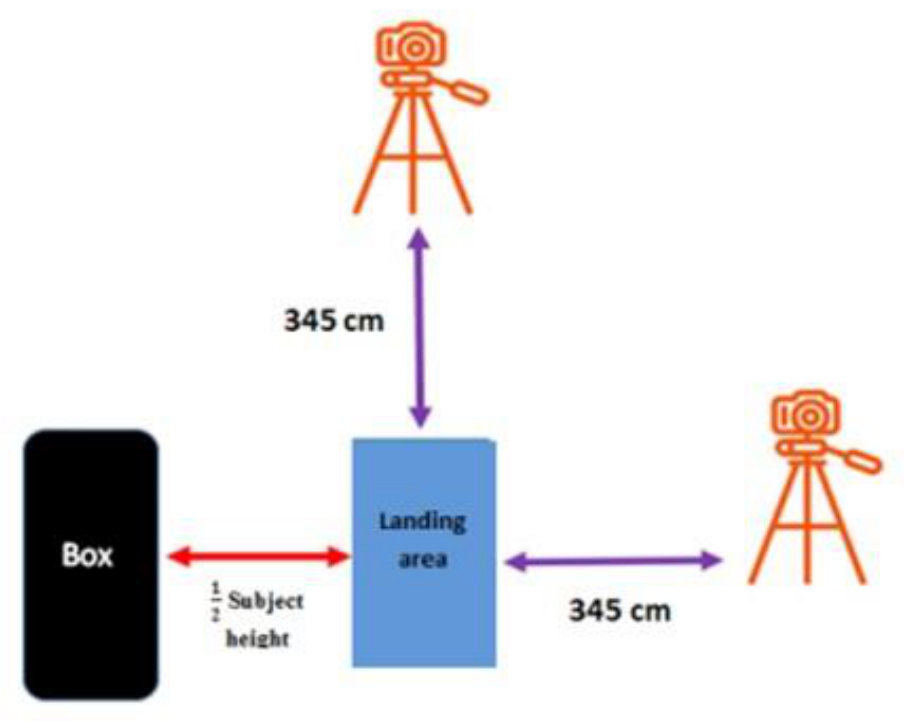
A Vicon motion capture system was used to collect three-dimensional kinematic data during the jump–landing task. A total of 25 reflective markers were placed on anatomical landmarks of the participants based on a full-body marker set. Markers were attached to the first, second, and third metatarsal heads, medial and lateral malleoli, calcaneus, medial and lateral femoral epicondyles, anterior superior iliac spines (ASIS), posterior superior iliac spines (PSIS), iliac crests, T10 vertebra, acromion processes, C7, and bilateral subscapular regions. In addition, cluster markers were attached to the tibia (four markers) and femur (one marker) to improve tracking accuracy and reduce soft tissue artifact during movement. Two digital video cameras (Casio EXILIM EX-ZR1000) were used to record the Landing Error Scoring System trials from frontal and sagittal views. The cameras were positioned approximately 3.45 m from the landing area to ensure adequate field of view and movement capture (Fig. 1). A 30-cm-high box was placed at a distance equal to 50% of each participant’s body height from the landing point, in accordance with the standard LESS protocol. Participants performed the jump–landing task by jumping from the box, landing bilaterally on a designated area, and immediately performing a maximal vertical jump upon landing.
Fig. 1. Schematic of the placement of the cameras and distance between box and landing place
Landing Error Scoring System (LESS) and Group Classification
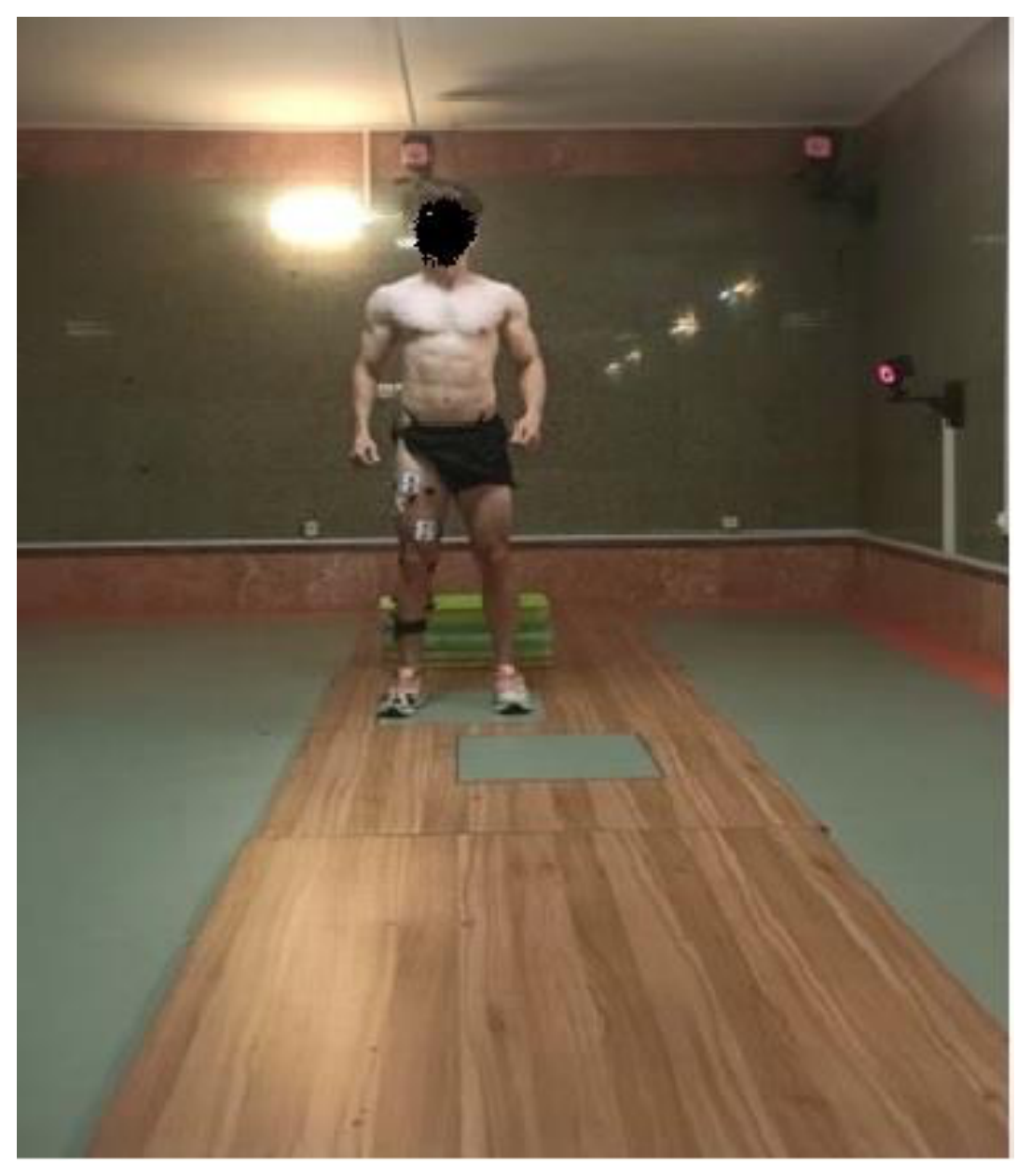
The Landing Error Scoring System, consisting of 17 observational items, was used to assess observable landing errors during the standardized jump–landing task (14). LESS scoring was performed by a trained rater familiar with the standardized LESS scoring criteria and procedures. Video recordings of the jump–landing trials were reviewed independently, and the rater did not have access to the participants’ EMG data during the scoring process. Each participant completed three successful jump–landing trials, and the LESS score was determined according to the standardized scoring procedure. The total LESS score was calculated by summing the individual item scores, with higher scores indicating a greater number of observable landing errors and poorer landing performance. No formal intra-rater or inter-rater reliability analysis was performed in the present study. The LESS score was used to characterize landing performance and classify participants according to higher and lower LESS scores, rather than as a direct measure of prospective ACL injury risk (Fig. 2). Participants were classified into two groups based on their total LESS score. Individuals with a LESS score ≤ 5 were assigned to the lower LESS scores group, whereas those with a score > 5 were classified as the higher LESS scores group. This classification was performed in accordance with previous studies using the LESS to categorize landing performance (8).
For the event-based analysis of neuromuscular activity during the jump–landing task, four discrete kinetic events were defined based on the vertical ground reaction force (vGRF). Initial contact (IC) was defined as the instant when vGRF first exceeded 10 N. Peak landing was defined as the time point corresponding to the maximum vGRF during the initial landing period. Toe-off was defined as the instant when vGRF decreased below 10 N, indicating the transition from the landing to the subsequent propulsion phase. Second contact was defined as the time point when vGRF again exceeded 10 N, marking the onset of the second landing.
Fig. 2. the subject performing the LESS test
EMG activity was extracted at each of these four discrete events, and no time-window averaging around the events was performed. After familiarization with the LESS protocol, participants performed the jump–landing task. Kinematic data were collected at 200 Hz and kinetic data at 1000 Hz using a motion analysis system synchronized with a force platform (AMTI, USA). Synchronization of the kinematic, kinetic, and EMG systems was achieved using a hardware-based trigger, providing a common temporal reference for the motion-capture, force-platform, and EMG signals. This hardware synchronization enabled temporal alignment of the EMG signals with the corresponding force-platform and kinematic data for identification of the predefined jump–landing events and extraction of event-specific EMG activity. No additional temporal delay correction was applied after hardware synchronization.Ground reaction force data were used to identify initial contact events. A 4th-order low-pass Butterworth filter with a cutoff frequency of 10 Hz was applied to kinematic data to reduce noise. Kinematic data were collected solely to monitor and verify the execution of the jump–landing task. Although these data were processed using MATLAB, no kinematic variables were extracted as outcome measures or included in the statistical analyses. The present study focused exclusively on event-specific EMG activity.
Experimental Procedure
Participants performed a 5-minute warm-up on a stationary cycle ergometer prior to testing. For the Landing Error Scoring System task, each participant stood on a 30-cm-high box with the feet positioned approximately shoulder-width apart and performed a forward jump, landing bilaterally on a force plate positioned at a distance approximately equal to 50% of their body height. Immediately after landing, participants performed a maximal vertical jump. Three successful trials were recorded for each participant, with a 60-second rest interval between trials to minimize potential fatigue. A successful trial was defined as completion of the prescribed jump–landing task according to the standardized protocol, including a bilateral landing on the designated force plate followed by the maximal vertical jump, without a clear technical error, loss of balance, or failure to complete the task as instructed. Two practice trials were allowed before data collection to familiarize participants with the procedure. No performance feedback was provided during testing, except when a trial clearly failed to meet the standardized task requirements, in which case it was repeated. EMG data from each of the three successful trials were processed separately, and the event-specific EMG values were averaged across the three trials for each participant before statistical analysis. The trials were performed in a consistent order for all participants. No formal statistical analysis of trial-order or fatigue effects was performed; however, the 60-second rest interval between trials was used to minimize potential fatigue.
Statistical Analysis
Descriptive statistics (mean ± standard deviation) were calculated for all variables. The normality of data distribution was assessed using the Shapiro–Wilk test. To compare neuromuscular activity between the higher and lower LESS scores groups, separate multivariate analyses of variance (MANOVA) were conducted for each of the four kinetic events. In each analysis, group (higher LESS scores vs. lower LESS scores) was entered as the independent variable, and the EMG activity of the seven selected lower-extremity muscles was entered as the dependent variables. When a significant multivariate effect was observed, follow-up univariate analyses were performed to identify the muscles contributing to the between-group differences. To control for Type I error associated with multiple univariate comparisons, Bonferroni correction was applied, resulting in an adjusted significance level of p < 0.007 (0.05/7). All statistical analyses were performed using SPSS software (version 26.0).
Results
The higher-LESS group included 35 participants and had a mean age of 21.70 ± 2.20 years, height of 176.30 ± 4.80 cm, weight of 71.20 ± 4.50 kg, and body mass index of 22.85 ± 0.80 kg/m², whereas the lower-LESS group included 28 participants and had a mean age of 21.20 ± 1.90 years, height of 177.25 ± 4.35 cm, weight of 70.25 ± 4.05 kg, and body mass index of 22.56 ± 0.72 kg/m². No statistically significant between-group differences were observed in age, height, body mass, or body mass index (all p > 0.05).
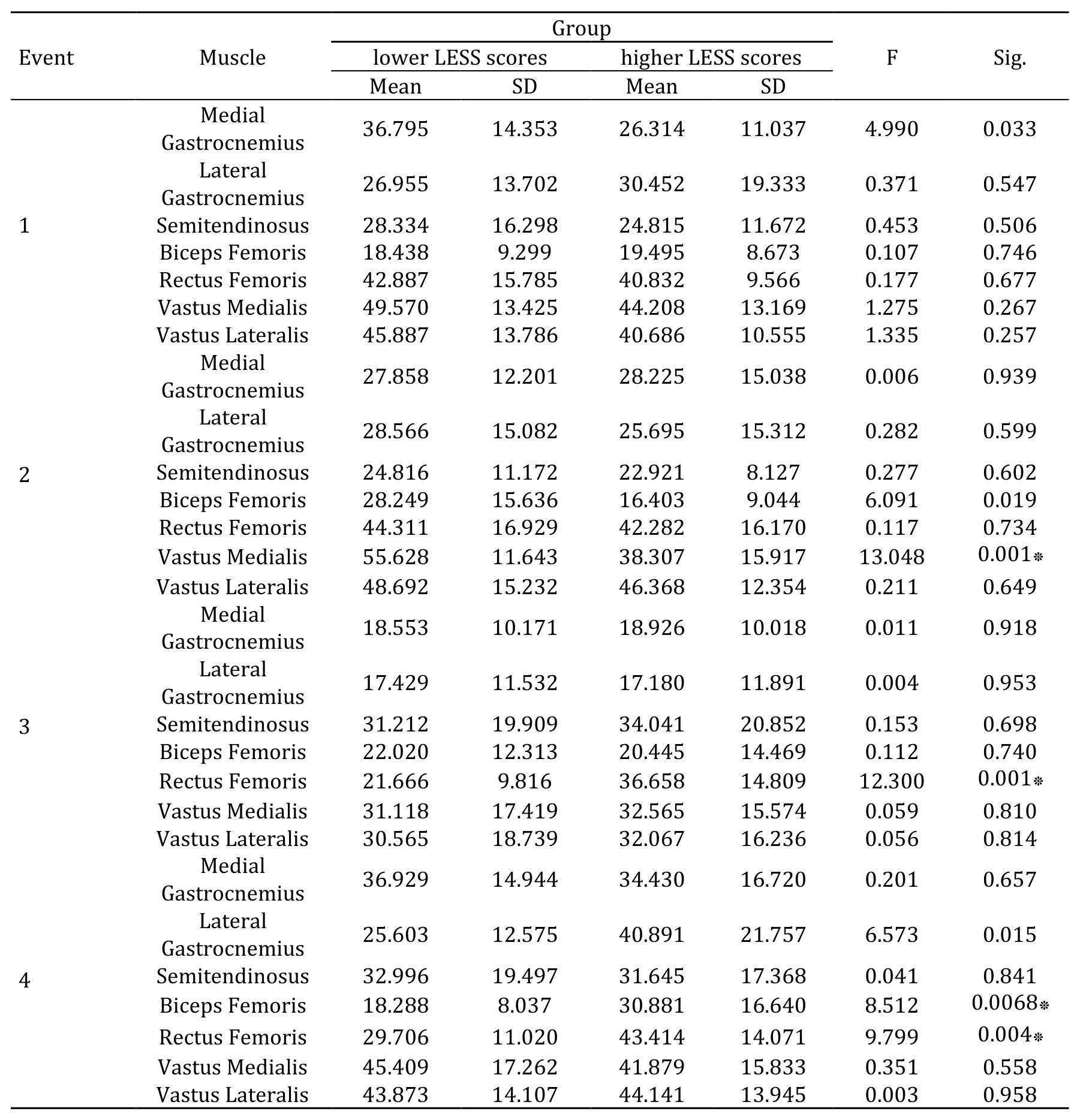
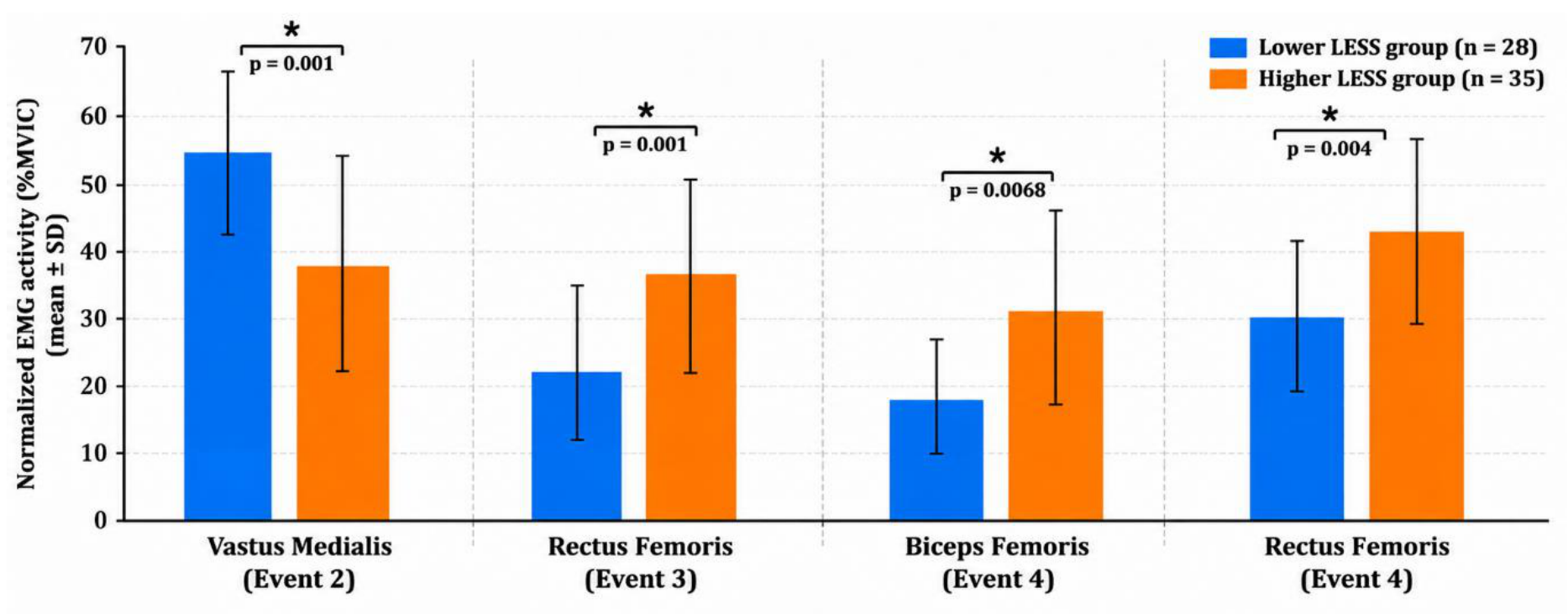
Separate multivariate analyses of variance (MANOVA) were conducted to examine differences in neuromuscular activity between the higher and lower LESS scores groups across the four kinetic events. Group (higher LESS scores vs. lower LESS scores) was entered as the independent variable, and EMG activity of the seven selected lower-extremity muscles was entered as dependent variables. The multivariate results are presented in Table 1. Significant multivariate effects of group were observed during Events 2, 3, and 4, while no significant effect was found during Event 1 (Table 1). Follow-up univariate analyses were performed to identify specific muscle differences contributing to the significant multivariate effects. After Bonferroni correction for multiple comparisons, significant between-group differences were found for the vastus medialis during Event 2, the rectus femoris during Event 3, and the biceps femoris and rectus femoris during Event 4 (Table 2). The results of the between-group analyses showed that, after Bonferroni correction for multiple comparisons, significant differences between the higher and lower LESS scores groups were observed for the vastus medialis during Event 2, the rectus femoris during Event 3, and the biceps femoris and rectus femoris during Event 4. No significant differences were found for the remaining muscles in any event after correction. During Event 2, vastus medialis activity was higher in the lower LESS scores group compared with the higher LESS scores group. During Event 3, rectus femoris activity was higher in the higher LESS scores group compared with the lower LESS scores group. During Event 4, biceps femoris and rectus femoris activity were higher in the higher LESS scores group compared with the lower LESS scores group (Fig. 3).
Discussion
The purpose of the present study was to compare neuromuscular activity during different events of a jump–landing task between soccer players with higher and lower LESS scores. The main findings demonstrated that significant between-group differences were observed in the activity of the vastus medialis during Event 2, the rectus femoris during Event 3, and the biceps femoris and rectus femoris during Event 4. Specifically, athletes classified as higher LESS scores exhibited greater activation of the rectus femoris during Events 3 and 4 and greater activation of the biceps femoris during Event 4, whereas athletes in the lower LESS scores group demonstrated greater vastus medialis activity during Event 2. Collectively, these findings indicate that athletes with higher and lower LESS scores demonstrate distinct neuromuscular activation patterns during critical events of the jump–landing task. Such differences may reflect variations in lower-extremity motor control and movement stabilization strategies and may be associated with differences in landing performance. From a practical perspective, the observed differences in muscle-specific activity may provide additional information regarding neuromuscular characteristics associated with differences in landing performance. However, these findings should not be interpreted as evidence that the observed EMG characteristics predict future ACL injury or provide established screening value beyond the LESS. The feasibility, cost, and incremental clinical value of incorporating EMG into movement-based screening were not evaluated in the present study.
Table 1. Multivariate comparisons of lower-extremity muscle activity between the higher and lower LESS scores groups
Table 2. Results of follow-up univariate analyses comparing lower-extremity muscle activity between the higher and lower less scores groups across the four kinetic events.
Therefore, the findings should be considered hypothesis-generating and may provide a basis for future prospective studies investigating whether event-specific EMG characteristics are associated with subsequent ACL injury and whether EMG provides meaningful additional information beyond established movement-based assessments.
The findings of the present study demonstrated that during the peak ground reaction force (Peak GRF) event, athletes classified as lower LESS scores exhibited significantly greater vastus medialis activity than those classified as higher LESS scores. This finding suggests that differences in quadriceps activation patterns may exist between athletes with different levels of LESS performance during periods of high mechanical loading. Given the role of the vastus medialis in knee stabilization and control of lower-extremity alignment, greater activation of this muscle may be interpreted as reflecting differences in neuromuscular control strategies during landing demands.
Fig. 3. Comparison of normalized electromyographic (EMG) activity (%MVIC) of selected lower-extremity muscles between higher LESS scores and lower LESS scores groups during different events of the jump–landing task.
Greater vastus medialis activity during peak loading may reflect differences in neuromuscular activation strategies associated with landing performance. From a biomechanical perspective, medial quadriceps activation has been discussed in relation to knee stabilization and lower-extremity movement control during landing tasks. However, because the present study did not directly assess knee joint moments, knee kinematics, ACL loading, or subsequent injury outcomes, the observed greater vastus medialis activity in the lower-LESS group should be interpreted as a possible neuromuscular characteristic associated with landing performance rather than evidence of improved knee control or force absorption. Further biomechanical and prospective studies are needed to determine whether differences in vastus medialis activation are functionally related to knee mechanics or subsequent ACL injury occurrence. These findings suggest that neuromuscular characteristics of the quadriceps, particularly the vastus medialis, may be associated with differences in landing performance identified through LESS scores (29, 33).
Previous evidence suggests that vastus medialis activation during landing tasks may be associated with biomechanical variables linked to ACL injury risk (34). In particular, neuromuscular control of the quadriceps has been recognized as an important factor influencing knee joint stability and lower-extremity movement patterns during dynamic activities. Although the available literature has not consistently demonstrated a direct relationship between vastus medialis activation and ACL injury occurrence, several studies have indicated that neuromuscular control during high-loading events of landing may be associated with injury risk profiles. Therefore, the greater vastus medialis activity observed in the lower LESS scores group in the present study may reflect differences in neuromuscular control strategies during demanding athletic tasks (35). From a biomechanical perspective, the activation pattern of the vastus medialis during the peak ground reaction force (Peak GRF) event may be relevant to knee joint mechanics during landing. Previous evidence suggests that greater vastus medialis activation is associated with knee joint control and may contribute to limiting excessive frontal-plane knee motion during landing tasks (36). Accordingly, increased vastus medialis activity before and during peak loading may be involved in the modulation of force distribution across the lower extremity. Such neuromuscular responses have been proposed in the literature as being associated with movement control during high-demand landing situations and with characteristics of neuromuscular function. Therefore, the greater vastus medialis activation observed in the lower LESS scores group may reflect differences in neuromuscular control strategies during dynamic athletic movements (37).
In Event 3, rectus femoris (RF) activity was significantly greater in the higher-LESS group than in the lower-LESS group, whereas no significant between-group difference was observed in biceps femoris (BF) activity. This pattern may reflect differences in neuromuscular strategies during the propulsive event of the jump–landing task. Increased activation of both RF and BF may be associated with greater muscular demand during the take-off event; however, it may also indicate differences in neuromuscular control strategies between athletes with higher and lower LESS scores (16). Previous studies have suggested that increased agonist–antagonist co-activation during jumping or landing tasks may be associated with altered movement patterns and force production characteristics. Such patterns may reflect increased joint stabilization demands and may be indicative of altered neuromuscular coordination during dynamic tasks (37). Furthermore, this difference may reflect alterations in muscle-specific neuromuscular activation patterns during the jump–landing task. However, because co-contraction or co-activation indices were not calculated in the present study, the observed differences should be interpreted based on the individual muscle activation amplitudes rather than as evidence of altered agonist–antagonist co-activation. Such a pattern may be associated with different neuromuscular demands during repetitive jump–landing cycles (16). Previous EMG-based studies have reported that athletes with different landing-performance characteristics may demonstrate altered co-activation patterns of the rectus femoris and biceps femoris during both take-off and landing events. These neuromuscular patterns may be associated with changes in joint control strategies and altered movement coordination during dynamic tasks (37). In Event 4, the findings of the present study showed that rectus femoris (RF) activity was greater in the higher LESS scores group compared with the lower LESS scores group. This increased activation may reflect neuromuscular involvement during the control of impact-related demands in the subsequent ground contact event. However, elevated RF activity may also indicate differences in neuromuscular strategies, potentially associated with altered intermuscular coordination during landing. Such a pattern may reflect a greater contribution of the quadriceps in managing external loads, which has been suggested in previous literature to be associated with movement patterns during dynamic tasks (38).
These findings highlight the importance of appropriate and timely activation of the RF during landing for effective movement control. From a practical perspective, neuromuscular training strategies aimed at improving coordination and control of the quadriceps during landing tasks may be relevant for optimizing movement patterns in athletes at different levels of ACL injury risk; however, such implications should be interpreted with caution as the present study did not directly assess injury outcomes(21, 39), and therefore cannot establish associations between neuromuscular patterns and actual anterior cruciate ligament injury occurrence. It should be noted that the Landing Error Scoring System represents a surrogate measure of movement quality and injury risk rather than a direct assessment of anterior cruciate ligament injury occurrence. Therefore, group classification based on LESS scores reflects movement-based risk indicators rather than confirmed injury risk. Furthermore, surface electromyography provides information regarding muscle activation patterns but does not directly quantify muscle force production or joint loading. Therefore, interpretations related to mechanical joint loading should be made with caution. An important methodological consideration is that no a priori power analysis was performed to determine the required sample size. The final sample of 63 participants was based on the availability of eligible competitive soccer players during the recruitment period. Given the assessment of multiple muscles across four discrete events, some muscle-specific comparisons may have had limited statistical power, particularly for detecting smaller between-group effects. Accordingly, these findings should be interpreted cautiously and warrant confirmation in adequately powered prospective studies.
Conclusion
The findings of the present study indicate that neuromuscular activation patterns of the lower extremity differ between soccer players with higher and lower LESS scores during a jump–landing task. Specifically, significant between-group differences were observed in vastus medialis, rectus femoris, and biceps femoris activity across different kinetic events, highlighting event-dependent alterations in muscle activation strategies. Overall, these findings indicate that soccer players with higher and lower LESS scores exhibited different muscle-specific EMG activity at selected kinetic events during the jump–landing task. These between-group differences represent associations with LESS performance and should not be interpreted as evidence of future ACL injury risk or causal neuromuscular deficits. Further prospective research is needed to determine whether these EMG characteristics are associated with subsequent ACL injury. These findings suggest that neuromuscular assessment may provide complementary information regarding functional characteristics associated with differences in LESS performance among soccer players. However, the present study did not evaluate whether EMG assessment improves classification, prediction, clinical decision-making, or injury prevention beyond movement-based screening tools such as the LESS. Therefore, prospective studies are needed to determine the incremental predictive and clinical value of incorporating EMG assessment alongside established movement-based screening approaches, particularly with respect to subsequent ACL injury risk. Further research is warranted to investigate these neuromuscular patterns in larger populations and to examine their potential predictive value in prospective study designs.
Ethical Considerations
Before participation, all participants were provided with information regarding the study procedures and voluntarily provided written informed consent. Participants were informed that participation was voluntary and that they could withdraw from the study at any time without penalty. All personal information and research data were handled confidentially and used solely for research purposes.
Compliance with ethical guidelines
The study was conducted in accordance with the ethical standards of the Declaration of Helsinki and all applicable institutional and national guidelines governing research involving human participants. The study protocol was reviewed and approved by Shahid Beheshti of Tehran (approval code: [IR.SBU.REC.1404.252]).
Funding
This research received no specific grant from any funding agency in the public, commercial, or not-for-profit sectors.
Authors' contributions
AB conceived the study, collected the data, and drafted the manuscript; HM supervised the study and contributed to its conceptualization; DK contributed to data analysis; HMo contributed to writing and revising the manuscript; and PAA contributed to data analysis and writing and revising the manuscript. All authors read and approved the final manuscript.
Conflicts of interest
The authors declare no conflict of interest.
Type of Study: Research |
Subject:
Special
Received: 2026/06/16 | Accepted: 2026/11/16 | Published: 2026/11/29
Received: 2026/06/16 | Accepted: 2026/11/16 | Published: 2026/11/29
References
1. Fu FH, Cohen SB, editors. Current concepts in ACL reconstruction. Thorofare (NJ): SLACK Incorporated; 2008.
2. Bahr R, Krosshaug T. Understanding injury mechanisms: a key component of preventing injuries in sport. British Journal of Sports Medicine. 2005;39(6):324-329. [DOI:10.1136/bjsm.2005.018341]
3. Piri E, Jafarnezhadgero A, Dehghani M, Rezazadeh F, Enteshari-Moghaddam A. Running mechanics in individuals with anterior cruciate ligament reconstruction 6-12 months after surgery: a systematic review and meta-analysis. Journal of Sport Biomechanics. 2026;12(1):52-69. [DOI:10.61882/JSportBiomech.12.1.52]
4. Pappas E, Zampeli F, Xergia SA, Georgoulis AD. Lessons learned from the last 20 years of ACL-related in vivo-biomechanics research of the knee joint. Knee Surgery, Sports Traumatology, Arthroscopy. 2013;21(4):755-766. [DOI:10.1007/s00167-012-1955-0]
5. Belkhelladi M, Cierson T, Martineau PA. Biomechanical risk factors for increased anterior cruciate ligament loading and injury: a systematic review. Orthopaedic Journal of Sports Medicine. 2025;13(2):23259671241312681. [DOI:10.1177/23259671241312681]
6. Musahl V, Karlsson J. Anterior cruciate ligament tear. The New England Journal of Medicine. 2019;380(24):2341-2348. [DOI:10.1056/NEJMcp1805931]
7. Bates NA, McPherson AL, Rao MB, Myer GD, Hewett TE. Characteristics of inpatient anterior cruciate ligament reconstructions and concomitant injuries. Knee Surgery, Sports Traumatology, Arthroscopy. 2016;24(9):2778-2786. [DOI:10.1007/s00167-014-3478-3]
8. Mather RC III, Koenig L, Kocher MS, Dall TM, Gallo P, Scott DJ, et al. Societal and economic impact of anterior cruciate ligament tears. The Journal of Bone and Joint Surgery. American Volume. 2013;95(19):1751-1759. [DOI:10.2106/JBJS.L.01705]
9. Viswanathan VK, Vaishya R, Iyengar KP, Jain VK, Vaish A. Strategies for preventing anterior cruciate ligament injuries in athletes: insights from a scoping review. Journal of Orthopaedics. 2025;67:101-110. [DOI:10.1016/j.jor.2025.01.001]
10. Etnoyer J, Cortes N, Ringleb SI, Van Lunen BL, Onate JA. Instruction and jump-landing kinematics in college-aged female athletes over time. Journal of Athletic Training. 2013;48(2):161-171. [DOI:10.4085/1062-6050-48.2.09]
11. Mohammad Zaheri R, Majlesi M, Fatahi A. Impact of lower-limb fatigue on kinetic risk factors for ACL injury during post-spike landings in volleyball athletes. Journal of Sport Biomechanics. 2026;11(4):466-484. [DOI:10.61882/JSportBiomech.11.4.466]
12. Clark NC. Sensorimotor control of functional joint stability: scientific concepts, clinical considerations, and the articuloneuromuscular cascade paradigm in peripheral joint injury. Musculoskeletal Science and Practice. 2024;74:103198. [DOI:10.1016/j.msksp.2024.103198]
13. Padua DA, Marshall SW, Boling MC, Thigpen CA, Garrett WE Jr, Beutler AI. The Landing Error Scoring System (LESS) is a valid and reliable clinical assessment tool of jump-landing biomechanics: the JUMP-ACL study. The American Journal of Sports Medicine. 2009;37(10):1996-2002. [DOI:10.1177/0363546509343200]
14. Padua DA, DiStefano LJ, Beutler AI, de la Motte SJ, DiStefano MJ, Marshall SW. The landing error scoring system as a screening tool for an anterior cruciate ligament injury-prevention program in elite-youth soccer athletes. Journal of Athletic Training. 2015;50(6):589-595. [DOI:10.4085/1062-6050-50.1.10]
15. Padua DA, Boling MC, DiStefano LJ, Onate JA, Beutler AI, Marshall SW. Reliability of the landing error scoring system-real time, a clinical assessment tool of jump-landing biomechanics. Journal of Sport Rehabilitation. 2011;20(2):145-156. [DOI:10.1123/jsr.20.2.145]
16. Pangestuputra AW, Changestu DA. Neuromuscular training in ACL injury prevention: a narrative review. Orthopaedic Journal of Sports Medicine. 2024;12(10 Suppl 3):2325967124S00394. [DOI:10.1177/2325967124S00394]
17. Buckthorpe M. Optimising the late-stage rehabilitation and return-to-sport training and testing process after ACL reconstruction. Sports Medicine. 2019;49(7):1043-1058. [DOI:10.1007/s40279-019-01102-z]
18. Buckthorpe M, Danelon F, La Rosa G, Nanni G, Stride M, Della Villa F. Recommendations for hamstring function recovery after ACL reconstruction. Sports Medicine. 2021;51(4):607-624. [DOI:10.1007/s40279-020-01400-x]
19. Buckthorpe M, La Rosa G, Della Villa F. Restoring knee extensor strength after anterior cruciate ligament reconstruction: a clinical commentary. International Journal of Sports Physical Therapy. 2019;14(1):159-172. [DOI:10.26603/ijspt20190159]
20. Malinzak RA, Colby SM, Kirkendall DT, Yu B, Garrett WE. A comparison of knee joint motion patterns between men and women in selected athletic tasks. Clinical Biomechanics. 2001;16(5):438-445. [DOI:10.1016/S0268-0033(01)00019-5]
21. Zebis MK, Bencke J, Andersen LL, Døssing S, Alkjær T, Magnusson SP, et al. The effects of neuromuscular training on knee joint motor control during sidecutting in female elite soccer and handball players. Clinical Journal of Sport Medicine. 2008;18(4):329-337. [DOI:10.1097/JSM.0b013e31817f3e35]
22. Buckthorpe M, Della Villa F, Della Villa S, Roi GS. On-field rehabilitation part 1: 4 pillars of high-quality on-field rehabilitation are restoring movement quality, physical conditioning, restoring sport-specific skills, and progressively developing chronic training load. Journal of Orthopaedic & Sports Physical Therapy. 2019;49(8):565-569. [DOI:10.2519/jospt.2019.8954]
23. Buckthorpe M, Della Villa F, Della Villa S, Roi GS. On-field rehabilitation part 2: a 5-stage program for the soccer player focused on linear movements, multidirectional movements, soccer-specific skills, soccer-specific movements, and modified practice. Journal of Orthopaedic & Sports Physical Therapy. 2019;49(8):570-575. [DOI:10.2519/jospt.2019.8952]
24. Claes S, Verdonk P, Forsyth R, Bellemans J. The "ligamentization" process in anterior cruciate ligament reconstruction: what happens to the human graft? A systematic review of the literature. The American Journal of Sports Medicine. 2011;39(11):2476-2483. [DOI:10.1177/0363546511402662]
25. Janssen RP, Scheffler SU. Intra-articular remodelling of hamstring tendon grafts after anterior cruciate ligament reconstruction. Knee Surgery, Sports Traumatology, Arthroscopy. 2014;22(9):2102-2108. [DOI:10.1007/s00167-013-2634-5]
26. Stańczak M, Swinnen B, Kacprzak B, Pacek A, Surmacz J. Neurophysiology of ACL injury. Orthopedic Reviews. 2025;17:129173. [DOI:10.52965/001c.129173]
27. Hermens HJ, Freriks B, Merletti R, Stegeman D, Blok J, Rau G, et al. European recommendations for surface electromyography: results of the SENIAM project. Enschede: Roessingh Research and Development; 1999.
28. Hermens HJ, Freriks B, Disselhorst-Klug C, Rau G. Development of recommendations for SEMG sensors and sensor placement procedures. Journal of Electromyography and Kinesiology. 2000;10(5):361-374. [DOI:10.1016/S1050-6411(00)00027-4]
29. Walsh M, Boling MC, McGrath M, Blackburn JT, Padua DA. Lower extremity muscle activation and knee flexion during a jump-landing task. Journal of Athletic Training. 2012;47(4):406-413. [DOI:10.4085/1062-6050-47.4.17]
30. Phillips DA, Paletta S, Perlet M. Voluntary contractions underestimate peak muscle activity in drop jumps. International Biomechanics. 2025;12(1):1-6. [DOI:10.1080/23335432.2025.2518343]
31. Burden A. How should we normalize electromyograms obtained from healthy participants? What we have learned from over 25 years of research. Journal of Electromyography and Kinesiology. 2010;20(6):1023-1035. [DOI:10.1016/j.jelekin.2010.07.004]
32. Halaki M, Ginn K. Normalization of EMG signals: to normalize or not to normalize and what to normalize to? In: Naik GR, editor. Computational intelligence in electromyography analysis: a perspective on current applications and future challenges. Rijeka: InTech; 2012. p. 175-194. [DOI:10.5772/49957]
33. Marotta N, Demeco A, de Scorpio G, Indino A, Iona T, Ammendolia A. Late activation of the vastus medialis in determining the risk of anterior cruciate ligament injury in soccer players. Journal of Sport Rehabilitation. 2020;29(7):952-955. [DOI:10.1123/jsr.2019-0026]
34. Xue B, Yang X, Wang X, Yang C, Zhou Z. Limb dominance influences landing mechanics and neuromuscular control during drop vertical jump in patients with ACL reconstruction. Frontiers in Physiology. 2024;15:1488001. [DOI:10.3389/fphys.2024.1488001]
35. Theisen D, Rada I, Brau A, Gette P, Seil R. Muscle activity onset prior to landing in patients after anterior cruciate ligament injury: a systematic review and meta-analysis. PLOS ONE. 2016;11(5):e0155277. [DOI:10.1371/journal.pone.0155277]
36. Jeong J, Choi DH, Shin CS. Association between the medial-lateral quadriceps and hamstring muscle thickness and the knee kinematics and kinetics during single-leg landing. Sports Health. 2023;15(4):519-526. [DOI:10.1177/19417381231152476]
37. Sinsurin K, Vachalathiti R, Jalayondeja W, Limroongreungrat W. Knee muscular control during jump landing in multidirections. Asian Journal of Sports Medicine. 2016;7(2):e31248. [DOI:10.5812/asjsm.31248]
38. Hewett TE, Myer GD, Ford KR, Heidt RS Jr, Colosimo AJ, McLean SG, et al. Biomechanical measures of neuromuscular control and valgus loading of the knee predict anterior cruciate ligament injury risk in female athletes: a prospective study. The American Journal of Sports Medicine. 2005;33(4):492-501. [DOI:10.1177/0363546504269591]
39. Zebis MK, Andersen CH, Bencke J, Ørntoft C, Linnebjerg C, Hölmich P, et al. Neuromuscular coordination deficit persists 12 months after ACL reconstruction but can be modulated by 6 weeks of kettlebell training: a case study in women's elite soccer. Case Reports in Orthopedics. 2017;2017:4269575. [DOI:10.1155/2017/4269575]
| Rights and permissions | |
 |
This work is licensed under a Creative Commons Attribution-NonCommercial 4.0 International License. |

Journal of Sport Biomechanics
Department of Sport Biomechanics, Faculty of Humanities, Islamic Azad University, Hamedan Branch, Prof. Mousivand Blvd, Imam Khomeini Blvd, Hamedan, Iran.
Journal Tel: +98 81 34494042
Website: http://biomechanics.iauh.ac.ir
Email: sportbiomechanics@iauh.ac.ir
