

Volume 12, Issue 4 (2-2027)
J Sport Biomech 2027, 12(4): 986-1002 |
Back to browse issues page




Download citation:
BibTeX | RIS | EndNote | Medlars | ProCite | Reference Manager | RefWorks
Send citation to:


BibTeX | RIS | EndNote | Medlars | ProCite | Reference Manager | RefWorks
Send citation to:
Almasi J, Hassani Tabatabaei S M E. Effects of Neuromuscular Electrical Stimulation Combined with Resistance Training on Muscle Strength and Body Composition in Strength Athletes. , J Sport Biomech. 2027; 12 (4) :986-1002
URL: http://biomechanics.iauh.ac.ir/article-1-548-en.html
URL: http://biomechanics.iauh.ac.ir/article-1-548-en.html


1- Department of Physical Education and Sport Sciences, Ha. C. Islamic Azad University, Hamadan, Iran.
Keywords: Neuromuscular electrical stimulation, Resistance training, Muscular strength, Body composition, Strength athletes
Full-Text [PDF 1656 kb]
(7 Downloads)
| Abstract (HTML) (12 Views)
Full-Text: (6 Views)
Introduction
Neuromuscular electrical stimulation (NMES) is a noninvasive technique that delivers controlled electrical impulses through surface electrodes to activate peripheral motor nerves and elicit muscle contractions. It has been widely used in rehabilitation to improve muscle strength, limit muscle atrophy, and facilitate the recovery of motor function. NMES has also been investigated as a means of improving muscle strength and functional capacity in athletic and clinical populations, including patients undergoing dialysis (1). Beyond rehabilitation, NMES has been explored as an adjunct to conventional exercise training. Electrically evoked muscle contractions may provide an additional neuromuscular stimulus and contribute to improvements in muscle strength and functional performance (2). Previous studies have reported improvements in muscle strength and, under certain conditions, muscle hypertrophy following NMES interventions. A systematic review and meta-analysis also suggested that NMES may produce strength gains comparable to those achieved through conventional resistance training under specific training conditions (3). However, these findings do not necessarily establish that adding NMES to resistance training produces greater adaptations than resistance training alone.
Resistance training is a well-established approach to improving muscular strength, muscle hypertrophy, and physical performance (4). Its effectiveness depends on the appropriate manipulation of training variables, including intensity, volume, frequency, exercise selection, and recovery intervals. Resistance training induces neuromuscular and morphological adaptations that contribute to increased force-generating capacity and muscle size. In addition, regular resistance exercise may provide broader metabolic and health-related benefits (5–8). Improvements in body composition, including increases in lean mass and reductions in body fat, have also been reported following appropriately designed resistance training programs (9). Combining NMES with resistance training has attracted interest as a potential approach to augmenting neuromuscular adaptations. Unlike voluntary contractions, electrically evoked contractions involve recruitment patterns that depend on electrode placement, stimulation intensity, and other stimulation parameters. These characteristics may provide an additional training stimulus when NMES is applied concurrently with voluntary resistance exercise. Some studies have reported greater improvements in muscular strength or body composition following combined NMES and resistance training than following resistance training alone (10, 11). However, findings have been inconsistent, and the extent to which concurrent NMES provides additional benefits remains uncertain. Although NMES has been investigated in rehabilitation and exercise settings, its additional effects when applied simultaneously with resistance training in resistance-trained athletes remain insufficiently established. This distinction is important because adaptations observed in untrained or clinical populations may not be directly generalizable to individuals with substantial resistance training experience. Furthermore, the potential benefits of concurrent NMES may differ across strength-related and body composition outcomes. Therefore, this study aimed to examine the effects of eight weeks of resistance training with concurrent NMES on muscular strength and body composition in male strength athletes, compared with resistance training alone.
Methods
This quasi-experimental study employed a two-group pretest–posttest design. Thirty male strength athletes aged 20–30 years, each with at least two years of resistance training experience, were recruited through convenience sampling and randomly allocated to two equal groups: resistance training with concurrent neuromuscular electrical stimulation (NMES; n = 15) and resistance training alone (n = 15). Both groups completed an eight-week resistance training program consisting of three sessions per week at an intensity of 70–80% of one-repetition maximum (1RM). Each training session included a standardized warm-up, progressive load adjustments of 2.5–5%, and rest intervals between exercises and sets. In the intervention group, NMES was applied concurrently with resistance exercises using an E-WANE device. Electrical stimulation was delivered through surface electrodes at a frequency of 50 Hz and a pulse width of 300 μs, with 6-second stimulation periods followed by 24-second rest intervals. Stimulation intensity was individually adjusted according to participant tolerance. Height and body mass were measured using standard anthropometric instruments, and body mass index was calculated. Data were analyzed using SPSS software (version 26). Descriptive statistics were calculated, and analysis of covariance (ANCOVA) was used to compare postintervention outcomes between groups, adjusting for baseline values. Statistical significance was set at p < 0.05.
Results
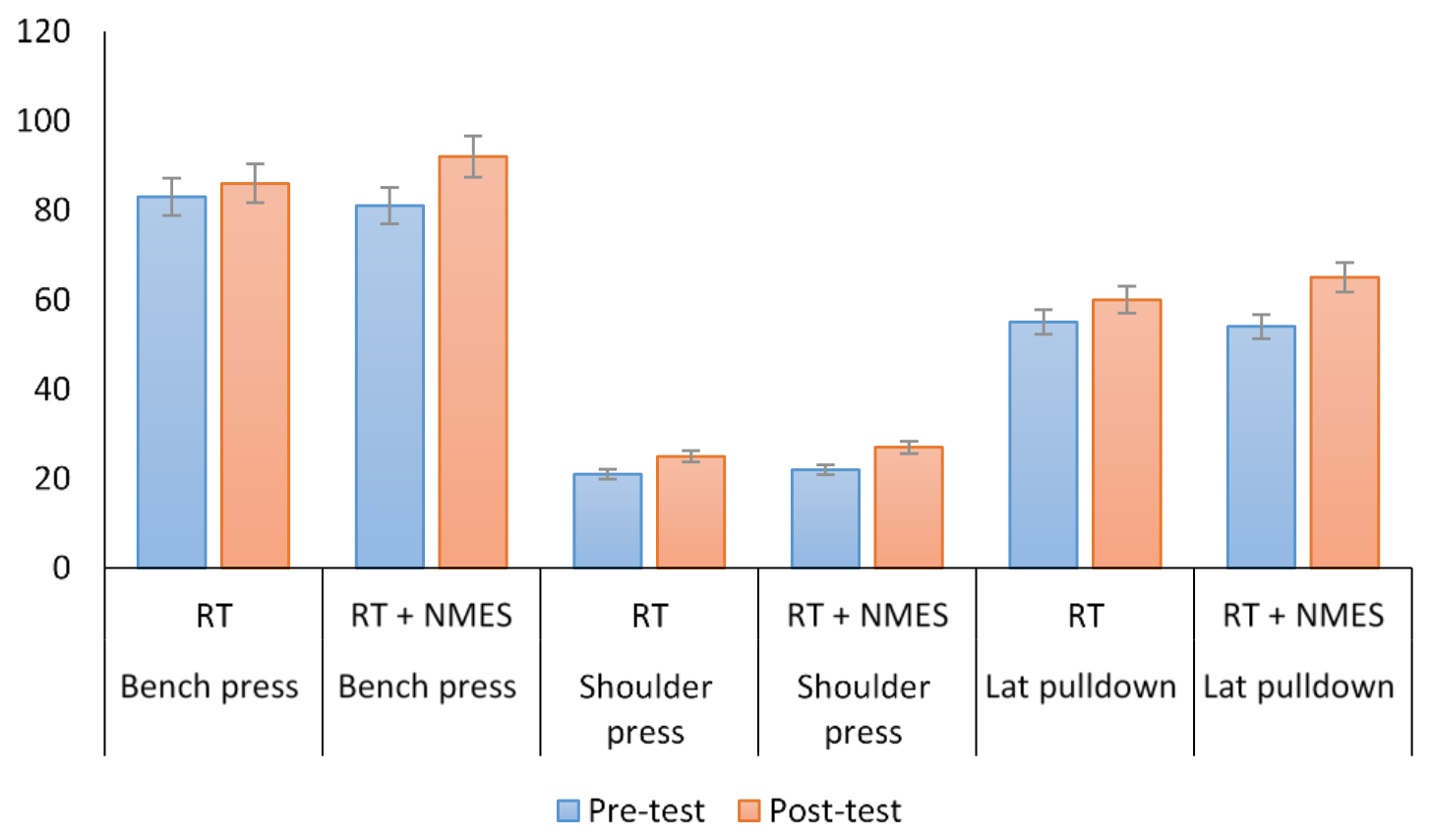
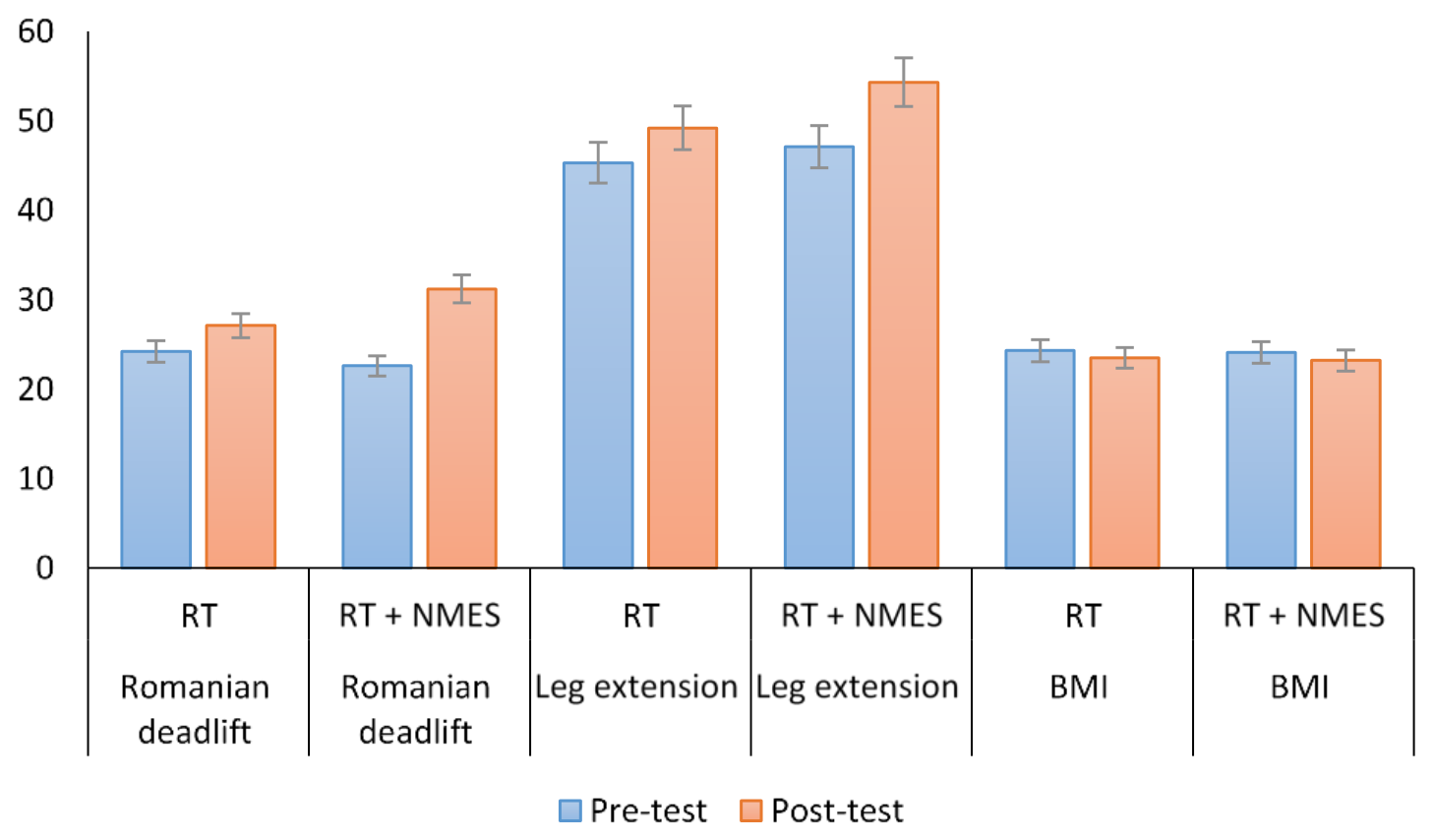
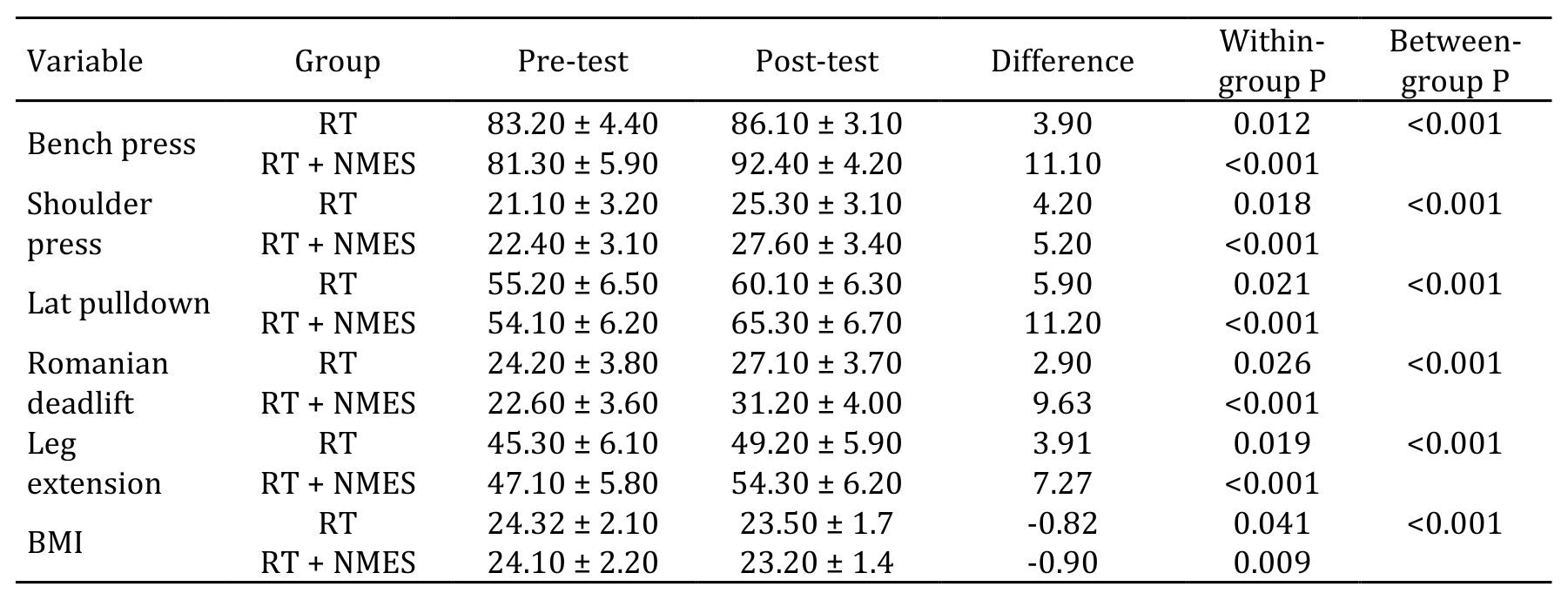
Analysis of covariance (ANCOVA), adjusting for baseline values, revealed significant between-group differences in all five measures of muscular strength, including the bench press, dumbbell shoulder press, lat pulldown, Romanian dumbbell deadlift, and leg extension (Table 1; p ≤ 0.05). These findings indicate that postintervention muscular strength differed significantly between the resistance training plus neuromuscular electrical stimulation (NMES) group and the resistance-training-only group after adjustment for baseline values. Body composition outcomes, including body mass index (BMI) and waist-to-hip ratio (WHR), were also assessed. However, the available statistical information is insufficient to establish the direction, magnitude, or statistical significance of the between-group differences in these outcomes (Fig. 1 and 2).
Discussion
The present study examined the effects of eight weeks of resistance training with concurrent neuromuscular electrical stimulation (NMES) on muscular strength and body composition in male strength athletes. The findings indicated significant between-group differences in five measures of muscular strength after adjustment for baseline values. These results suggest that adding NMES to resistance training may influence strength-related adaptations compared with resistance training alone. However, the direction and magnitude of these differences must be considered when evaluating the practical benefits of the combined intervention. The potential effects of concurrent NMES may be explained, in part, by differences in neuromuscular activation during electrically stimulated contractions. NMES activates peripheral motor nerves through externally applied electrical currents, producing muscle contractions that differ from voluntary contractions in their recruitment characteristics (12, 13). Motor unit recruitment during NMES depends on several factors, including electrode placement, stimulation intensity, tissue properties, and nerve excitability. Consequently, electrically evoked contractions may produce spatially restricted recruitment patterns and greater local fatigue under certain conditions (14, 15). When applied concurrently with resistance exercise, NMES may modify the overall neuromuscular stimulus. Nevertheless, whether these changes translate into additional strength gains depends on the interaction between electrical stimulation, voluntary muscle activation, mechanical loading, and recovery.
Fig. 1. Mean changes in study variables following the resistance training and neuromuscular electrical stimulation (NMES) protocols.
Fig. 2. Mean changes in study variables following the resistance training and neuromuscular electrical stimulation (NMES) protocols.
Table 1. Comparison of muscle strength and body composition between groups
Note: * Indicates a statistically significant within-group difference. # Indicates a statistically significant between-group difference.
Improvements in muscular strength following resistance training are generally attributed to neural and morphological adaptations, including changes in voluntary muscle activation, intermuscular coordination, muscle size, and force-generating capacity (16, 17). Concurrent NMES may influence some of these processes by providing an additional electrically evoked stimulus during exercise. However, the present study did not directly assess motor unit recruitment, muscle activation, or muscle morphology. Therefore, the underlying mechanisms responsible for the observed between-group differences cannot be established. Furthermore, the effects of NMES are likely to depend on stimulation parameters, exercise characteristics, training status, and individual tolerance (18). The interpretation of body composition outcomes requires particular caution. Resistance training can influence lean mass and fat mass, although these adaptations are also affected by nutritional intake, energy balance, and habitual physical activity (19). In addition, body composition estimates obtained using bioelectrical impedance analysis are sensitive to hydration status and measurement conditions. Accordingly, changes in body composition should not automatically be attributed to NMES without considering these potential sources of variation. The available results do not yet provide sufficient verified information to determine whether concurrent NMES produced additional improvements in body composition compared with resistance training alone. The interpretation of the findings also requires consideration of the study design and statistical analysis. Baseline-adjusted analysis of covariance provides a framework for comparing postintervention outcomes between groups when the relevant assumptions are satisfied (20). Nevertheless, statistical significance does not necessarily indicate a meaningful improvement in athletic performance. The magnitude and precision of between-group differences, together with their practical relevance, should be considered before drawing conclusions regarding the effectiveness of concurrent NMES. Previous research has suggested that combining NMES with voluntary exercise may provide additional strength-related benefits under certain conditions (21), although differences in training protocols and participant characteristics may contribute to inconsistent findings.
Several limitations should be acknowledged. The relatively small sample consisted exclusively of male strength athletes aged 20–30 years, limiting the generalizability of the findings to other populations. The intervention lasted eight weeks, and no follow-up assessment was conducted to determine whether the observed differences persisted after training. In addition, the study did not include direct measurements of neuromuscular activation or muscle morphology, preventing identification of the physiological mechanisms underlying the results. Future studies should incorporate more detailed neuromuscular assessments, standardized body composition measurements, and longer follow-up periods to clarify the potential additional benefits of NMES during resistance training.
Conclusion
Eight weeks of resistance training with concurrent neuromuscular electrical stimulation (NMES) resulted in significant between-group differences in muscular strength outcomes after adjustment for baseline values. These findings suggest that concurrent NMES may influence strength adaptations in resistance-trained male athletes. However, the magnitude and practical relevance of these differences require further evaluation. The available evidence from this study is insufficient to establish additional benefits for body composition or to identify the underlying neuromuscular mechanisms. Further well-controlled studies are needed before concurrent NMES can be recommended as a routine adjunct to resistance training in strength athletes.
Ethical Considerations
Compliance with ethical guidelines
This study was approved by the Ethics Committee of Islamic Azad University, Hamadan Branch (IR.IAU.H.REC.1402.121). Written informed consent was obtained from all participants prior to participation.
Funding
This research received no specific grant from any funding agency in the public, commercial, or not-for-profit sectors.
Authors' contributions
Seyed Mohammad Esmaeil Hassani Tabatabaei: Conceptualization, Methodology, Formal analysis, Supervision, Writing – original draft, Writing – review & editing.
Javad Almasi: Conceptualization, Methodology, Writing – original draft, Writing – review & editing.
All authors read and approved the final version of the manuscript.
Conflicts of interest
The authors declare no conflict of interest.
Type of Study: Applicable |
Subject:
Special
Received: 2026/07/21 | Accepted: 2026/11/16 | Published: 2026/11/23
Received: 2026/07/21 | Accepted: 2026/11/16 | Published: 2026/11/23
References
1. Zheng J, Wei Z, Zuo H, Wang K, Lin X, Chen J. The effect of adding neuromuscular electrical stimulation to exercise therapy on patellofemoral pain: a systematic review and meta-analysis. PLOS ONE. 2025;20(6):e0326785. [DOI:10.1371/journal.pone.0326785]
2. Ahmadi V. Effect of 8 weeks of gymnastics training with electrical stimulation on electromyographic and electroneurographic parameters of the calf muscle in gymnasts aged 8-12. Journal of Motor and Behavioral Sciences. 2023;6(4):1-11.
3. Adolph KE, Hoch JE. The importance of motor skills for development. Nestlé Nutrition Institute Workshop Series. 2020;95:136-144. [DOI:10.1159/000511511]
4. Zaroni RS, Brigatto FA, Schoenfeld BJ, Braz TV, Benvenutti JC, Germano MD, et al. High resistance-training frequency enhances muscle thickness in resistance-trained men. Journal of Strength and Conditioning Research. 2019;33(Suppl 1):S140-S151. [DOI:10.1519/JSC.0000000000002643]
5. Mero AA, Hulmi JJ, Salmijärvi H, Katajavuori M, Haverinen M, Holviala J, et al. Resistance training induced increase in muscle fiber size in young and older men. European Journal of Applied Physiology. 2013;113(3):641-650. [DOI:10.1007/s00421-012-2466-x]
6. Delezie J, Handschin C. Endocrine crosstalk between skeletal muscle and the brain. Frontiers in Neurology. 2018;9:698. [DOI:10.3389/fneur.2018.00698]
7. Pedersen BK. Physical activity and muscle-brain crosstalk. Nature Reviews Endocrinology. 2019;15(7):383-392. [DOI:10.1038/s41574-019-0174-x]
8. Bay ML, Pedersen BK. Muscle-organ crosstalk: focus on immunometabolism. Frontiers in Physiology. 2020;11:567881. [DOI:10.3389/fphys.2020.567881]
9. Blizzard LeBlanc DR, Rioux BV, Pelech C, Moffatt TL, Kimber DE, Duhamel TA, et al. Exercise-induced irisin release as a determinant of the metabolic response to exercise training in obese youth: the EXIT trial. Physiological Reports. 2017;5(23):e13539. [DOI:10.14814/phy2.13539]
10. Bompa TO, Buzzichelli C. Periodization: theory and methodology of training. 6th ed. Champaign (IL): Human Kinetics; 2018. [DOI:10.5040/9781718225435]
11. Bull FC, Al-Ansari SS, Biddle S, Borodulin K, Buman MP, Cardon G, et al. World Health Organization 2020 guidelines on physical activity and sedentary behaviour. British Journal of Sports Medicine. 2020;54(24):1451-1462. [DOI:10.1136/bjsports-2020-102955]
12. Diamond A. Executive functions. Handbook of Clinical Neurology. 2020;173:225-240. [DOI:10.1016/B978-0-444-64150-2.00020-4]
13. Naseri SIS S. The role of resistance training in improving executive function in children. Journal of Motor and Behavioral Sciences. 2025;8(2). [اطلاعات نویسنده و صفحات نیازمند تأیید]
14. Zeng N, Ayyub M, Sun H, Wen X, Xiang P, Gao Z. Effects of physical activity on motor skills and cognitive development in early childhood: a systematic review. BioMed Research International. 2017;2017:2760716. [DOI:10.1155/2017/2760716]
15. Song Y, Fan B, Wang C, Yu H. Meta-analysis of the effects of physical activity on executive function in children and adolescents with attention deficit hyperactivity disorder. PLOS ONE. 2023;18(8):e0289732. [DOI:10.1371/journal.pone.0289732]
16. Happ KA, Behringer M. Neuromuscular electrical stimulation training vs. conventional strength training: a systematic review and meta-analysis of the effect on strength development. Journal of Strength and Conditioning Research. 2022;36(12):3527-3540. [DOI:10.1519/JSC.0000000000004119]
17. Borzuola R, Laudani L, Labanca L, Macaluso A. Superimposing neuromuscular electrical stimulation onto voluntary contractions to improve muscle strength and mass: a systematic review. European Journal of Sport Science. 2023;23(8):1547-1559. [DOI:10.1080/17461391.2022.2104656]
18. Sarvar F, Fallah Mohammadi M, Safari F. The effect of neuromuscular training on balance, functional movement, and proprioception of the knee and ankle in female taekwondo athletes aged 15-18 years. Journal of Sport Biomechanics. 2023;9(4):320-335. [DOI:10.61186/JSportBiomech.9.4.320]
19. Qiyami Rad A, Jafari Amir Khiz S, Shahbazi B. The effect of extra-functional exercises with and without functional muscle stimulation on lumbar lordosis in women aged 20-30 years in Tabriz. Journal of Sport Biomechanics. 2023;9(3):192-202. [DOI:10.61186/JSportBiomech.9.3.192]
20. Hashim H, Mohammed SA, Mohammed B, Ismaeel SA, Nasir M. Biceps and triceps muscle activation under progressive loads: a study on functional symmetry of the upper limbs. Journal of Sport Biomechanics. 2025;11(1):64-78. [DOI:10.61186/JSportBiomech.11.1.64]
21. Filipović A, Kleinöder H, Dörmann U, Mester J. Electromyostimulation-a systematic review of the influence of training regimens and stimulation parameters on effectiveness in electromyostimulation training of selected strength parameters. Journal of Strength and Conditioning Research. 2011;25(11):3218-3238. [DOI:10.1519/JSC.0b013e318212e3ce]
| Rights and permissions | |
 |
This work is licensed under a Creative Commons Attribution-NonCommercial 4.0 International License. |

Journal of Sport Biomechanics
Department of Sport Biomechanics, Faculty of Humanities, Islamic Azad University, Hamedan Branch, Prof. Mousivand Blvd, Imam Khomeini Blvd, Hamedan, Iran.
Journal Tel: +98 81 34494042
Website: http://biomechanics.iauh.ac.ir
Email: sportbiomechanics@iauh.ac.ir
