

Volume 12, Issue 4 (2-2027)
J Sport Biomech 2027, 12(4): 946-984 |
Back to browse issues page




Download citation:
BibTeX | RIS | EndNote | Medlars | ProCite | Reference Manager | RefWorks
Send citation to:


BibTeX | RIS | EndNote | Medlars | ProCite | Reference Manager | RefWorks
Send citation to:
R.N A, S D, N S, Kumar P, Jayaraj V, Suganthirababu P. Effects of Ladder Drill Training and Plyometric Training on Planned Change-of-Direction Performance in Sub-Elite Badminton Players: A Two-Arm, Parallel-Group Randomized Active-Comparator Trial. , J Sport Biomech. 2027; 12 (4) :946-984
URL: http://biomechanics.iauh.ac.ir/article-1-551-en.html
URL: http://biomechanics.iauh.ac.ir/article-1-551-en.html
Anusheela R.N1 

 , Dhanusia S *1 , Suriya N1 , Priyadharshini Kumar1 , Vanitha Jayaraj1 , Prathap Suganthirababu2
1- Saveetha College of Physiotherapy, Saveetha Institute of Medical and Technical Sciences, Chennai, Tamil Nadu, India.
2- Saveetha College of Physiotherapy, Saveetha Institute of Medical and Technical Sciences, Chennai, Tamil Nadu, India. & Department of Physiotherapy, College of Pharmacy and Health Sciences, Center of Medical and Bio-Allied Health Sciences Research, Ajman University, Ajman, United Arab Emirates.
2- Saveetha College of Physiotherapy, Saveetha Institute of Medical and Technical Sciences, Chennai, Tamil Nadu, India. & Department of Physiotherapy, College of Pharmacy and Health Sciences, Center of Medical and Bio-Allied Health Sciences Research, Ajman University, Ajman, United Arab Emirates.
Full-Text [PDF 2016 kb]
(16 Downloads)
| Abstract (HTML) (41 Views)
Full-Text: (15 Views)
Introduction
Badminton is one of the most widely played racket sports worldwide. The Badminton World Federation (BWF) estimates that approximately 200 million people participate in badminton recreationally, while more than 7,000 players compete annually in national and international tournaments (1). The sport is played across all age groups and competitive levels and is recognized as one of the fastest racket sports, requiring rapid decision-making, precise motor control, and a high level of physical fitness (2, 3). It is characterized by repeated high-intensity movements, including jumping, lunging, rapid acceleration and deceleration, multidirectional changes of direction, and explosive upper-limb actions (4-7). Match-play analyses have demonstrated that badminton consists of short, high-intensity rallies alternating with short recovery periods, imposing considerable demands on both aerobic and anaerobic energy metabolism (8-10). Consequently, successful badminton performance relies on multiple performance-related attributes, including muscular strength, power, speed, coordination, endurance, flexibility, balance, stability, change-of-direction ability, and neuromuscular control (11-14). Change-of-direction (COD) performance is an important physical demand in badminton, involving rapid deceleration and subsequent acceleration in a different direction during court movements (15, 16).
Given the importance of change of direction performance in badminton, specific training approaches are required to develop the footwork, movement speed, and lower-limb power needed for efficient court movement. Ladder drill training, an integral component of Speed, Agility, and Quickness (SAQ) training, is commonly used to develop footwork and movement speed, which are important components of planned change of direction performance in badminton players (17, 18). It requires athletes to perform rapid and precise footwork patterns using an agility ladder while maintaining coordination, balance, concentration, and postural control (19). The drills can be progressively advanced from simple to complex movement patterns, placing increasing demands on neuromotor coordination, which is considered important for rapidly performing complex motor tasks in fast-action sports (20). Common ladder drill variations, including the in-out shuffle, zig-zag crossover, side shuffle, one-foot-in-each, two-feet-in-each, and Ali shuffle, are incorporated into training programmes targeting footwork, movement speed, lower-limb coordination, and planned change of direction performance (21-23). Through repeated practice of multidirectional footwork patterns, ladder drill training may improve neuromuscular coordination, foot speed, movement precision, and movement efficiency, potentially contributing to better performance during planned change of direction tasks (17, 23). From a biomechanical perspective, ladder drills involve rapid foot-placement patterns, frequent steps, quick adjustments during ground contact, and coordinated movements in different directions. These drills require athletes to control foot placement accurately and reposition the lower limbs rapidly from one step to the next (24). In comparison, plyometric exercises involve rapid eccentric and concentric muscle actions through the stretch–shortening cycle (25), promoting rapid force generation, rate of force development (26), and the production of vertical or lateral ground forces depending on the exercise (27). Therefore, although both training methods may improve physical performance attributes relevant to planned change of direction tasks, they provide different training stimuli. Ladder drills primarily emphasize rapid footwork, coordination, and movement control, whereas plyometric exercises place greater emphasis on reactive force production and explosive power. These differences in training characteristics may influence their respective effects on planned change of direction performance.
Plyometric training is another widely employed conditioning strategy for improving physical performance attributes relevant to change of direction performance in badminton. It consists of explosive body-weight exercises that utilize the stretch-shortening cycle, in which a rapid eccentric action is followed immediately by a forceful concentric contraction, thereby increasing force production and movement efficiency (28, 29). Previous studies have reported beneficial effects of plyometric training on agility, speed, muscular power, coordination, landing mechanics, lower-limb neuromuscular function, and change of direction performance across various athletic populations (30-33). Commonly used plyometric exercises include squat jumps, depth jumps, tuck jumps, bounding drills, lateral hopping exercises, and sport-specific jump drills that closely replicate the movement demands of badminton (34). These exercises enable players to accelerate, decelerate, change direction rapidly, generate explosive power for jumping and stroke execution, and improve dynamic balance which are relevant to the physical demands of badminton (34-38). Evidence also suggests that systematic plyometric training enhances physical preparedness and may contribute to reducing lower-limb injury incidence in athletic populations (31, 39).
The potential transfer of adaptations from a training intervention to a performance outcome can be considered according to the principle of training specificity, whereby the characteristics of the training stimulus influence the nature and extent of its transfer to subsequent performance tasks (40-42). This principle provides a theoretical framework for considering whether the movement characteristics and mechanical demands practiced during training are sufficiently related to those required during performance testing to facilitate transfer. In the present study, ladder drills repeatedly involve rapid foot-placement sequences and multidirectional stepping, whereas the Modified Agility t-test (MAT) and 505 Agility Test require rapid movement and planned changes of direction (43, 44). The similarity between ladder-based footwork and the movement patterns involved in these tests may provide a rationale for improvements in planned COD performance following ladder drill training. However, sharp directional changes also place substantial demands on the lower limbs, requiring rapid deceleration, controlled absorption of braking forces through eccentric muscle actions, and subsequent force generation to accelerate in a different direction. These mechanical requirements may not be fully addressed through the rapid foot-placement sequences emphasized in ladder drills. Plyometric training may offer a complementary approach by developing the capacity to absorb and generate force during dynamic movements. Therefore, although movement specificity provides a theoretical basis for the potential benefits of ladder drills, the relative effects of ladder drill and plyometric training on planned COD performance remain an empirical question investigated in the present randomized controlled trial.
Previous research has investigated various training approaches to improve speed, agility, and change of direction related performance in badminton players. Chandrakumar and Ramesh (17) reported improvements in speed and agility following ladder-drill and speed, agility, and quickness (SAQ) training among sports-club badminton players. Other studies have examined different ladder-drill variations and agility-oriented training approaches in badminton players (22, 23). However, these investigations primarily evaluated broader agility and physical-performance outcomes rather than specifically examining pre-planned change of direction performance. Furthermore, a study combining ladder drills with plyometric exercises and multidirectional speed drills reported improvements in change of direction performance among young female volleyball players, although the combined intervention did not allow the independent contribution of each training component to be established (21). Plyometric-based training has also been investigated among badminton players, with reported improvements in agility, dynamic postural control, and change of direction performance (34, 45, 46). Evidence from other team-sport populations has also demonstrated improvements in change of direction speed following multidirectional plyometric training (33). A comparative study evaluating plyometric and SAQ training in amateur badminton players reported improvements in agility and speed following both approaches, although significant between-group differences were not observed for these outcomes (36). Nevertheless, SAQ training incorporates a broader range of exercises and cannot be considered equivalent to an intervention consisting exclusively of ladder drills. Thus, although previous studies provide evidence supporting both ladder-based and plyometric training among badminton players, their comparative effects as separate interventions on pre-planned change of direction performance remain insufficiently established. In particular, evidence directly comparing ladder-drill training and plyometric training using specific pre-planned change of direction tests among sub-elite badminton players is limited. The Modified Agility t-test (MAT) and 505 Agility Test assess planned directional movement through different movement sequences and turning demands. Therefore, the present randomized controlled trial aimed to compare the effects of six weeks of ladder-drill training and plyometric training on pre-planned change of direction performance, assessed using the MAT and 505 Agility Test, in sub-elite badminton players. The primary hypothesis was that both interventions would reduce completion times on both tests. The secondary directional hypothesis was that ladder-drill training would produce greater reductions in completion times than plyometric training, based on the movement similarity between ladder-based footwork and the planned change of direction demands represented by these tests.
Methods
Study Design and Participants
A two-arm, parallel-group, active-comparator randomized controlled trial was conducted at Nothing But Net Badminton Academy, Chennai, India, to compare the effects of ladder drill training and plyometric training on planned change-of-direction performance in sub-elite badminton players. Both groups continued their regular badminton practice alongside their assigned interventions. As no non-intervention or regular-training-only control group was included, the study was designed to compare the relative effects of the two training approaches rather than determine their effectiveness compared with regular training alone.
Participants were recruited from the academy using convenience sampling. The sampling frame consisted of actively training sub-elite badminton players who were available during the recruitment period and met the prespecified eligibility criteria. Recruitment was conducted from November 2025 to January 2026, and the final post-intervention assessment was completed in March 2026.
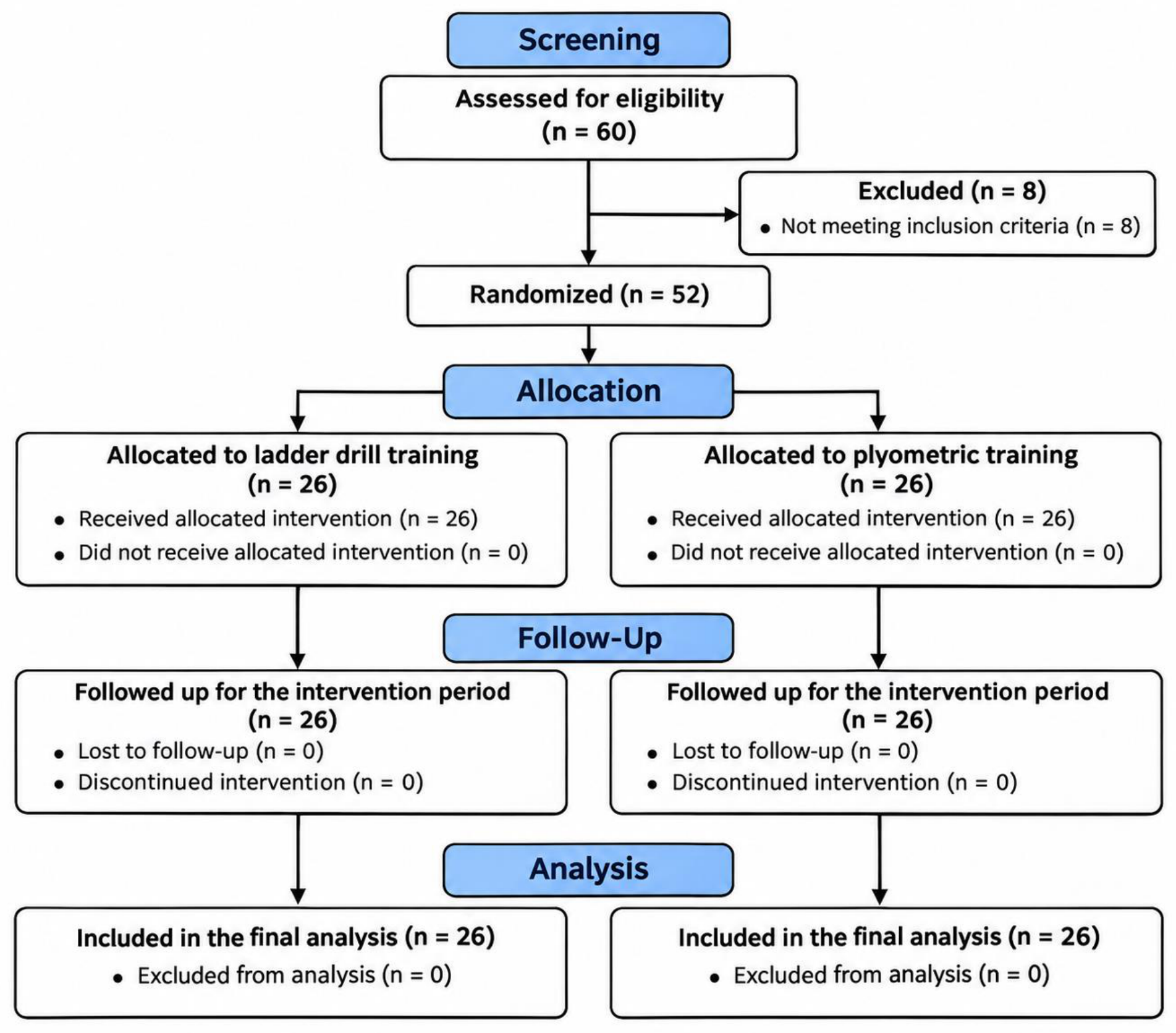
The study protocol was finalized and approved by the Institutional Scientific Review Board of Saveetha College of Physiotherapy (Approval No. 005/10/2025/ISRB/UGSR/SCPT) before recruitment commenced. An active-comparator design was adopted to allow all participants to continue their regular badminton practice while receiving a structured exercise intervention. Athletes and members of the public were not involved in the design, conduct, analysis, interpretation, or reporting of the trial. The study was not prospectively registered in a public clinical trial registry. Initially, 60 sub-elite badminton players were screened, of whom 52 met the eligibility criteria and were included in the study (Fig. 1).
The sample size was calculated using G*Power software (version 3.1) based on a two-tailed independent-samples t-test, with an alpha level of 0.05, statistical power of 0.80, and an anticipated effect size of Cohen’s d = 0.80. The selection of a large anticipated effect size was informed by previous badminton-specific and sports-training studies that used similar assumptions for sample-size determination (47, 48). The calculated sample size was 52 participants, with 26 allocated to each intervention group.
The original sample-size calculation was based on a between-group comparison using an independent-samples t-test, consistent with the initially planned statistical analysis involving paired and independent t-tests. Following commencement of the study, the analysis plan was revised to use separate analyses of covariance (ANCOVA), comparing post-intervention scores between groups while adjusting for the corresponding baseline values. This approach was adopted to account for potential baseline differences. The original sample-size calculation was retained, and no separate a priori calculation based on the revised ANCOVA model was performed. No changes were made to the outcome measures, and no additional participants were recruited to account for anticipated attrition. No interim analyses or formal stopping guidelines were specified. Eight of the 60 screened players were excluded before randomization because they did not meet the eligibility criteria. All 52 randomized participants completed the study and were included in the final analysis. The primary outcome was planned change-of-direction performance, assessed using the Modified Agility T-test (MAT) and 505 Agility Test.
Fig. 1. CONSORT Flowchart
The principal investigator conducted participant screening and enrolment. Group allocation was performed after completion of the baseline assessment. An independent researcher, who was not involved in recruitment, intervention delivery, outcome assessment, or data analysis, generated the random allocation sequence using a physical lottery procedure. Equal numbers of slips marked “A” and “B,” representing ladder drill training and plyometric training, respectively, were placed in an opaque container, thoroughly mixed, and drawn individually. The order of the drawn slips determined the allocation sequence.
The independent researcher documented the sequence and prepared sequentially numbered, opaque, sealed envelopes (SNOSE) containing the corresponding group assignments. A second independent researcher managed allocation concealment and opened the envelopes sequentially only after each eligible participant had completed enrolment and baseline assessment. Thus, the principal investigator had no access to the allocation sequence or upcoming assignments before baseline assessment. This separation of sequence generation and allocation concealment was intended to minimize selection and allocation bias.
Because of the nature of the exercise interventions, participants and the supervising physiotherapist could not be blinded. However, the assessor conducting the MAT and 505 Agility Test was blinded to group allocation to minimize detection bias.
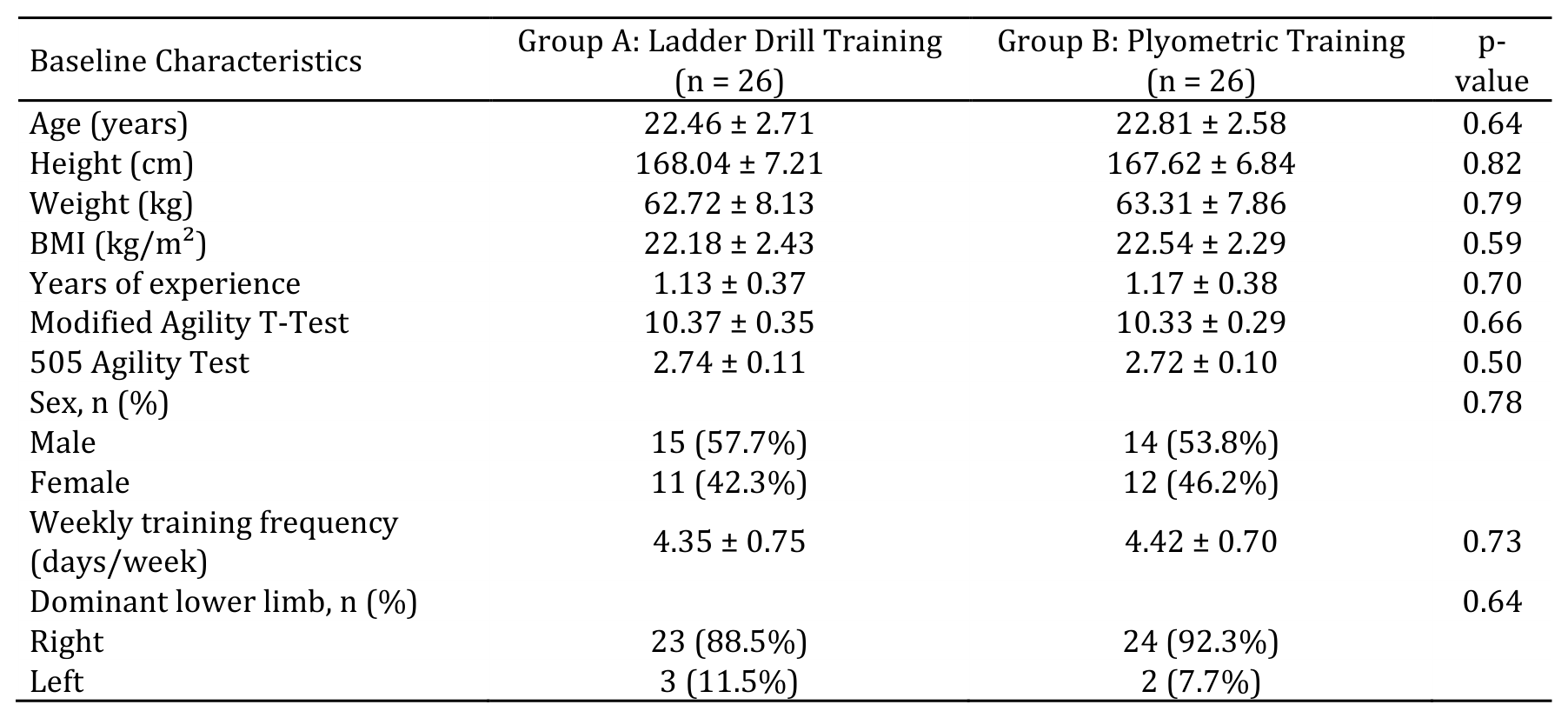
Sub-elite badminton players of either sex, aged 18–30 years, were eligible if they had at least six months of continuous badminton training experience, participated in structured training at least three times per week, and actively competed in district- or state-level badminton competitions. Sub-elite players were defined as regularly trained competitive athletes participating in academy-level training and district- or state-level competitions but not competing at the national or international elite level. Participants were also required to have medical clearance for moderate- to high-intensity physical activity. Baseline demographic and training characteristics, including age, sex, height, weight, body mass index (BMI), weekly training frequency, and dominant lower limb, are presented in Table 1. Exclusion criteria included lower-limb surgery, fracture, or major injury within the preceding six months; current musculoskeletal pain or injury involving the lower limbs or spine; neurological or balance disorders affecting movement performance; medical conditions contraindicating moderate- to high-intensity exercise; and participation in a structured ladder drill or plyometric training program during the previous three months.
Procedure
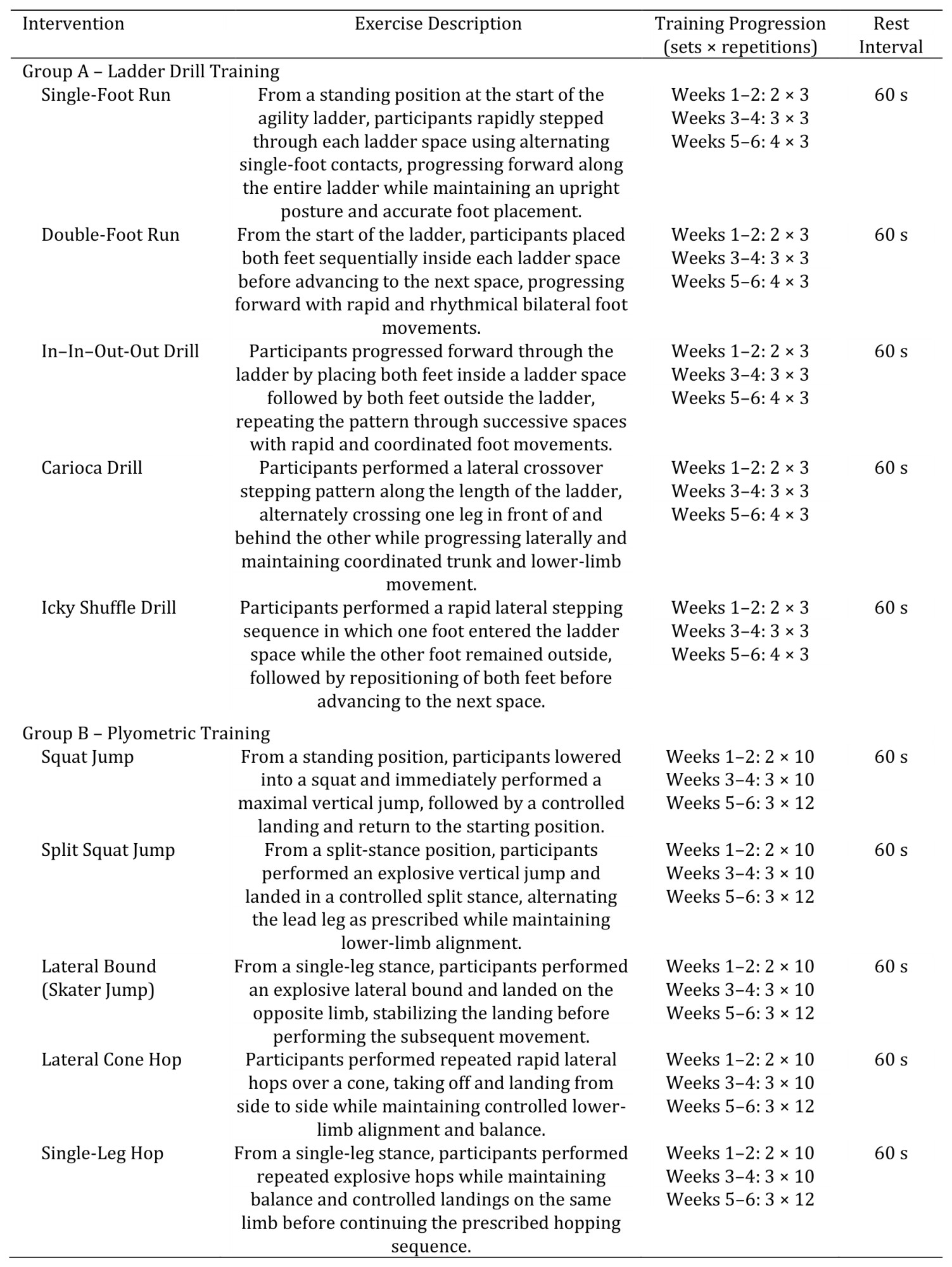
All participants completed a six-week supervised training program consisting of three sessions per week, with each session lasting approximately 40–45 minutes, in addition to their regular badminton practice. Regular badminton training was standardized across both groups at approximately two hours per day, five days per week (approximately 10 hours per week). Participants were instructed to maintain this schedule throughout the intervention to minimize differences in background training exposure. Each intervention session consisted of a 10-minute warm-up, 25–30 minutes of intervention-specific exercises, and a 5-minute cool-down. Both interventions were delivered by the same licensed physiotherapist according to the standardized protocols presented in Table 2. The physiotherapist supervised exercise execution, monitored movement technique and landing mechanics, ensured adherence to the prescribed progression, and monitored participants for pain, discomfort, or adverse events.
Table 1. Baseline Characteristics
Note: Data are presented as mean ± standard deviation (SD) or frequency (%). p-values represent between-group comparisons at baseline. Statistical significance was set at p < 0.05.
Table 2. Six-week ladder drill and plyometric training protocols
The two groups trained separately under direct supervision to minimize intervention contamination. Participants were instructed not to perform exercises assigned to the alternative group or exchange training techniques during the intervention period. Both groups followed the same session frequency, approximate duration, warm-up and cool-down procedures, and standardized 60-second rest intervals between sets and exercises. Exercise intensity during supervised sessions was monitored individually using a 0–10 rating of perceived exertion (RPE) scale. However, RPE was not recorded during regular badminton practice, and the associated internal training load and cumulative fatigue could not be quantified. Furthermore, external mechanical workload was not directly matched between interventions because ladder drills and plyometric exercises differed in movement characteristics, repetitions, and mechanical demands. Therefore, potential differences in exercise-specific loading could not be completely excluded.
Group A – Ladder Drill Training
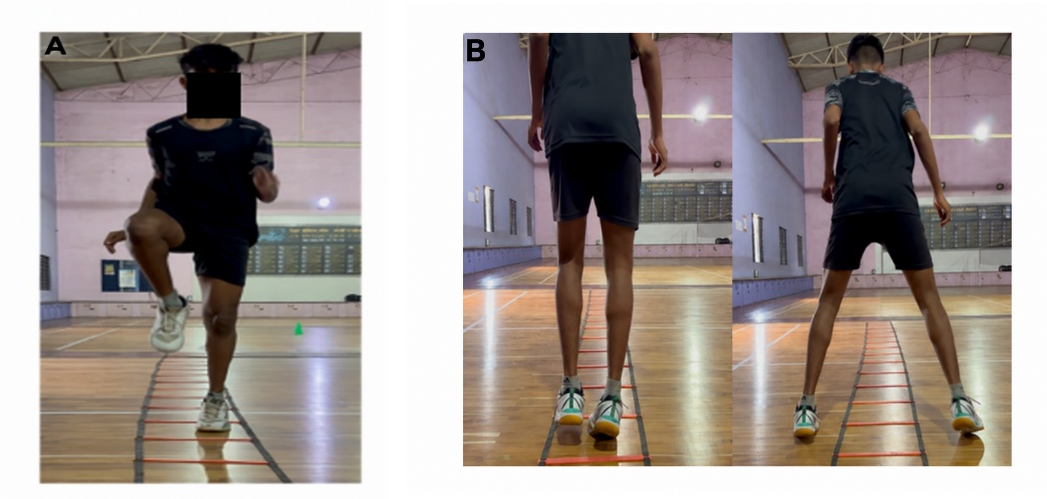
The 10-minute warm-up consisted of 2–3 minutes of light jogging followed by approximately 7–8 minutes of dynamic stretching targeting the major lower-limb muscle groups, including the hip flexors, quadriceps, hamstrings, gluteal muscles, gastrocnemius–soleus complex, and ankle musculature. The ladder drill training program consisted of five exercises: Single-Foot Run, Double-Foot Run, In–In–Out–Out Drill, Carioca Drill, and Icky Shuffle Drill. These exercises were selected to emphasize rapid stepping, foot-placement accuracy, neuromuscular coordination, dynamic balance, and multidirectional movement relevant to badminton footwork. Representative images of selected exercises are presented in Fig. 2. Participants were instructed to perform each drill as rapidly as possible while maintaining correct movement technique, body alignment, and accurate foot placement. Training was progressively increased by adjusting the number of repetitions or ladder traversals over the six-week intervention while maintaining exercise quality and participant safety. One repetition was defined as one complete traversal of the agility ladder. A standardized 60-second rest interval was provided between sets and exercises. The detailed training progression is presented in Table 2. The 5-minute cool-down consisted of low-intensity walking followed by static stretching of the quadriceps, hamstrings, gastrocnemius, soleus, hip flexors, hip adductors, gluteal muscles, and lower back. Each stretch was maintained for approximately 20–30 seconds.
Fig. 2. Representative ladder drill exercises: (A) Single-Foot Run and (B) In–In–Out–Out Drill
Group B – Plyometric Training
The warm-up and cool-down procedures were identical to those used in the ladder drill group.
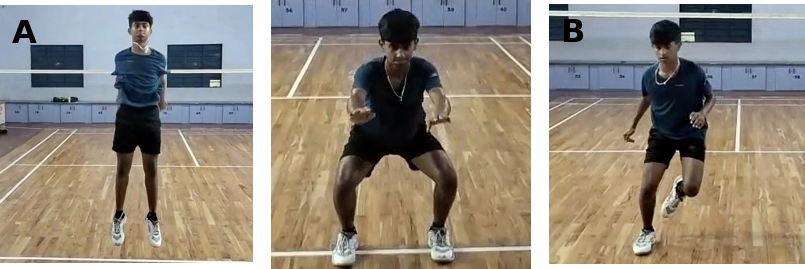
The plyometric training program consisted of five exercises: Squat Jump, Split Squat Jump, Lateral Bound (Skater Jump), Lateral Cone Hop, and Single-Leg Hop. These exercises were selected to target lower-limb explosive power, reactive force production, dynamic stability, neuromuscular control, and multidirectional force production. Representative images of selected exercises are shown in Fig. 3. Participants were instructed to perform each repetition with maximal intended effort while maintaining appropriate landing mechanics, lower-limb alignment, and movement control. Training volume was progressively increased over the six-week intervention while maintaining exercise quality and participant safety. One repetition was defined as one complete execution of the prescribed jumping or hopping movement. A standardized 60-second rest interval was provided between sets and exercises. The detailed plyometric training progression is presented in Table 2.
Training Attendance, Adherence, and Protocol Modifications
Both groups were scheduled to complete three supervised sessions per week for six weeks, resulting in 18 prescribed sessions per participant. Attendance was recorded throughout the intervention using an attendance register. Participants received WhatsApp reminders approximately 24 hours and two hours before scheduled sessions. Flexible session timings and make-up sessions within the same week were offered when necessary to maintain the prescribed training frequency. Participants also provided written commitments to complete the intervention. Session RPE was recorded after each supervised training session. Session training load (sRPE) was calculated by multiplying the RPE score by the session duration (45 minutes). Mean session RPE was 4.03 ± 0.29 in the ladder drill group and 4.00 ± 0.27 in the plyometric group. The corresponding mean session training loads were 181.35 ± 12.91 and 179.81 ± 12.16 arbitrary units (AU), respectively, with no statistically significant between-group difference (p = 0.660). All 52 participants completed the 18 prescribed intervention sessions, resulting in 100% completion of the prescribed intervention dose, with no withdrawals. No exercise substitutions, modifications, or reductions in the prescribed training programs were required. Exercise-specific training volume differed between groups because of the distinct characteristics of the interventions. In the ladder drill group, each exercise progressed from 2 × 3 traversals during Weeks 1–2 to 3 × 3 traversals during Weeks 3–4 and 4 × 3 traversals during Weeks 5–6. In the plyometric group, each exercise progressed from 2 × 10 repetitions during Weeks 1–2 to 3 × 10 repetitions during Weeks 3–4 and 3 × 12 repetitions during Weeks 5–6 (Table 2). Traversal and repetition counts were specific to each exercise type and were not considered equivalent measures of mechanical workload. Because individual exercise-bout durations were not recorded, numerical work-to-rest ratios could not be calculated. Thus, although session structure and rest intervals were standardized, differences in external mechanical loading may have contributed to the observed between-group differences. Participants were instructed to report any pain, discomfort, or adverse events immediately. All sessions were monitored for protocol adherence, correct exercise execution, and participant safety. No adverse events or training-related injuries were reported during the study.
Fig. 3. Representative plyometric exercises: (A) Squat Jump and (B) Lateral Bound (Skater Jump).
Outcome Measures
Outcome assessments were conducted at baseline and immediately after the six-week intervention by the same assessor under standardized conditions. The MAT and 505 Agility Test were used to evaluate planned change-of-direction performance. Both tests involved predetermined movement patterns without unpredictable external stimuli and therefore did not assess reactive agility. The MAT was performed first, followed by the 505 Agility Test, with a three-minute recovery period between tests. The testing order and recovery period were identical for all participants. Before the recorded trials, participants completed one or two familiarization attempts for each test at submaximal effort, followed by recorded trials performed with maximal intended effort. Completion times were measured manually using a Casio HS-80TW-1DF digital stopwatch (Casio Computer Co., Ltd., Japan). Although the stopwatch had millisecond display capability, times were recorded to the nearest 0.01 s because timing was manually initiated and stopped. Electronic timing gates were unavailable at the study site. The same assessor, stopwatch, and timing procedure were used throughout the study to maintain procedural consistency. Manual timing is susceptible to operator reaction-time error and may provide lower measurement precision than electronic timing gates. This limitation is particularly relevant when interpreting the relatively small between-group differences in change observed for the MAT (0.23 s) and 505 Agility Test (0.13 s). Although standardized procedures were used, the possibility that manual timing error influenced these differences cannot be excluded. Therefore, the results should be interpreted cautiously, and future studies should employ electronic timing gates to improve measurement precision.
Modified Agility T-test
The MAT was performed on a T-shaped course. The distance from the starting line to the central cone was 5 m, with 2.5 m between the central cone and each lateral cone and 5 m between the central and rear cones. Participants began in a standing position with both feet behind the starting line. On the start signal, they moved forward to the central cone, completed the prescribed lateral and backward movements, and returned through the finish line. After one or two familiarization attempts, participants completed three recorded trials at maximal intended effort, with a three-minute rest period between trials. The fastest trial was used for statistical analysis. Lower completion times indicated better planned change-of-direction performance.
505 Agility Test
The 505 Agility Test was performed using a 10-m approach distance to the timing point. Participants accelerated through the approach, crossed the timing point, continued for 5 m to the turning line, performed a 180° turn, and returned through the timing point. Each participant used their preferred turning limb, and the same limb and turning direction were maintained across all recorded trials. Only one turning direction was assessed; therefore, bilateral turning performance was not evaluated. Following one or two familiarization attempts, participants completed three recorded trials at maximal intended effort, with a three-minute rest period between trials. The fastest completion time was used for statistical analysis. Lower completion times indicated better planned change-of-direction performance.
Statistical Analysis
Statistical analyses were performed using IBM SPSS Statistics for Windows, version 29.0. Descriptive data were expressed as mean ± standard deviation (SD). The Shapiro–Wilk test was used to assess normality. As the data showed no statistically significant departures from normality (p > 0.05), parametric statistical methods were applied. Separate analyses of covariance (ANCOVA) were performed for the MAT and 505 Agility Test to compare post-intervention completion times between the ladder drill and plyometric training groups, with the corresponding baseline values included as covariates. This approach adjusted for baseline scores when estimating between-group differences in post-intervention performance. Levene’s test was used to assess the homogeneity of error variances. Results were reported as adjusted means, standard errors (SE), 95% confidence intervals (CI), F-statistics, p-values, and partial eta squared (η²p). Bonferroni adjustment was applied to pairwise comparisons of estimated marginal means. Statistical significance was set at p < 0.05. Between-group effect sizes were calculated using Cohen’s d, defined as the difference in mean change scores between groups divided by the pooled standard deviation of change scores. Change scores were calculated by subtracting post-intervention values from pre-intervention values:
d = (Mean change in ladder drill group − Mean change in plyometric group) / Pooled standard deviation of change scores
Intra-session reliability of the three repeated trials was assessed using the intraclass correlation coefficient (ICC). A two-way mixed-effects, single-measure model [ICC (3,1)] was used, and the standard error of measurement (SEM) was calculated to quantify absolute measurement error.
Results
A total of 52 participants completed the study, with 26 participants allocated to each intervention group. The baseline characteristics of the participants are presented in Table 1. The ladder drill and plyometric training groups were comparable at baseline, with no statistically significant between-group differences in participant characteristics or baseline measurements (p > 0.05). Intra-session reliability was assessed using the three repeated trials obtained during the pre-intervention assessment. The intraclass correlation coefficient (ICC [3,1]) was 0.990 (95% CI: 0.984–0.994) for the Modified Agility t-test and 0.907 (95% CI: 0.858–0.942) for the 505 Agility Test. The corresponding standard error of measurement (SEM) values were 0.032 s for both tests.
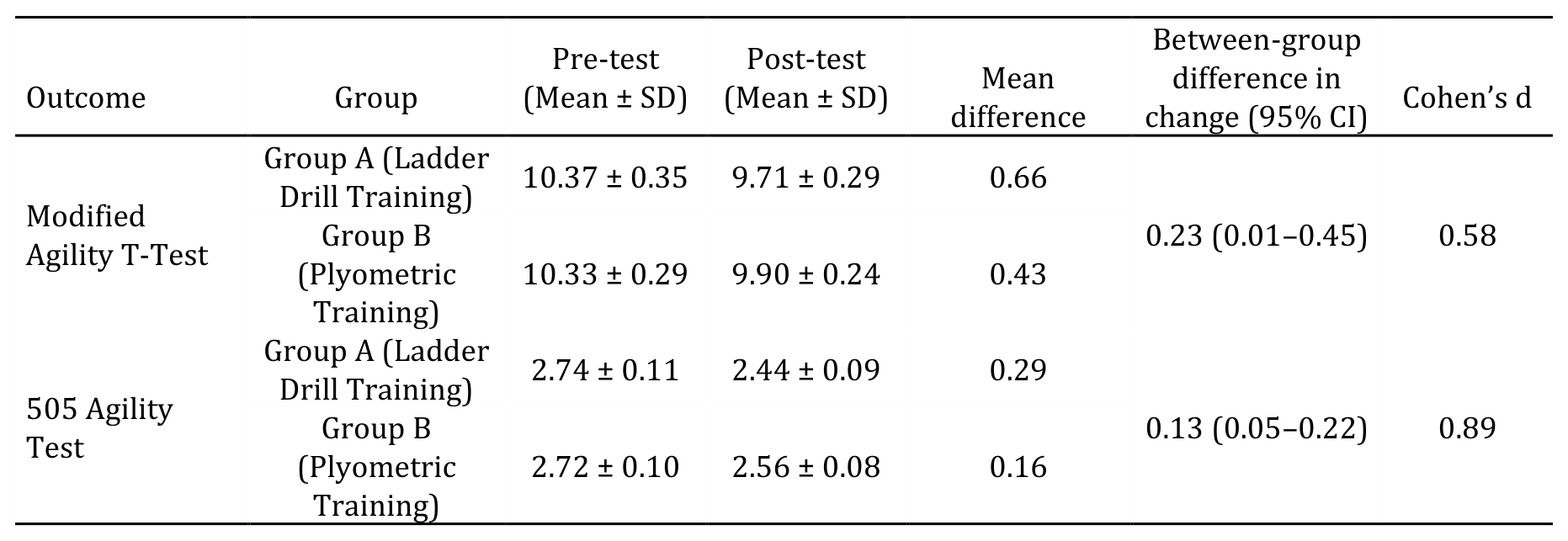
Pre- and post-intervention pre planned change of direction performance values are presented in Table 3. In the ladder drill training group, Modified Agility t-test completion time decreased from 10.37 ± 0.35 s at baseline to 9.71 ± 0.29 s after six weeks, representing a mean reduction of 0.66 s (95% CI: 0.48-0.83). In the plyometric training group, completion time decreased from 10.33 ± 0.29 s to 9.90 ± 0.24 s, representing a mean reduction of 0.43 s (95% CI: 0.28-0.57). Similarly, 505 Agility Test completion time decreased from 2.74 ± 0.11 s to 2.44 ± 0.09 s in the ladder drill training group and from 2.72 ± 0.10 s to 2.56 ± 0.08 s in the plyometric training group, corresponding to mean reductions of 0.29 s (95% CI: 0.22-0.36) and 0.16 s (95% CI: 0.10-0.21), respectively. The between-group differences in mean change favoured ladder drill training for both the Modified Agility t-test (0.23 s, 95% CI: 0.01–0.45) and the 505 Agility Test (0.13 s, 95% CI: 0.05–0.22). The corresponding effect sizes were Cohen’s d = 0.58 and 0.89, respectively.
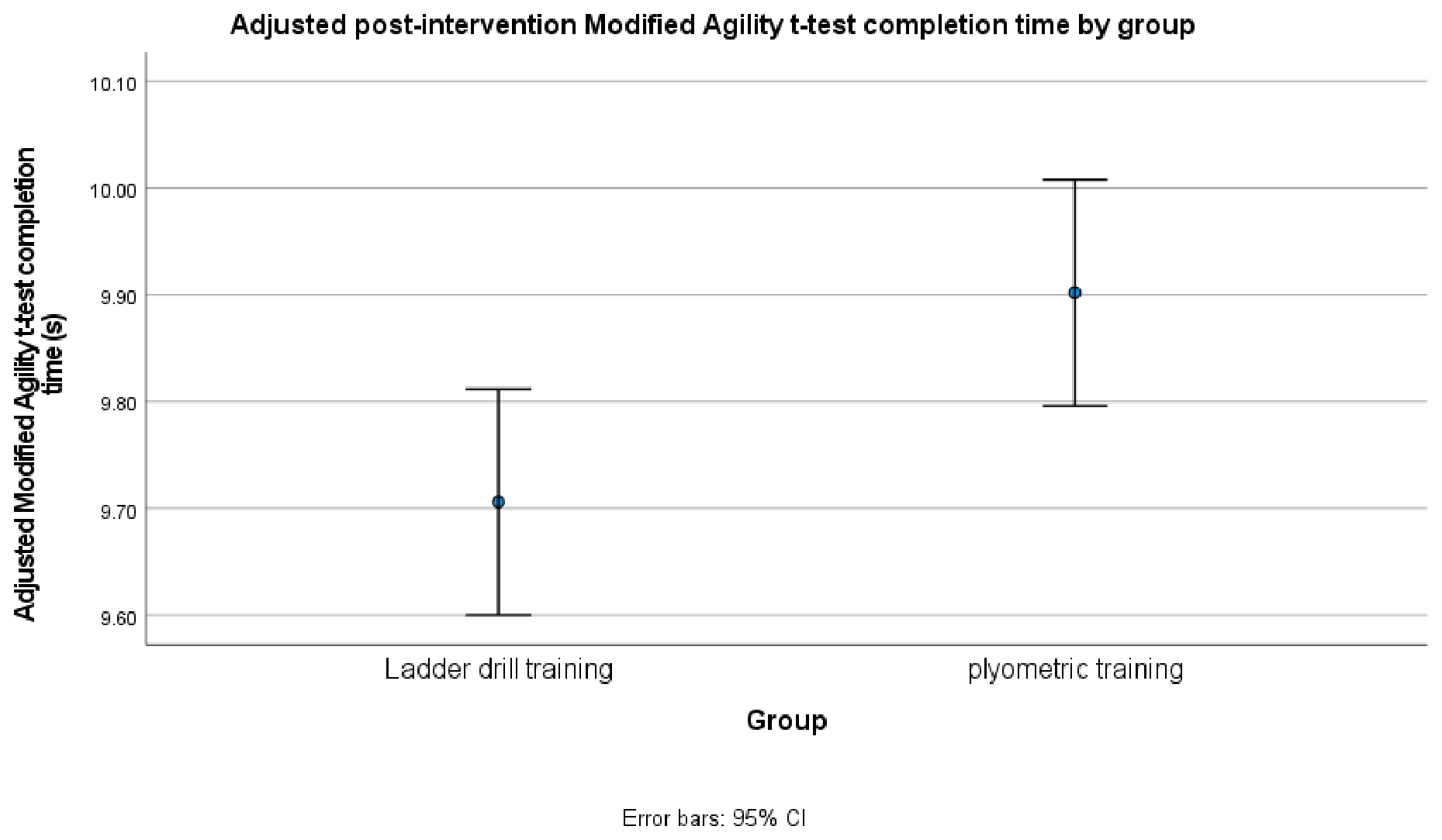
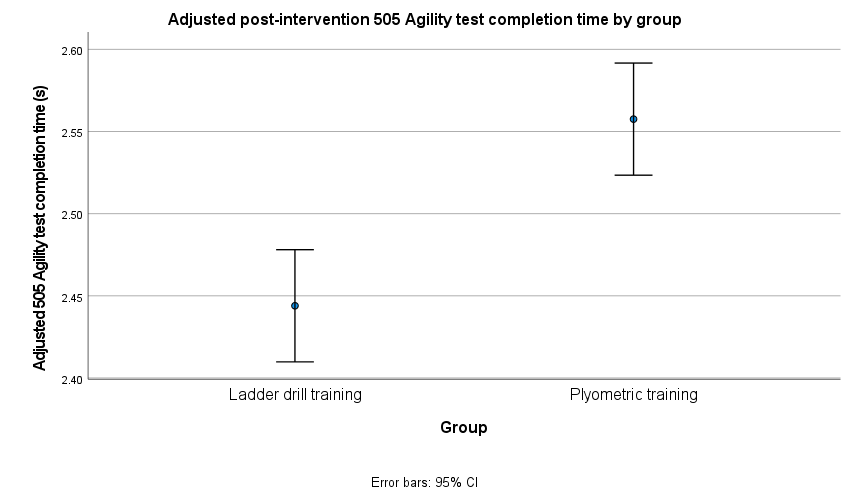
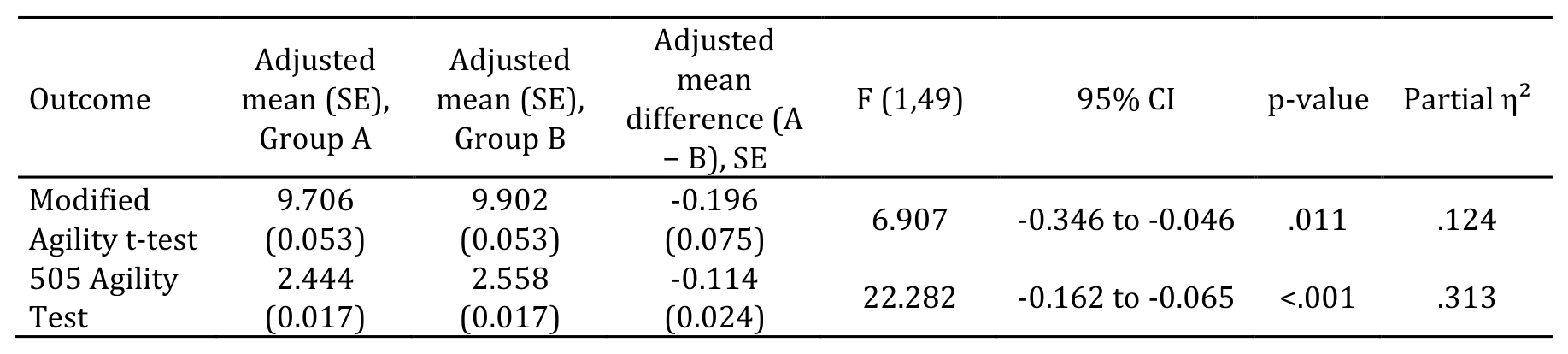
Separate analyses of covariance (ANCOVA) were performed to compare post-intervention pre planned change of direction performance between the groups, adjusting for the corresponding baseline scores. As presented in Table 4, the adjusted post-intervention mean completion time for the Modified Agility t-test was 9.706 ± 0.053 s in the ladder drill training group and 9.902 ± 0.053 s in the plyometric training group Fig. 4. The between-group difference was statistically significant (adjusted mean difference = −0.196 s, 95% CI: −0.346 to −0.046; F(1,49) = 6.907, p = 0.011, partial η² = 0.124), favouring ladder drill training. Similarly, for the 505 Agility Test, the adjusted post-intervention mean completion time was 2.444 ± 0.017 s in the ladder drill training group and 2.558 ± 0.017 s in the plyometric training group Fig. 5. This difference was also statistically significant (adjusted mean difference = −0.114 s, 95% CI: −0.162 to −0.065; F(1,49) = 22.282, p < 0.001, partial η² = 0.313), favouring ladder drill training. The standard error of measurement (SEM) was calculated to quantify absolute measurement error. The minimal detectable change at the 95% confidence level (MDC95) was calculated using the formula MDC95 = SEM × 1.96 × √2. Based on the observed SEM of 0.032 seconds for both outcome measures, the corresponding MDC95 was 0.089 seconds. The MDC95 was used to contextualize the magnitude of observed changes relative to measurement error. The observed within-group reductions in completion time exceeded the calculated MDC95. However, the MDC95 represents an individual-level measurement threshold and should not be interpreted as direct evidence that the between-group differences exceed measurement error.
Table 3. Descriptive Statistics of Pre Planned Change of Direction (COD) Performance Measures Before and After the Intervention
Note: Values are presented as mean ± standard deviation (SD). Lower completion times indicate better pre-planned change of direction performance.
Fig. 4. Baseline-adjusted post-intervention Modified Agility t-test completion times in the ladder drill and plyometric training groups. Error bars represent 95% confidence intervals.
Fig. 5. Baseline-adjusted post-intervention means for the 505 Agility Test in the ladder drill and plyometric training groups. Error bars represent 95% confidence intervals.
Table 4. Analysis of Covariance (ANCOVA) Comparing Post-Intervention Pre Planned Change of Direction (COD) Performance Between Groups, Adjusted for Baseline Scores
Note: Analysis of covariance (ANCOVA) was used to compare post intervention pre planned change of direction (COD) performance between the ladder drill and plyometric training groups, adjusting for the corresponding pre-intervention scores as covariates. Values are presented as adjusted means, standard errors (SE), 95% confidence intervals (CI), F-statistics, p-values, and partial eta squared (η²p). Lower completion times indicate better pre planned change of direction performance.
Discussion
The present randomized controlled trial compared the effects of six weeks of ladder drill training and plyometric training on change of direction performance in sub-elite badminton players. Both groups demonstrated reductions in completion times on the Modified Agility t-test (MAT) and 505 Agility Test following the intervention. However, the baseline-adjusted comparisons favoured ladder drill training, indicating greater improvements in the two planned change of direction outcomes assessed in this study. These findings suggest that ladder drill training may offer an advantage over the plyometric programme used in the present study for improving planned change of direction performance. Nevertheless, the between-group differences should be interpreted cautiously, considering the distinct mechanical demands and potentially unmatched training loads of the interventions, as well as the potential measurement error associated with manual stopwatch timing. Previous studies have investigated the effects of ladder-based training on speed, agility, and change of direction related performance in badminton players and other athletic populations (17, 21, 22, 24). Chandrakumar and Ramesh (17) reported improvements in speed and agility following ladder-drill and speed, agility, and quickness (SAQ) training among sports-club badminton players. Similarly, Sanrijaya et al. (22) reported beneficial changes in speed and agility following different ladder-drill variations. Bai and Selvanayagam (24) also reported improvements in agility-related performance, including change of direction outcomes, following ladder-based training in badminton players. Further evidence of change of direction improvements was reported by Bassa et al. (21) in young female volleyball players following a combined programme incorporating ladder drills, plyometric exercises, and multidirectional speed drills. Although these findings support the potential benefits of ladder-based training for movement-related performance, differences in participant characteristics, intervention protocols, and assessment methods should be considered when interpreting the evidence. Therefore, the present study extends the existing literature by directly comparing six weeks of ladder-drill training and plyometric training on pre-planned change of direction performance in sub-elite badminton players.
A possible explanation for the greater improvement observed in the ladder drill group is the repeated practice of rapid foot-placement sequences and successive stepping movements. Ladder drills require participants to organize foot placement rapidly while maintaining repeated ground contacts and progressing through predetermined movement patterns. These tasks provide repeated opportunities to practise the timing and positioning of successive steps and transitions between foot contacts (24). More efficient execution of these movement sequences could theoretically contribute to faster completion of planned movement tasks. However, step frequency, foot-contact characteristics, foot-placement accuracy, dynamic balance, and lower-limb movement kinematics were not directly measured in the present study. Accordingly, these factors represent plausible explanations for the observed performance changes rather than confirmed physiological or biomechanical adaptations. The potential advantage of ladder drill training may be interpreted through the principle of training specificity, which proposes that performance transfer is influenced by the correspondence between the training stimulus and the demands of the target activity (40-42). In the present study, ladder drills emphasised rapid stepping and foot-placement patterns, whereas the MAT and 505 Agility Test required participants to complete predetermined movement sequences involving changes of direction (43, 44). The greater improvement following ladder drill training is therefore consistent with a possible movement-specific transfer effect, although the study did not directly measure the similarity between training and test biomechanics.
Previous studies have examined the effects of plyometric-based training on change of direction (COD) performance in badminton players. Guo and Xu (46) evaluated COD performance following an eight-week combined balance and plyometric training programme in young badminton players. Their findings showed greater improvements in the modified T-test and Hexagon Test in the combined training group compared with plyometric training alone. Similarly, Guo et al. (49) investigated the effects of six weeks of combined balance and plyometric training compared with plyometric training alone in elite badminton players. Both groups demonstrated improvements in COD performance, although the combined training group showed greater improvement in the 505 test, with no significant between-group difference in the SEMO test. Together, these studies provide evidence that plyometric-based training approaches can improve COD performance in badminton players, although the magnitude of improvement may differ according to the training combination and assessment method. More broadly, plyometric training involves rapid eccentric–concentric muscle actions through the stretch-shortening cycle, which can support explosive performance and rapid force production (28, 29, 31, 50). Daneshjoo and Raeisi (51) also reported changes in explosive and agility-related performance following an eight-week plyometric programme in elite parkour athletes, providing additional evidence from another athletic population. These adaptations may contribute to acceleration, propulsion, and force production during directional changes. The improvement observed in the plyometric group in the present study is consistent with the potential contribution of plyometric exercise to planned COD performance.
The mechanical demands of the change of direction tests may help explain the comparatively smaller improvement observed following plyometric training. Both the Modified Agility t-test (MAT) and the 505 Agility Test involve acceleration, deceleration, and directional transitions, while the 505 test additionally requires a 180° turn. Successful performance therefore depends not only on rapid force production but also on the ability to control horizontal momentum during braking and generate force in the new direction. Although plyometric training develops explosive lower-limb power through rapid eccentric–concentric actions and the stretch-shortening cycle (28, 29, 31), these adaptations may not transfer equally to all change of direction tasks. Such transfer is influenced by the correspondence between the training exercises and the mechanical demands of the target activity (40–41). In the present study, the plyometric programme included squat jumps, split-squat jumps, lateral bounds, lateral cone hops, and single-leg hops. Although the lateral and unilateral exercises incorporated multidirectional movements and landing demands, the programme did not systematically emphasise horizontal deceleration, unilateral braking, and subsequent directional reversal. Furthermore, eccentric force absorption during landing does not necessarily reproduce the braking and force-redirection demands of rapid change of direction movements. In contrast, ladder drill training provided repeated practice of sequential stepping and foot-placement adjustments, which may have offered greater movement correspondence with the planned change of direction tasks assessed in this study. This difference in exercise-specific demands may partly explain the smaller improvement following plyometric training. However, this interpretation remains hypothetical because braking forces, ground-reaction forces, and lower-limb kinematics were not directly measured.
Several limitations should be considered when interpreting the findings. First, although both groups completed the same intervention duration, session frequency, and approximate session schedule, the exercise-specific volume and mechanical demands of ladder drills and plyometric exercises were not directly matched. Ladder drills involved repeated stepping contacts, whereas plyometric exercises involved explosive jumping or hopping actions and their associated landings. Although intervention intensity was monitored using a 0–10 Rating of Perceived Exertion (RPE) scale during supervised sessions, exercise-specific mechanical workload and external training load were not quantitatively matched. Therefore, the observed between-group differences may reflect both movement specificity and differences in exercise volume and mechanical loading. Regular badminton exposure was maintained at approximately two hours per day, five days per week, in both groups. However, RPE and other physiological measures were not recorded during routine badminton practice. Consequently, differences in cumulative training load and fatigue associated with regular practice cannot be completely excluded as potential influences on performance. Furthermore, the absence of a regular-practice-only control group limits the ability to separate the effects of the experimental interventions from ongoing badminton practice, repeated test exposure, familiarisation, learning effects, and natural variation in performance. The use of a handheld stopwatch to record completion times represents another methodological limitation. Although times were recorded to the nearest 0.01 seconds, this display precision does not eliminate potential errors associated with manual starting and stopping. Electronic timing gates would provide a more objective method of recording performance. Other methodological limitations include convenience sampling from a single badminton academy, which may restrict the generalisability of the findings beyond sub-elite players aged 18–30 years. Although allocation was conducted independently using a concealed lottery-based procedure, a computer-generated randomisation sequence was not used. In addition, the study was not prospectively registered in a public clinical trial registry. The six-week intervention period also did not include follow-up assessment; therefore, the retention of improvements after training cessation remains unknown. Furthermore, the sample size was originally calculated using an independent-samples t-test and was not recalculated following the adoption of the baseline-adjusted ANCOVA model. Therefore, the study may not have been optimally powered for detecting between-group differences under the final analytical approach.
Future studies should compare ladder drill and plyometric training using clearly quantified and, where feasible, comparable training loads. Recording session-RPE during both intervention sessions and regular badminton practice, alongside actual session duration and exercise-specific repetitions and contacts, would improve characterisation of internal and external training loads. Instrumented assessments could examine braking impulse, ground-reaction forces, force-vector orientation, and movement kinematics during change of direction tasks. The inclusion of reactive-agility tests, badminton-specific court-movement tasks, electronic timing gates, and a usual-practice control group would help determine whether improvements transfer to broader performance outcomes. Future studies should also use sample-size calculations appropriate to the planned statistical analysis, include longer follow-up periods, and recruit participants across multiple training settings to establish the durability and generalisability of the findings.
Conclusion
Following six weeks of training, pre-planned change of direction speed, assessed using the Modified Agility t-test and 505 Agility Test, improved in both the ladder-drill and plyometric-training groups, as reflected by reduced completion times. Greater numerical reductions were observed in the ladder-drill group for both tests. However, these between-group findings should be interpreted cautiously in view of potential measurement error associated with manual stopwatch timing and differences in exercise-specific training loads. Both training approaches may contribute to improvements in pre-planned change of direction performance in sub-elite badminton players. Future studies should investigate an integrated conditioning approach combining ladder-based footwork drills and plyometric exercises to determine whether their complementary training effects can further enhance change of direction performance in badminton players. The findings of the present study are limited to the pre-planned change of direction tasks assessed and should not be generalised to reactive agility or overall badminton-specific agility during match play.
Ethical Considerations
Compliance with ethical guidelines
This study was approved by the Institutional Scientific Review Board of Saveetha College of Physiotherapy (Approval No. 005/10/2025/ISRB/UGSR/SCPT). Written informed consent was obtained from all participants prior to participation.
Funding
This research received no specific grant from any funding agency in the public, commercial, or not-for-profit sectors.
Authors' contributions
Anusheela R.N.: Conceptualization, Methodology, Formal analysis, Writing – original draft.
Dhanusia S.: Methodology, Writing – original draft, Writing – review & editing.
Suriya N.: Conceptualization, Writing – review & editing.
Priyadharshini Kumar: Investigation, Writing – review & editing.
Vanitha Jayaraj: Project administration, Methodology.
Prathap Suganthirababu: Supervision, Formal analysis.
All authors read and approved the final version of the manuscript.
Conflicts of interest
The authors declare no conflict of interest.
Type of Study: Research |
Subject:
General
Received: 2026/07/25 | Accepted: 2026/11/11 | Published: 2026/11/21
Received: 2026/07/25 | Accepted: 2026/11/11 | Published: 2026/11/21
References
1. Winata B, Brochhagen J, Apriantono T, Hoppe MW. Match-play data according to playing categories in badminton: a systematic review. Frontiers in Sports and Active Living. 2025;7:1466778. [DOI:10.3389/fspor.2025.1466778]
2. Pardiwala DN, Subbiah K, Rao N, Modi R. Badminton injuries in elite athletes: a review of epidemiology and biomechanics. Indian Journal of Orthopaedics. 2020;54(3):237-245. [DOI:10.1007/s43465-020-00054-1]
3. Macquet AC, Fleurance P. Naturalistic decision-making in expert badminton players. Ergonomics. 2007;50(9):1433-1450. [DOI:10.1080/00140130701393452]
4. Sharma P, Samant N, Keshav K, Mishra S. Injury profile in badminton players of Asian countries: a systematic review and meta-analysis. Journal of Arthroscopic Surgery and Sports Medicine. 2025;6(2):93-103. [DOI:10.25259/JASSM_51_2024]
5. Cabak A, Ciok M. Assessment of sport-related injuries in badminton players and the applied treatment approaches. Polish Journal of Sports Medicine. 2020;36(3):145-150.
6. Arora M, Shetty SH, Khedekar RG, Kale S. Over half of badminton players suffer from shoulder pain: is impingement to blame? Journal of Arthroscopy and Joint Surgery. 2015;2(1):33-36. [DOI:10.1016/j.jajs.2014.12.006]
7. Malwanage KT, Senadheera VV, Dassanayake TL. Effect of balance training on footwork performance in badminton: an interventional study. PLOS ONE. 2022;17(11):e0277775. [DOI:10.1371/journal.pone.0277775]
8. Phomsoupha M, Laffaye G. The science of badminton: game characteristics, anthropometry, physiology, visual fitness and biomechanics. Sports Medicine. 2015;45(4):473-495. [DOI:10.1007/s40279-014-0287-2]
9. Cabello Manrique D, González-Badillo JJ. Analysis of the characteristics of competitive badminton. British Journal of Sports Medicine. 2003;37(1):62-66. [DOI:10.1136/bjsm.37.1.62]
10. Edel A, Vuong JL, Kaufmann S, Hoos O, Wiewelhove T, Ferrauti A. Metabolic profile in elite badminton match play and training drills. European Journal of Sport Science. 2024;24(11):1639-1652. [DOI:10.1002/ejsc.12196]
11. Kalantariyan M, Zarghami Aliabad S, Khalandi J. Investigating the effects of sport-metric training on functional factors related to lower limb injuries and skill variables in young futsal players. Journal of Sport Biomechanics. 2025;10(4):346-360. [DOI:10.61186/JSportBiomech.10.4.346]
12. Apte S, Karami H, Vallat C, Gremeaux V, Aminian K. In-field assessment of change-of-direction ability with a single wearable sensor. Scientific Reports. 2023;13(1):4518. [DOI:10.1038/s41598-023-30773-y]
13. Wong TK, Ma AW, Liu KP, Chung LM, Bae YH, Fong SS, et al. Balance control, agility, eye-hand coordination, and sport performance of amateur badminton players: a cross-sectional study. Medicine. 2019;98(2):e14134. [DOI:10.1097/MD.0000000000014134]
14. Shadkanlu Ostad M, Norasteh AA, Babagoltabar Samakoush H. Comparison of static and dynamic balance of athletes of different sports in conditions with and without posture disturbances. Journal of Sport Biomechanics. 2019;4(4):16-27. [DOI:10.32598/biomechanics.4.4.16]
15. Shishido H, Nishijima T. Indicator analysis of the footwork in the world's top badminton athletes based on markerless motion measurement. Frontiers in Sports and Active Living. 2026;8:1753118. [DOI:10.3389/fspor.2026.1753118]
16. Kuntze G, Mansfield N, Sellers W. A biomechanical analysis of common lunge tasks in badminton. Journal of Sports Sciences. 2010;28(2):183-191. [DOI:10.1080/02640410903428533]
17. Chandrakumar N, Ramesh C. Effect of ladder drill and SAQ training on speed and agility among sports club badminton players. International Journal of Applied Research. 2015;1(12):527-529.
18. Khanina N, Hazar F, Damayanti E, Bayu S. The effect of ladder drill training on speed and agility improvement in junior badminton athletes aged 11-14 years. Journal of Racket Sports Performance & Science. 2025;1(1):8-15.
19. Ramadhan R, Subarkah A, Wardoyo H. Development of footwork training model for badminton. Scientific Journal of Sport Coaching and Education. 2018;2(2):150-158. [DOI:10.21009/JSCE.02208]
20. Pojskic H, Pagaduan J, Uzicanin E, Separovic V, Spasic M, Foretic N, et al. Reliability, validity and usefulness of a new response time test for agility-based sports: a simple vs. complex motor task. Journal of Sports Science & Medicine. 2019;18(4):623-635.
21. Bassa E, Lola AC, Melliou A, Prassa M, Stavropoulou G, Ziogas N. Agility ladder training combined with plyometric or multidirectional speed drills: short-term adaptations on jump, speed, and change of direction performance in young female volleyball players. Pediatric Exercise Science. 2024;36(4):248-257. [DOI:10.1123/pes.2024-0024]
22. Sanrijaya N, Wiriawan O, Wibowo S. Increased speed and agility through ladder drill variations. Competitor: Jurnal Pendidikan Kepelatihan Olahraga. 2023;15(2):269-281. [DOI:10.26858/cjpko.v15i2.47333]
23. Banole SP, Sathya P, Roy F, Paul J. Effectiveness of Southeast Missouri (SEMO) agility drill along with ladder drill exercises versus zig-zag drill along with ladder drill exercises on agility in recreational badminton players: a randomized controlled trial. Journal of Ecophysiology and Occupational Health. 2025;25(2):1-8. [DOI:10.18311/jeoh/2025/46411]
24. Bai L, Selvanayagam VS. Effect of dual task ladder training on physical function among badminton players. Scientific Reports. 2026;16(1):22747. [DOI:10.1038/s41598-026-51687-5]
25. McGarrigal LD, Morse CI, Sims DT, Stebbings GK. Development of stretch-shortening cycle function in girls during maturation and in response to training: a narrative review. Journal of Strength and Conditioning Research. 2025;39(8):e1043-e1051. [DOI:10.1519/JSC.0000000000005191]
26. Jensen RL, Ebben WP. Quantifying plyometric intensity via rate of force development, knee joint, and ground reaction forces. Journal of Strength and Conditioning Research. 2007;21(3):763-767. [DOI:10.1519/00124278-200708000-00018]
27. Meylan CM, Nosaka K, Green J, Cronin JB. Temporal and kinetic analysis of unilateral jumping in the vertical, horizontal, and lateral directions. Journal of Sports Sciences. 2010;28(5):545-554. [DOI:10.1080/02640411003628048]
28. Booth MA, Orr R. Effects of plyometric training on sports performance. Strength & Conditioning Journal. 2016;38(1):30-37. [DOI:10.1519/SSC.0000000000000183]
29. Davies G, Riemann BL, Manske R. Current concepts of plyometric exercise. International Journal of Sports Physical Therapy. 2015;10(6):760-786.
30. Bhosale N, Yeole U, Chavarkar M. Effect of plyometric training on jumping performance and agility in badminton players. Indian Journal of Public Health Research & Development. 2020;11(6):532-537.
31. Eraslan L, Castelein B, Spanhove V, Orhan C, Duzgun I, Cools A. Effect of plyometric training on sport performance in adolescent overhead athletes: a systematic review. Sports Health. 2021;13(1):37-44. [DOI:10.1177/1941738120938007]
32. Rædergård HG, Falch HN, van den Tillaar R. Effects of strength vs. plyometric training on change of direction performance in experienced soccer players. Sports. 2020;8(11):144. [DOI:10.3390/sports8110144]
33. Jlid MC, Coquart J, Maffulli N, Paillard T, Bisciotti GN, Chamari K. Effects of in-season multi-directional plyometric training on vertical jump performance, change of direction speed and dynamic postural control in U-21 soccer players. Frontiers in Physiology. 2020;11:374. [DOI:10.3389/fphys.2020.00374]
34. Majeed KNA, Latheef MNA. Effects of plyometric training on agility and dynamic postural control in badminton players. International Journal of Sports Sciences and Fitness. 2016;6(2):100-112.
35. Akhila G, Kumar R. Effect of plyometric training for development of agility among hockey players of Hyderabad district in Telangana state. Journal of Sports Science and Nutrition. 2021;2(1):82-83. [DOI:10.33545/27077012.2021.v2.i1b.37]
36. Prachita PW, Josheeta S. Effect of plyometric exercises versus speed agility quickness training on agility, speed, power, dynamic balance and reaction time in amateur badminton players. International Journal of Physiotherapy Research. 2023;11(3):4524-4530. [DOI:10.16965/ijpr.2023.124]
37. Keerthana M, Senthil Kumar S, Priyadharshini Kumar, Meenakshi V, Kalaiarasi B. The effectiveness of plyometric and proprioceptive training on dynamic balance among karate athletes: randomized controlled study. Sportis. Scientific Journal of School Sport, Physical Education and Psychomotricity. 2026;12(2):1-19. [DOI:10.17979/sportis.2026.12.2.12538]
38. Praveenkumar R, Kamalakannan M, Suganthirababu P, Alagesan J. Efficacy of plyometric training versus postural exercises in volleyball players on improving their landing mechanics and functional performance using AI software. In: Kumar A, Gunjan VK, Senatore S, Hu YC, editors. Proceedings of the 6th International Conference on Data Science, Machine Learning and Applications, Volume 2. Lecture Notes in Electrical Engineering. Singapore: Springer; 2026. p. 949-955. [DOI:10.1007/978-981-95-5835-3_140]
39. Ramalingam V, Nivasini G, Purushothaman VK, Kaladharan VN, Subbarayalu AV, Marimuthu PR. Effect of 6-week land-based plyometric training versus regular basketball training on lower limb injury incidence among basketball players. Health, Sport, Rehabilitation. 2026;12(2):72-85. [DOI:10.58962/HSR.1172]
40. Young WB, McDowell MH, Scarlett BJ. Specificity of sprint and agility training methods. Journal of Strength and Conditioning Research. 2001;15(3):315-319. [DOI:10.1519/1533-4287(2001)0152.0.CO;2]
41. Brazil A, Exell T, Wilson C, Irwin G. A biomechanical approach to evaluate overload and specificity characteristics within physical preparation exercises. Journal of Sports Sciences. 2020;38(10):1140-1149. [DOI:10.1080/02640414.2020.1743065]
42. Keiner M, Warneke K, Skratek J, Kadlubowski B, Beinert K, Wittke A, et al. Specificity in change of direction training: impact on performance across different tests. Journal of Strength and Conditioning Research. 2025;39(9):945-951. [DOI:10.1519/JSC.0000000000005171]
43. Fernandez-Fernandez J, Loturco I, Hernández-Davó JL, Nakamura FY, García-Tormo V, Álvarez-Dacal F, et al. On-court change of direction test: an effective approach to assess COD performance in badminton players. Journal of Human Kinetics. 2022;82:155-164. [DOI:10.2478/hukin-2022-0042]
44. Stewart PF, Turner AN, Miller SC. Reliability, factorial validity, and interrelationships of five commonly used change of direction speed tests. Scandinavian Journal of Medicine & Science in Sports. 2014;24(3):500-506. [DOI:10.1111/sms.12019]
45. Heang LJ, Hoe WE, Quin CK, Yin LH. Effect of plyometric training on the agility of students enrolled in required college badminton program. International Journal of Applied Sports Sciences. 2012;24(1):18-24. [DOI:10.24985/ijass.2012.24.1.18]
46. Guo C, Xu M. The effect of 8-week combined balance and plyometric training on change of direction performance of young badminton players. Scientific Reports. 2025;15(1):21181. [DOI:10.1038/s41598-025-08101-3]
47. Niyazov A, Madiyeva G, Krugovykh I, Milashius K, Ongarbaeva D. The effect of the Shuttle Time program on the physical and technical training of badminton athletes. International Journal of Kinesiology and Sports Science. 2024;12(3):44-51. [DOI:10.7575/10.7575/aiac.ijkss.v.12n.3p.44]
48. Cherni Y, Mzita I, Oranchuk DJ, Dhahbi W, Hammami M, Ceylan HI, et al. Effects of loaded vs unloaded plyometric training combined with change-of-direction sprints on neuromuscular performance in elite U-18 female basketball players: a randomized controlled study. Sport Sciences for Health. 2025;21(4):2899-2911. [DOI:10.1007/s11332-025-01498-4]
49. Guo Z, Huang Y, Zhou Z, Leng B, Gong W, Cui Y, et al. The effect of 6-week combined balance and plyometric training on change of direction performance of elite badminton players. Frontiers in Psychology. 2021;12:684964. [DOI:10.3389/fpsyg.2021.684964]
50. Magendran D, Annadurai B, Ramalingam V, Rahman K. The effectiveness of plyometric training and aquatic training on patellar tendinopathy among university-level volleyball players. Journal of Modern Rehabilitation. 2025;19(4):358-364. [DOI:10.18502/jmr.v19i4.19772]
51. Daneshjoo A, Raeisi S. Effect of eight weeks plyometric training on some kinematic parameters, horizontal jumping power, agility, and body composition in elite parkour athletes. Journal of Sport Biomechanics. 2020;6(1):54-65. [DOI:10.32598/biomechanics.6.1.1]
| Rights and permissions | |
 |
This work is licensed under a Creative Commons Attribution-NonCommercial 4.0 International License. |

Journal of Sport Biomechanics
Department of Sport Biomechanics, Faculty of Humanities, Islamic Azad University, Hamedan Branch, Prof. Mousivand Blvd, Imam Khomeini Blvd, Hamedan, Iran.
Journal Tel: +98 81 34494042
Website: http://biomechanics.iauh.ac.ir
Email: sportbiomechanics@iauh.ac.ir
