

Volume 12, Issue 3 (11-2026)
J Sport Biomech 2026, 12(3): 506-530 |
Back to browse issues page




Download citation:
BibTeX | RIS | EndNote | Medlars | ProCite | Reference Manager | RefWorks
Send citation to:


BibTeX | RIS | EndNote | Medlars | ProCite | Reference Manager | RefWorks
Send citation to:
Solanki S, Fahim T. Exploring the Effects of Neck Muscle Strengthening on Postural Control: A Systematic Review. J Sport Biomech 2026; 12 (3) :506-530
URL: http://biomechanics.iauh.ac.ir/article-1-454-en.html
URL: http://biomechanics.iauh.ac.ir/article-1-454-en.html


1- Physiotherapy Department, GD Goenka University, Gurugram, Haryana, India.
Full-Text [PDF 2107 kb]
(12 Downloads)
| Abstract (HTML) (39 Views)

.jpg)
.jpg)
Full-Text: (15 Views)
1. Introduction
The cervical spine is essential for maintaining upright posture, orienting sensory information, and enabling neuromuscular control throughout the upper body. The deep cervical muscles, specifically the longus colli, longus capitis, and suboccipital muscles, function as stabilizers and sensory integrators, facilitating precise control of head position and alignment (1). These muscles are continuously engaged during daily activities such as reading, computer use, and other static occupations. Prolonged loading or repetitive strain, frequently observed in desk workers, surgeons, and smartphone users, may result in cervical muscle weakness, postural deviations, and impaired postural control and proprioceptive accuracy (2, 3). Postural control depends on the integration of visual, vestibular, and somatosensory systems, with the cervical spine acting as an important proprioceptive source. Mechanoreceptors in the cervical muscles provide essential afferent feedback to the central nervous system, contributing to balance regulation and spatial orientation (4). Sensorimotor impairments are particularly evident in individuals with forward head posture (FHP) or persistent neck discomfort, who progressively rely on superficial muscles such as the sternocleidomastoid and upper trapezius, thereby reinforcing maladaptive postural patterns (5). Babakhani et al. (6) found that hyperlordosis did not significantly affect static balance as measured by center of pressure (COP); however, it significantly increased time to stabilization (TTS), indicating that spinal alignment may selectively influence dynamic rather than static postural control.
Experimental and clinical research has highlighted the influence of neck muscle fatigue on motor control strategies. Mylonas et al. (7) reported that patients with mechanical neck pain who participated in a combined program of neuromuscular training and instrument-assisted soft tissue mobilization demonstrated significant improvements in craniovertebral angle (CVA), proprioception, and neck disability compared with the control group. Elgendy et al. (8) similarly found that a multimodal intervention consisting of postural correction exercises, scapular stabilization, and kinesiotaping produced significant improvements in scapular alignment, craniovertebral angle (CVA), and grip strength in individuals with FHP. Occupational studies have indicated that chronic cervical loading contributes to neuromotor impairment and discomfort; however, ergonomic interventions, such as passive exoskeletons, may reduce these adverse effects (3). A major challenge in this field is the inconsistent use of terminology. Terms such as strength and endurance are sometimes applied interchangeably, despite representing distinct physiological concepts. Endurance may refer either to the duration until voluntary failure or to reductions in electromyographic frequency and may involve isometric or concentric muscle actions (9). Such variations hinder the development of consistent and precise training protocols. Furthermore, the anatomical complexity of the cervical musculature increases methodological challenges, as these muscles are densely arranged and function across multiple planes, making isolated muscle assessment difficult without standardized positioning and anatomical landmark identification (10, 11).
Improvements in cervical muscle strength and endurance have been associated with enhanced postural alignment, reduced pain, and decreased risk of head and neck injuries (12, 13). Understanding the mechanisms through which cervical muscle dysfunction affects balance provides a physiological rationale for strengthening-based interventions. Muscle fatigue and weakness may impair whole-body balance by altering neuromuscular afferent input and reducing sensorimotor integration (14), effects that have also been observed in individuals with acute or chronic head and neck disorders (15, 16). Vuillerme et al. (17) further demonstrated that cervical muscle fatigue leads to sensory reweighting during postural control, increasing reliance on somatosensory inputs from the plantar surfaces, ankles, and visual information. Naderi et al. (18) reported that both functional and non-functional fatigue protocols reduced dynamic balance, with non-functional fatigue producing a greater decline (21.39%) compared with functional fatigue (10.49%), highlighting the differential effects of fatigue type on postural stability. Collectively, these findings provide a strong physiological rationale for interventions targeting cervical muscle strengthening and endurance to improve postural control and daily functional performance (19, 20).
2. Methods
2.1 Protocol
This study was designed as a systematic review conducted in accordance with the Preferred Reporting Items for Systematic Reviews and Meta-Analyses (PRISMA) 2020 guidelines.
2.2 Literature Search and Study Selection
Electronic databases, including PubMed, PEDro, EBSCOhost, ScienceDirect (Elsevier), and the Cochrane Central Register of Controlled Trials, were systematically searched using individual and combined keywords. The PRISMA-S guidelines for reporting literature searches in systematic reviews were followed throughout the search process. Boolean combinations of the terms "neck muscle," "fatigue," and "postural control" were used to identify relevant studies. Studies were eligible for inclusion if they met the following criteria: randomized controlled trials (RCTs), controlled trials, or non-randomized trials published in English between 2015 and 2025. Full texts were obtained by contacting corresponding authors when articles were not directly accessible. Titles and abstracts were initially screened, and reviewers reached consensus regarding study eligibility. Studies unrelated to the objectives of this review were excluded. The inclusion criteria were as follows: (a) studies published in English; (b) randomized controlled trials (RCTs); and (c) studies involving participants with neck-related disorders, muscular fatigue, weakness, or impaired postural control. Studies were excluded if they were duplicate records, not written in English, did not use a randomized or controlled design, or were unrelated to the variables of interest (neck function or postural control). The comprehensive search strategies for all databases are presented in Table 1.
The cervical spine is essential for maintaining upright posture, orienting sensory information, and enabling neuromuscular control throughout the upper body. The deep cervical muscles, specifically the longus colli, longus capitis, and suboccipital muscles, function as stabilizers and sensory integrators, facilitating precise control of head position and alignment (1). These muscles are continuously engaged during daily activities such as reading, computer use, and other static occupations. Prolonged loading or repetitive strain, frequently observed in desk workers, surgeons, and smartphone users, may result in cervical muscle weakness, postural deviations, and impaired postural control and proprioceptive accuracy (2, 3). Postural control depends on the integration of visual, vestibular, and somatosensory systems, with the cervical spine acting as an important proprioceptive source. Mechanoreceptors in the cervical muscles provide essential afferent feedback to the central nervous system, contributing to balance regulation and spatial orientation (4). Sensorimotor impairments are particularly evident in individuals with forward head posture (FHP) or persistent neck discomfort, who progressively rely on superficial muscles such as the sternocleidomastoid and upper trapezius, thereby reinforcing maladaptive postural patterns (5). Babakhani et al. (6) found that hyperlordosis did not significantly affect static balance as measured by center of pressure (COP); however, it significantly increased time to stabilization (TTS), indicating that spinal alignment may selectively influence dynamic rather than static postural control.
Experimental and clinical research has highlighted the influence of neck muscle fatigue on motor control strategies. Mylonas et al. (7) reported that patients with mechanical neck pain who participated in a combined program of neuromuscular training and instrument-assisted soft tissue mobilization demonstrated significant improvements in craniovertebral angle (CVA), proprioception, and neck disability compared with the control group. Elgendy et al. (8) similarly found that a multimodal intervention consisting of postural correction exercises, scapular stabilization, and kinesiotaping produced significant improvements in scapular alignment, craniovertebral angle (CVA), and grip strength in individuals with FHP. Occupational studies have indicated that chronic cervical loading contributes to neuromotor impairment and discomfort; however, ergonomic interventions, such as passive exoskeletons, may reduce these adverse effects (3). A major challenge in this field is the inconsistent use of terminology. Terms such as strength and endurance are sometimes applied interchangeably, despite representing distinct physiological concepts. Endurance may refer either to the duration until voluntary failure or to reductions in electromyographic frequency and may involve isometric or concentric muscle actions (9). Such variations hinder the development of consistent and precise training protocols. Furthermore, the anatomical complexity of the cervical musculature increases methodological challenges, as these muscles are densely arranged and function across multiple planes, making isolated muscle assessment difficult without standardized positioning and anatomical landmark identification (10, 11).
Improvements in cervical muscle strength and endurance have been associated with enhanced postural alignment, reduced pain, and decreased risk of head and neck injuries (12, 13). Understanding the mechanisms through which cervical muscle dysfunction affects balance provides a physiological rationale for strengthening-based interventions. Muscle fatigue and weakness may impair whole-body balance by altering neuromuscular afferent input and reducing sensorimotor integration (14), effects that have also been observed in individuals with acute or chronic head and neck disorders (15, 16). Vuillerme et al. (17) further demonstrated that cervical muscle fatigue leads to sensory reweighting during postural control, increasing reliance on somatosensory inputs from the plantar surfaces, ankles, and visual information. Naderi et al. (18) reported that both functional and non-functional fatigue protocols reduced dynamic balance, with non-functional fatigue producing a greater decline (21.39%) compared with functional fatigue (10.49%), highlighting the differential effects of fatigue type on postural stability. Collectively, these findings provide a strong physiological rationale for interventions targeting cervical muscle strengthening and endurance to improve postural control and daily functional performance (19, 20).
2. Methods
2.1 Protocol
This study was designed as a systematic review conducted in accordance with the Preferred Reporting Items for Systematic Reviews and Meta-Analyses (PRISMA) 2020 guidelines.
2.2 Literature Search and Study Selection
Electronic databases, including PubMed, PEDro, EBSCOhost, ScienceDirect (Elsevier), and the Cochrane Central Register of Controlled Trials, were systematically searched using individual and combined keywords. The PRISMA-S guidelines for reporting literature searches in systematic reviews were followed throughout the search process. Boolean combinations of the terms "neck muscle," "fatigue," and "postural control" were used to identify relevant studies. Studies were eligible for inclusion if they met the following criteria: randomized controlled trials (RCTs), controlled trials, or non-randomized trials published in English between 2015 and 2025. Full texts were obtained by contacting corresponding authors when articles were not directly accessible. Titles and abstracts were initially screened, and reviewers reached consensus regarding study eligibility. Studies unrelated to the objectives of this review were excluded. The inclusion criteria were as follows: (a) studies published in English; (b) randomized controlled trials (RCTs); and (c) studies involving participants with neck-related disorders, muscular fatigue, weakness, or impaired postural control. Studies were excluded if they were duplicate records, not written in English, did not use a randomized or controlled design, or were unrelated to the variables of interest (neck function or postural control). The comprehensive search strategies for all databases are presented in Table 1.
2.3 Data Extraction
The reviewers extracted and recorded the following information from each included study: authors’ names, publication year, participant characteristics, exercise intervention details (including type, duration, intensity, and frequency), sample size, main findings, and reported conclusions.
Data extraction was independently reviewed by the principal reviewer and two additional reviewers to ensure accuracy and minimize potential bias. Any disagreements were resolved through discussion and consensus. The methodological quality of the included studies was assessed using the Physiotherapy Evidence Database (PEDro) scale, an established 11-item tool designed to evaluate the internal validity and statistical reporting quality of clinical trials.
2.4 Methodological Quality Assessment
All seven studies included in the eligibility assessment were evaluated for methodological quality and risk of bias using the Physiotherapy Evidence Database (PEDro) scale. Common methodological limitations identified through PEDro scoring included the absence of concealed allocation and insufficient blinding of participants, therapists, and outcome assessors. In contrast, several PEDro criteria were consistently well addressed across the included studies, including baseline comparability, adequate follow-up, intention-to-treat analysis, reporting of measures of variability, and between-group comparisons. Table 2 presents a summary of the PEDro scores for the included studies.
The reviewers extracted and recorded the following information from each included study: authors’ names, publication year, participant characteristics, exercise intervention details (including type, duration, intensity, and frequency), sample size, main findings, and reported conclusions.
Data extraction was independently reviewed by the principal reviewer and two additional reviewers to ensure accuracy and minimize potential bias. Any disagreements were resolved through discussion and consensus. The methodological quality of the included studies was assessed using the Physiotherapy Evidence Database (PEDro) scale, an established 11-item tool designed to evaluate the internal validity and statistical reporting quality of clinical trials.
2.4 Methodological Quality Assessment
All seven studies included in the eligibility assessment were evaluated for methodological quality and risk of bias using the Physiotherapy Evidence Database (PEDro) scale. Common methodological limitations identified through PEDro scoring included the absence of concealed allocation and insufficient blinding of participants, therapists, and outcome assessors. In contrast, several PEDro criteria were consistently well addressed across the included studies, including baseline comparability, adequate follow-up, intention-to-treat analysis, reporting of measures of variability, and between-group comparisons. Table 2 presents a summary of the PEDro scores for the included studies.
3. Results
3.1 Article Selection Process
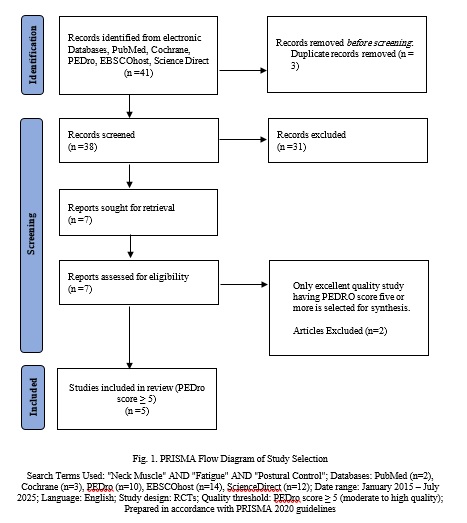
The electronic database search identified 41 records: 3 from the Cochrane Central Register of Controlled Trials, 14 from EBSCOhost, 10 from the Physiotherapy Evidence Database (PEDro), 2 from PubMed, and 12 from ScienceDirect (Elsevier). Following the removal of 3 duplicate records and the exclusion of 31 studies that did not meet the inclusion criteria after title, abstract, and full-text screening, 7 studies were assessed for methodological quality using the PEDro scale. Of these, 2 studies scored below the predefined threshold of 5 and were excluded from the final analysis, resulting in 5 studies included in the final synthesis. All included studies were original peer-reviewed research articles published in English, consistent with the established inclusion and exclusion criteria. Fig. 1 illustrates the study selection process through the PRISMA flow diagram.
3.1 Article Selection Process
The electronic database search identified 41 records: 3 from the Cochrane Central Register of Controlled Trials, 14 from EBSCOhost, 10 from the Physiotherapy Evidence Database (PEDro), 2 from PubMed, and 12 from ScienceDirect (Elsevier). Following the removal of 3 duplicate records and the exclusion of 31 studies that did not meet the inclusion criteria after title, abstract, and full-text screening, 7 studies were assessed for methodological quality using the PEDro scale. Of these, 2 studies scored below the predefined threshold of 5 and were excluded from the final analysis, resulting in 5 studies included in the final synthesis. All included studies were original peer-reviewed research articles published in English, consistent with the established inclusion and exclusion criteria. Fig. 1 illustrates the study selection process through the PRISMA flow diagram.
3.2 Methodological Evaluation of Studies
The PEDro scale consists of 11 items, with the first item assessing external validity and not contributing to the total score. The remaining 10 items are scored as “yes” (1) or “no” (0), resulting in a total score out of 10. Studies scoring 7–10 are classified as high quality, 5–6 as moderate quality, and 0–4 as low quality (21). Due to the practical challenges associated with blinding participants and therapists in rehabilitation research, the maximum achievable PEDro score is generally limited to 8 (21). In this review, PEDro scores ranged from 5 to 8, indicating moderate to high methodological quality among the included studies.
Several randomized controlled trials have investigated exercise-based interventions for forward head posture and related neck dysfunction. Elgendy et al. (8) reported significant improvements in craniovertebral angle, scapular alignment, and grip strength, achieving a PEDro score of 7 out of 10, indicating high methodological quality. Similarly, Yaghoubitajani et al. (22) and Mylonas et al. (7) demonstrated positive outcomes following corrective and neuromuscular exercise programs, with each study achieving a PEDro score of 6 out of 10. Hurer et al. (23) and Park and Lee (24) found that clinical Pilates and lower trapezius strengthening interventions effectively reduced pain and improved postural alignment, with both studies attaining a PEDro score of 5 out of 10. In contrast, Yaşa et al. (25) and Pawaria and Kalra (26) demonstrated lower methodological quality, each receiving a PEDro score of 4 out of 10, and were therefore excluded from the final synthesis. Overall, five studies met the inclusion criterion of a PEDro score ≥ 5, representing moderate to high methodological quality and providing consistent evidence supporting targeted exercise interventions for neck strengthening and postural improvement.
3.3 Population and Interventions
The characteristics of the included studies, including participant characteristics, intervention protocols, control conditions, and main findings, are summarized in Table 3. Across the included studies investigating postural correction and neck rehabilitation, a total of approximately 194 participants were included, consisting of at least 27 males and 167 females. Participants ranged in age from 18 to 60 years and were primarily office workers or individuals with FHP, upper crossed syndrome (UCS), or mechanical neck pain. The intervention protocols mainly focused on improving cervical alignment, scapular stabilization, and neuromuscular control through structured programs, including postural corrective exercises, scapular stabilization routines, Pilates-based training, kinesiotaping, and instrument-assisted soft tissue mobilization. Training sessions were generally conducted 3–4 times per week for 4–8 weeks, with each session lasting approximately 35–65 minutes. Collectively, these studies demonstrated that consistent and targeted exercise interventions improved postural alignment, neck muscle endurance, and pain-related outcomes, particularly among individuals with sedentary lifestyles or postural dysfunction.
The PEDro scale consists of 11 items, with the first item assessing external validity and not contributing to the total score. The remaining 10 items are scored as “yes” (1) or “no” (0), resulting in a total score out of 10. Studies scoring 7–10 are classified as high quality, 5–6 as moderate quality, and 0–4 as low quality (21). Due to the practical challenges associated with blinding participants and therapists in rehabilitation research, the maximum achievable PEDro score is generally limited to 8 (21). In this review, PEDro scores ranged from 5 to 8, indicating moderate to high methodological quality among the included studies.
Several randomized controlled trials have investigated exercise-based interventions for forward head posture and related neck dysfunction. Elgendy et al. (8) reported significant improvements in craniovertebral angle, scapular alignment, and grip strength, achieving a PEDro score of 7 out of 10, indicating high methodological quality. Similarly, Yaghoubitajani et al. (22) and Mylonas et al. (7) demonstrated positive outcomes following corrective and neuromuscular exercise programs, with each study achieving a PEDro score of 6 out of 10. Hurer et al. (23) and Park and Lee (24) found that clinical Pilates and lower trapezius strengthening interventions effectively reduced pain and improved postural alignment, with both studies attaining a PEDro score of 5 out of 10. In contrast, Yaşa et al. (25) and Pawaria and Kalra (26) demonstrated lower methodological quality, each receiving a PEDro score of 4 out of 10, and were therefore excluded from the final synthesis. Overall, five studies met the inclusion criterion of a PEDro score ≥ 5, representing moderate to high methodological quality and providing consistent evidence supporting targeted exercise interventions for neck strengthening and postural improvement.
3.3 Population and Interventions
The characteristics of the included studies, including participant characteristics, intervention protocols, control conditions, and main findings, are summarized in Table 3. Across the included studies investigating postural correction and neck rehabilitation, a total of approximately 194 participants were included, consisting of at least 27 males and 167 females. Participants ranged in age from 18 to 60 years and were primarily office workers or individuals with FHP, upper crossed syndrome (UCS), or mechanical neck pain. The intervention protocols mainly focused on improving cervical alignment, scapular stabilization, and neuromuscular control through structured programs, including postural corrective exercises, scapular stabilization routines, Pilates-based training, kinesiotaping, and instrument-assisted soft tissue mobilization. Training sessions were generally conducted 3–4 times per week for 4–8 weeks, with each session lasting approximately 35–65 minutes. Collectively, these studies demonstrated that consistent and targeted exercise interventions improved postural alignment, neck muscle endurance, and pain-related outcomes, particularly among individuals with sedentary lifestyles or postural dysfunction.
4. Discussion
This systematic review of five randomized controlled trials included in the final synthesis indicates that targeted neck and scapular interventions generally demonstrated improvements in forward head posture, assessed by craniovertebral angle (CVA), as well as related clinical outcomes. Park and Lee (24) found that incorporating a lower trapezius strengthening program into general scapulothoracic exercises resulted in greater increases in CVA and greater reductions in neck disability compared with stabilization exercises alone. Yaghoubitajani et al. (22) demonstrated that an online-supervised corrective exercise program significantly reduced neck–shoulder pain and improved postural angles and workability, whereas changes observed in the unsupervised workplace exercise group were minimal or not statistically significant. These findings are consistent with previous research indicating that therapeutic exercise and adjunctive taping strategies may improve forward head posture; however, exercise-based interventions appear to be more effective than taping alone. Overall, the reviewed studies consistently indicated that structured exercise programs, frequently combined with neuromuscular or supportive approaches, improved CVA, scapular alignment, muscle function, pain, and disability outcomes.
A significant pattern observed across the trials was the effectiveness of multimodal and supervised interventions compared with single-modality or unsupervised approaches. Elgendy et al. (8) demonstrated that incorporating scapular stabilization exercises (SSEs) into a postural correction program resulted in greater improvements in CVA and deep neck muscle endurance compared with postural exercises alone. Mylonas et al. (7) reported that the combination of instrument-assisted soft tissue mobilization (IASTM) and neuromuscular exercises produced greater improvements in CVA and Neck Disability Index scores compared with massage combined with exercises. These findings suggest a potential synergistic effect of integrating adjunctive therapies with strengthening exercises. Approaches such as kinesiotaping, IASTM, and Pilates-based exercises may enhance tissue mobility, proprioceptive input, and neuromuscular control, thereby supporting corrective exercise outcomes. In contrast, isolated or unsupervised home-based exercise programs tended to demonstrate smaller improvements.
The mode of intervention delivery also appeared to influence outcomes. The trial comparing online supervision with workplace-based exercises showed that participants receiving remote supervision experienced greater improvements in pain, postural angles, workability, and muscle activation. Although both groups improved from baseline, specific outcomes, including enhanced workability and reduced upper trapezius overactivation, were observed primarily in the online-supervised group. These findings suggest that supervision, including virtual formats, may enhance adherence, exercise intensity, and movement quality during corrective exercise programs. This observation is consistent with telerehabilitation literature indicating that supervised interventions, whether delivered remotely or in person, may provide greater benefits than unguided or self-directed programs due to enhanced feedback and motivation. Therefore, supervised exercise programs may represent a valuable alternative, particularly when face-to-face clinical rehabilitation is not feasible.
Particular exercise methodologies demonstrated unique benefits. Clinical Pilates, focusing on core and cervical stabilization, resulted in significantly greater improvements in postural alignment and deep neck flexor endurance compared with conventional home exercises, despite similar levels of pain reduction between groups (23). In the Pilates study, improvements in craniovertebral angle (CVA) and neck flexor endurance were significantly greater in the Pilates group compared with the control group. The trial investigating lower trapezius strengthening demonstrated that only the group performing specific lower trapezius exercises showed significant increases in muscle thickness and contraction rate, which were associated with improved alignment and reduced disability. These findings suggest that targeting specific muscle groups, including deep neck flexors and scapular stabilizers, within a stabilization framework may provide greater postural benefits compared with general strengthening exercises. Exercise programs emphasizing spinal stabilization and scapular muscle activation, including Pilates-based exercises and isolated trapezius strengthening, appear to be effective approaches for improving forward head posture. The findings of this review are consistent with previous literature demonstrating an association between head posture and neck health. Systematic reviews have indicated that adults with chronic neck pain typically demonstrate a greater forward head posture, reflected by reduced CVA, compared with individuals without neck pain. Lotfian et al. (27) reported that reduced CVA, indicating a more pronounced forward head posture, was significantly associated with greater neck disability scores. Therefore, improvements in CVA observed in the included trials may partly explain reductions in pain and disability. Corrective exercise programs that promote a more posterior head position relative to the shoulders may reduce mechanical stress on cervical structures and improve neuromuscular balance.
Previous research has shown that women with forward head posture exhibit lower neck extensor endurance and higher levels of pain and disability compared with individuals without this condition, highlighting the clinical importance of improving muscle endurance and postural alignment. Collectively, the findings of this review and previous studies suggest that strengthening and stabilization exercises targeting cervical and scapular muscles may contribute to improvements in neck posture and related symptoms. Lee (2) reported that forward head posture was associated with impaired static balance control, including increased sway velocity and sway distance, whereas no significant effects were observed on dynamic balance. These findings suggest that FHP may influence specific aspects of postural control, particularly static stability. Piaillard and Noe (28) emphasized that accurate assessment of postural control requires appropriate selection of testing methods and variables according to the study population and objectives. Therefore, combining mechanical, sensory, and cognitive assessment approaches may provide a more comprehensive evaluation of the sensory, central, and motor components involved in postural stability. Cheng et al. (29) observed impaired postural stability during quiet standing among individuals with chronic neck pain. Following neck flexor fatigue, both individuals with chronic neck pain and asymptomatic young adults adopted a more rigid control strategy to limit postural sway and maintain head stability during backward perturbations. Similarly, Hsu et al. (30) reported that chronic neck pain is associated with impaired postural control and altered cervical muscle activation patterns, and that additional neck flexor fatigue may further increase balance instability and promote protective muscle control strategies during upper-limb movements. Abdolahzad and Daneshmandi (31) demonstrated that structured corrective exercise programs targeting upper crossed syndrome can improve postural alignment and muscle balance. Overall, these findings indicate that neck flexor endurance and strengthening training may represent an important component of rehabilitation strategies aimed at improving postural stability.
The findings suggest that rehabilitation programs for neck pain and postural disorders should incorporate targeted, muscle-specific exercises and, when appropriate, adjunctive manual techniques administered by trained professionals. Therapists should prioritize exercises targeting the deep cervical flexors and scapular stabilizers rather than relying exclusively on general home-based programs or passive interventions. The inclusion of adjunctive approaches such as kinesiotaping or IASTM suggests that combining manual techniques with exercise may enhance postural outcomes. Furthermore, the evidence supports the feasibility of tele-rehabilitation, indicating that supervised online exercise programs may improve posture and reduce symptoms, particularly among individuals with limited access to clinical facilities. Measurement of CVA and other postural parameters may assist clinicians in monitoring rehabilitation progress. Patients should be encouraged to participate consistently in supervised corrective exercises and stabilization programs.
The methodological limitations of the included studies require cautious interpretation of the findings. All trials lacked double-blinding, as participants and therapists were aware of group allocation, which may have introduced performance or placebo effects. Blinding was mainly limited to outcome assessors, and several studies provided insufficient information regarding allocation concealment or intention-to-treat analysis. Sample sizes were generally modest (approximately 20–60 participants per study), which may have limited statistical power and reduced generalizability. Moreover, intervention durations were relatively short, ranging from 4 to 8 weeks, and follow-up periods were limited; therefore, the long-term sustainability of postural improvements remains uncertain. Heterogeneity in exercise protocols and outcome measures also restricted direct comparisons between studies. For example, not all studies used identical definitions or assessment procedures for CVA and postural control. Additionally, most included studies focused on specific populations, such as office workers or individuals with sagittal cervical disorientation, which may limit applicability to broader populations with neck pain. Future studies should include larger, well-designed randomized controlled trials with adequate sample sizes to confirm the effectiveness of neck muscle strengthening interventions. Researchers should incorporate concealed allocation, blinded outcome assessment, and preregistered protocols to minimize methodological bias. Factorial designs may help clarify the independent effects of specific intervention components, including exercise intensity, taping, and manual therapy. Longer follow-up periods are also required to determine whether postural improvements are maintained over time. The integration of objective biomechanical assessments, such as three-dimensional motion analysis and electromyography, may provide further insight into how strengthening interventions influence muscle activation patterns and postural alignment. Future investigations should also examine tele-exercise models, adherence strategies, mechanistic pathways related to cervical endurance and scapular stability, and cost-effectiveness to facilitate clinical implementation. Addressing these areas will strengthen the evidence base and contribute to the development of more effective rehabilitation strategies for improving neck posture and function.
4.1 Study Limitations
Methodological limitations, including relatively small sample sizes, short intervention durations, and limited blinding procedures, require cautious interpretation of the findings. Future research should prioritize standardized intervention protocols, longer follow-up periods, and investigation of the underlying mechanisms linking neck strengthening interventions with improvements in postural and sensorimotor functions.
5. Conclusion
This systematic review highlights the potential role of neck muscle strengthening interventions in improving postural control and functional outcomes. Across five randomized controlled trials, interventions targeting the cervical and scapular musculature, including postural correction exercises, scapular stabilization, kinesiotaping, clinical Pilates, lower trapezius strengthening, and instrument-assisted soft tissue mobilization, reported improvements in craniovertebral angle (CVA), muscle activation, postural alignment, pain, and disability outcomes. Multimodal and supervised interventions generally showed greater improvements compared with isolated or unsupervised approaches. Programs combining corrective exercises with adjunctive techniques, such as kinesiotaping, IASTM, or Pilates, appeared to provide additional benefits for posture and function compared with single-modality interventions. Similarly, supervised delivery, whether conducted in person or through online platforms, was associated with better adherence and improved outcomes compared with unsupervised programs. These findings emphasize the importance of structured, guided, and individualized rehabilitation strategies. The available evidence suggests that targeted cervical and scapular strengthening may be beneficial in the management of forward head posture (FHP), upper crossed syndrome (UCS), and chronic neck pain. Improving postural alignment may contribute to reductions in pain and disability and may enhance sensorimotor function and overall functional capacity. However, the current evidence remains preliminary, and clinical recommendations should be interpreted considering the methodological limitations of the available studies. In conclusion, strengthening of the cervical musculature, particularly when integrated with multimodal corrective strategies and delivered under professional supervision, represents a promising approach for improving posture and functional outcomes in individuals with neck dysfunction. Nevertheless, larger and methodologically rigorous randomized controlled trials with standardized protocols and long-term follow-up are required before definitive conclusions can be established.
Ethical Considerations
Compliance with ethical guidelines
Ethical approval was not applicable for this systematic review.
Funding
The authors received no financial support for this study.
Authors' contributions
SS contributed to the conception and design of the study, literature search, study selection, data extraction, analysis and interpretation of findings, and preparation of the initial manuscript. TF contributed to the methodological supervision, critical revision of the manuscript, interpretation of results, and final approval of the submitted version. Both authors read and approved the final manuscript.
Conflicts of interest
The authors declare that they have no conflict of interest related to this study.
This systematic review of five randomized controlled trials included in the final synthesis indicates that targeted neck and scapular interventions generally demonstrated improvements in forward head posture, assessed by craniovertebral angle (CVA), as well as related clinical outcomes. Park and Lee (24) found that incorporating a lower trapezius strengthening program into general scapulothoracic exercises resulted in greater increases in CVA and greater reductions in neck disability compared with stabilization exercises alone. Yaghoubitajani et al. (22) demonstrated that an online-supervised corrective exercise program significantly reduced neck–shoulder pain and improved postural angles and workability, whereas changes observed in the unsupervised workplace exercise group were minimal or not statistically significant. These findings are consistent with previous research indicating that therapeutic exercise and adjunctive taping strategies may improve forward head posture; however, exercise-based interventions appear to be more effective than taping alone. Overall, the reviewed studies consistently indicated that structured exercise programs, frequently combined with neuromuscular or supportive approaches, improved CVA, scapular alignment, muscle function, pain, and disability outcomes.
A significant pattern observed across the trials was the effectiveness of multimodal and supervised interventions compared with single-modality or unsupervised approaches. Elgendy et al. (8) demonstrated that incorporating scapular stabilization exercises (SSEs) into a postural correction program resulted in greater improvements in CVA and deep neck muscle endurance compared with postural exercises alone. Mylonas et al. (7) reported that the combination of instrument-assisted soft tissue mobilization (IASTM) and neuromuscular exercises produced greater improvements in CVA and Neck Disability Index scores compared with massage combined with exercises. These findings suggest a potential synergistic effect of integrating adjunctive therapies with strengthening exercises. Approaches such as kinesiotaping, IASTM, and Pilates-based exercises may enhance tissue mobility, proprioceptive input, and neuromuscular control, thereby supporting corrective exercise outcomes. In contrast, isolated or unsupervised home-based exercise programs tended to demonstrate smaller improvements.
The mode of intervention delivery also appeared to influence outcomes. The trial comparing online supervision with workplace-based exercises showed that participants receiving remote supervision experienced greater improvements in pain, postural angles, workability, and muscle activation. Although both groups improved from baseline, specific outcomes, including enhanced workability and reduced upper trapezius overactivation, were observed primarily in the online-supervised group. These findings suggest that supervision, including virtual formats, may enhance adherence, exercise intensity, and movement quality during corrective exercise programs. This observation is consistent with telerehabilitation literature indicating that supervised interventions, whether delivered remotely or in person, may provide greater benefits than unguided or self-directed programs due to enhanced feedback and motivation. Therefore, supervised exercise programs may represent a valuable alternative, particularly when face-to-face clinical rehabilitation is not feasible.
Particular exercise methodologies demonstrated unique benefits. Clinical Pilates, focusing on core and cervical stabilization, resulted in significantly greater improvements in postural alignment and deep neck flexor endurance compared with conventional home exercises, despite similar levels of pain reduction between groups (23). In the Pilates study, improvements in craniovertebral angle (CVA) and neck flexor endurance were significantly greater in the Pilates group compared with the control group. The trial investigating lower trapezius strengthening demonstrated that only the group performing specific lower trapezius exercises showed significant increases in muscle thickness and contraction rate, which were associated with improved alignment and reduced disability. These findings suggest that targeting specific muscle groups, including deep neck flexors and scapular stabilizers, within a stabilization framework may provide greater postural benefits compared with general strengthening exercises. Exercise programs emphasizing spinal stabilization and scapular muscle activation, including Pilates-based exercises and isolated trapezius strengthening, appear to be effective approaches for improving forward head posture. The findings of this review are consistent with previous literature demonstrating an association between head posture and neck health. Systematic reviews have indicated that adults with chronic neck pain typically demonstrate a greater forward head posture, reflected by reduced CVA, compared with individuals without neck pain. Lotfian et al. (27) reported that reduced CVA, indicating a more pronounced forward head posture, was significantly associated with greater neck disability scores. Therefore, improvements in CVA observed in the included trials may partly explain reductions in pain and disability. Corrective exercise programs that promote a more posterior head position relative to the shoulders may reduce mechanical stress on cervical structures and improve neuromuscular balance.
Previous research has shown that women with forward head posture exhibit lower neck extensor endurance and higher levels of pain and disability compared with individuals without this condition, highlighting the clinical importance of improving muscle endurance and postural alignment. Collectively, the findings of this review and previous studies suggest that strengthening and stabilization exercises targeting cervical and scapular muscles may contribute to improvements in neck posture and related symptoms. Lee (2) reported that forward head posture was associated with impaired static balance control, including increased sway velocity and sway distance, whereas no significant effects were observed on dynamic balance. These findings suggest that FHP may influence specific aspects of postural control, particularly static stability. Piaillard and Noe (28) emphasized that accurate assessment of postural control requires appropriate selection of testing methods and variables according to the study population and objectives. Therefore, combining mechanical, sensory, and cognitive assessment approaches may provide a more comprehensive evaluation of the sensory, central, and motor components involved in postural stability. Cheng et al. (29) observed impaired postural stability during quiet standing among individuals with chronic neck pain. Following neck flexor fatigue, both individuals with chronic neck pain and asymptomatic young adults adopted a more rigid control strategy to limit postural sway and maintain head stability during backward perturbations. Similarly, Hsu et al. (30) reported that chronic neck pain is associated with impaired postural control and altered cervical muscle activation patterns, and that additional neck flexor fatigue may further increase balance instability and promote protective muscle control strategies during upper-limb movements. Abdolahzad and Daneshmandi (31) demonstrated that structured corrective exercise programs targeting upper crossed syndrome can improve postural alignment and muscle balance. Overall, these findings indicate that neck flexor endurance and strengthening training may represent an important component of rehabilitation strategies aimed at improving postural stability.
The findings suggest that rehabilitation programs for neck pain and postural disorders should incorporate targeted, muscle-specific exercises and, when appropriate, adjunctive manual techniques administered by trained professionals. Therapists should prioritize exercises targeting the deep cervical flexors and scapular stabilizers rather than relying exclusively on general home-based programs or passive interventions. The inclusion of adjunctive approaches such as kinesiotaping or IASTM suggests that combining manual techniques with exercise may enhance postural outcomes. Furthermore, the evidence supports the feasibility of tele-rehabilitation, indicating that supervised online exercise programs may improve posture and reduce symptoms, particularly among individuals with limited access to clinical facilities. Measurement of CVA and other postural parameters may assist clinicians in monitoring rehabilitation progress. Patients should be encouraged to participate consistently in supervised corrective exercises and stabilization programs.
The methodological limitations of the included studies require cautious interpretation of the findings. All trials lacked double-blinding, as participants and therapists were aware of group allocation, which may have introduced performance or placebo effects. Blinding was mainly limited to outcome assessors, and several studies provided insufficient information regarding allocation concealment or intention-to-treat analysis. Sample sizes were generally modest (approximately 20–60 participants per study), which may have limited statistical power and reduced generalizability. Moreover, intervention durations were relatively short, ranging from 4 to 8 weeks, and follow-up periods were limited; therefore, the long-term sustainability of postural improvements remains uncertain. Heterogeneity in exercise protocols and outcome measures also restricted direct comparisons between studies. For example, not all studies used identical definitions or assessment procedures for CVA and postural control. Additionally, most included studies focused on specific populations, such as office workers or individuals with sagittal cervical disorientation, which may limit applicability to broader populations with neck pain. Future studies should include larger, well-designed randomized controlled trials with adequate sample sizes to confirm the effectiveness of neck muscle strengthening interventions. Researchers should incorporate concealed allocation, blinded outcome assessment, and preregistered protocols to minimize methodological bias. Factorial designs may help clarify the independent effects of specific intervention components, including exercise intensity, taping, and manual therapy. Longer follow-up periods are also required to determine whether postural improvements are maintained over time. The integration of objective biomechanical assessments, such as three-dimensional motion analysis and electromyography, may provide further insight into how strengthening interventions influence muscle activation patterns and postural alignment. Future investigations should also examine tele-exercise models, adherence strategies, mechanistic pathways related to cervical endurance and scapular stability, and cost-effectiveness to facilitate clinical implementation. Addressing these areas will strengthen the evidence base and contribute to the development of more effective rehabilitation strategies for improving neck posture and function.
4.1 Study Limitations
Methodological limitations, including relatively small sample sizes, short intervention durations, and limited blinding procedures, require cautious interpretation of the findings. Future research should prioritize standardized intervention protocols, longer follow-up periods, and investigation of the underlying mechanisms linking neck strengthening interventions with improvements in postural and sensorimotor functions.
5. Conclusion
This systematic review highlights the potential role of neck muscle strengthening interventions in improving postural control and functional outcomes. Across five randomized controlled trials, interventions targeting the cervical and scapular musculature, including postural correction exercises, scapular stabilization, kinesiotaping, clinical Pilates, lower trapezius strengthening, and instrument-assisted soft tissue mobilization, reported improvements in craniovertebral angle (CVA), muscle activation, postural alignment, pain, and disability outcomes. Multimodal and supervised interventions generally showed greater improvements compared with isolated or unsupervised approaches. Programs combining corrective exercises with adjunctive techniques, such as kinesiotaping, IASTM, or Pilates, appeared to provide additional benefits for posture and function compared with single-modality interventions. Similarly, supervised delivery, whether conducted in person or through online platforms, was associated with better adherence and improved outcomes compared with unsupervised programs. These findings emphasize the importance of structured, guided, and individualized rehabilitation strategies. The available evidence suggests that targeted cervical and scapular strengthening may be beneficial in the management of forward head posture (FHP), upper crossed syndrome (UCS), and chronic neck pain. Improving postural alignment may contribute to reductions in pain and disability and may enhance sensorimotor function and overall functional capacity. However, the current evidence remains preliminary, and clinical recommendations should be interpreted considering the methodological limitations of the available studies. In conclusion, strengthening of the cervical musculature, particularly when integrated with multimodal corrective strategies and delivered under professional supervision, represents a promising approach for improving posture and functional outcomes in individuals with neck dysfunction. Nevertheless, larger and methodologically rigorous randomized controlled trials with standardized protocols and long-term follow-up are required before definitive conclusions can be established.
Ethical Considerations
Compliance with ethical guidelines
Ethical approval was not applicable for this systematic review.
Funding
The authors received no financial support for this study.
Authors' contributions
SS contributed to the conception and design of the study, literature search, study selection, data extraction, analysis and interpretation of findings, and preparation of the initial manuscript. TF contributed to the methodological supervision, critical revision of the manuscript, interpretation of results, and final approval of the submitted version. Both authors read and approved the final manuscript.
Conflicts of interest
The authors declare that they have no conflict of interest related to this study.
Type of Study: Applicable |
Subject:
General
Received: 2025/10/27 | Accepted: 2026/05/23 | Published: 2026/07/28
Received: 2025/10/27 | Accepted: 2026/05/23 | Published: 2026/07/28
References
1. Falla D, O'Leary S, Farina D, Jull G. The change in deep cervical flexor activity after training is associated with the degree of pain reduction in patients with chronic neck pain. The Clinical Journal of Pain. 2012;28(7):628-634. [DOI:10.1097/AJP.0b013e31823e9378]
2. Lee JH. Effects of forward head posture on static and dynamic balance control. Journal of Physical Therapy Science. 2016;28(1):274-277. [DOI:10.1589/jpts.28.274]
3. Kim SY, Koo SJ. Effect of duration of smartphone use on muscle fatigue and pain caused by forward head posture in adults. Journal of Physical Therapy Science. 2016;28(6):1669-1672. [DOI:10.1589/jpts.28.1669]
4. Singla D, Veqar Z. Association between forward head, rounded shoulders, and increased thoracic kyphosis: a review of the literature. Journal of Chiropractic Medicine. 2017;16(3):220-229. [DOI:10.1016/j.jcm.2017.03.004]
5. Nejati P, Lotfian S, Moezy A, Nejati M. The relationship of forward head posture and rounded shoulders with neck pain in Iranian office workers. Medical Journal of the Islamic Republic of Iran. 2014;28:26.
6. Babakhani F, Hatefi M, Heydarian M, Barzegar M. Comparison of changes in center of pressure and time to stabilization in students with and without hyperlordosis. Journal of Sport Biomechanics. 2018;4(3):62-73. [DOI:10.32598/biomechanics.4.3.62]
7. Mylonas K, Angelopoulos P, Billis E, Tsepis E, Fousekis K. Combining targeted instrument-assisted soft tissue mobilization applications and neuromuscular exercises can correct forward head posture and improve the functionality of patients with mechanical neck pain: a randomized control study. BMC Musculoskeletal Disorders. 2021;22(1):212. [DOI:10.1186/s12891-021-04243-3]
8. Elgendy MH, Ghaffar MAA, Sabbahi SAE, Abutaleb EES, Elsayed SEB. Efficacy of head postural correction program on craniovertebral angle, scapular position, and dominant hand grip strength in forward head posture subjects: a randomized controlled trial. Physiotherapy Research International. 2024;29(3):e2093. [DOI:10.1002/pri.2093]
9. Vollestad NK. Measurement of human muscle fatigue. Journal of Neuroscience Methods. 1997;74(2):219-227. [DOI:10.1016/S0165-0270(97)02251-6]
10. Conley MS, Meyer RA, Bloomberg JJ, Feeback DL. Noninvasive analysis of human neck muscle function. Spine. 1995;20(23):2505-2512. [DOI:10.1097/00007632-199512000-00009]
11. Javanshir K, Amiri M, Mohseni-Bandpei MA, Rezasoltani A, Fernández-de-las-Peñas C. Ultrasonography of the cervical muscles: a critical review of the literature. Journal of Manipulative and Physiological Therapeutics. 2010;33(8):630-637. [DOI:10.1016/j.jmpt.2010.08.016]
12. Falla D, Jull G, Hodges P, Vicenzino B. An endurance-strength training regime is effective in reducing myoelectric manifestations of cervical flexor muscle fatigue in patients with chronic neck pain. Clinical Neurophysiology. 2006;117(4):828-837. [DOI:10.1016/j.clinph.2005.12.025]
13. Lavallee AV, Ching RP, Nuckley DJ. Developmental biomechanics of neck musculature. Journal of Biomechanics. 2013;46(3):527-534. [DOI:10.1016/j.jbiomech.2012.09.029]
14. Schieppati M, Nardone A, Schmid M. Neck muscle fatigue affects postural control in man. Neuroscience. 2003;121(2):277-285. [DOI:10.1016/S0306-4522(03)00439-1]
15. Guskiewicz KM, Ross SE, Marshall SW. Postural stability and neuropsychological deficits after concussion in collegiate athletes. Journal of Athletic Training. 2001;36(3):263-273.
16. Yoganandan N, Pintar FA, Maiman DJ, Cusick JF, Sances A, Walsh PR. Human head-neck biomechanics under axial tension. Medical Engineering and Physics. 1996;18(4):289-294. [DOI:10.1016/1350-4533(95)00054-2]
17. Vuillerme N, Pinsault N, Vaillant J. Postural control during quiet standing following cervical muscular fatigue: effects of changes in sensory inputs. Neuroscience Letters. 2005;378(3):135-139. [DOI:10.1016/j.neulet.2004.12.024]
18. Naderi S, Naserpour H, Mohammadi-Pour F, Amir-Seyfaddini M. A comparative study on the effects of functional and non-functional fatigue protocols on dynamic balance of amateur basketball players. Journal of Sport Biomechanics. 2019;5(3):168-177. [DOI:10.32598/biomechanics.5.3.4]
19. Shumway-Cook A, Horak FB. Assessing the influence of sensory interaction on balance: suggestions from the field. Physical Therapy. 1986;66(10):1548-1550. [DOI:10.1093/ptj/66.10.1548]
20. Winter DA. Human balance and posture control during standing and walking. Gait & Posture. 1995;3(4):193-214. [DOI:10.1016/0966-6362(96)82849-9]
21. Maher CG, Sherrington C, Herbert RD, Moseley AM, Elkins M. Reliability of the PEDro scale for rating quality of randomized controlled trials. Physical Therapy. 2003;83(8):713-721. [DOI:10.1093/ptj/83.8.713]
22. Yaghoubitajani Z, Gheitasi M, Bayattork M, Andersen LL. Corrective exercises administered online vs at the workplace for pain and function in office workers with upper crossed syndrome: randomized controlled trial. International Archives of Occupational and Environmental Health. 2022;95(8):1703-1718. [DOI:10.1007/s00420-022-01859-3]
23. Hurer C, Angin E, Tuzun EH. Effectiveness of clinical Pilates and home exercises in sagittal cervical disorientation: randomized controlled study. Journal of Comparative Effectiveness Research. 2021;10(5):365-380. [DOI:10.2217/cer-2020-0186]
24. Park SH, Lee MM. Effects of lower trapezius strengthening exercises on pain, dysfunction, posture alignment, muscle thickness and contraction rate in patients with neck pain: randomized controlled trial. Medical Science Monitor. 2020;26:e920208. [DOI:10.12659/MSM.920208]
25. Yaşa ME, Ün Yıldırım N, Demir P. The effects of a 6-week balance training in addition to conventional physiotherapy on pain, postural control, and balance confidence in patients with cervical disc herniation: a randomized controlled trial. Somatosensory & Motor Research. 2021;38(1):60-67. [DOI:10.1080/08990220.2020.1845136]
26. Pawaria S, Kalra S. Effect of deep cervical flexor training on respiratory functions in chronic neck pain patients with forward head posture. International Journal of Research in Pharmaceutical Sciences. 2020;11(4):5287-5292. [DOI:10.26452/ijrps.v11i4.3146]
27. Lotfian S, Fesharaki MJ, Shahabbaspour Z, Akbarzadeh H, Moezy A. The impact of forward head posture on neck muscle endurance and thickness in women with chronic neck pain: a cross-sectional study. BMC Musculoskeletal Disorders. 2025;26(1):468. [DOI:10.1186/s12891-025-08705-w]
28. Paillard T, Noé F. Techniques and methods for testing the postural function in healthy and pathological subjects. BioMed Research International. 2015;2015:891390. [DOI:10.1155/2015/891390]
29. Cheng CH, Chien A, Hsu WL, Yen LW, Lin YH, Cheng HY. Changes of postural control and muscle activation pattern in response to external perturbations after neck flexor fatigue in young subjects with and without chronic neck pain. Gait & Posture. 2015;41(3):801-807. [DOI:10.1016/j.gaitpost.2015.02.007]
30. Hsu WL, Chen CP, Nikkhoo M, Lin CF, Ching CT, Niu CC, et al. Fatigue changes neck muscle control and deteriorates postural stability during arm movement perturbations in patients with chronic neck pain. The Spine Journal. 2020;20(4):530-537. [DOI:10.1016/j.spinee.2019.10.016]
31. Abdolahzad M, Daneshmandi H. The effect of an 8-week NASM corrective exercise program on upper crossed syndrome. Journal of Sport Biomechanics. 2019;5(3):156-167. [DOI:10.32598/biomechanics.5.3.3]
| Rights and permissions | |
 |
This work is licensed under a Creative Commons Attribution-NonCommercial 4.0 International License. |

Journal of Sport Biomechanics
Department of Sport Biomechanics, Faculty of Humanities, Islamic Azad University, Hamedan Branch, Prof. Mousivand Blvd, Imam Khomeini Blvd, Hamedan, Iran.
Journal Tel: +98 81 34494042
Website: http://biomechanics.iauh.ac.ir
Email: sportbiomechanics@iauh.ac.ir
